The Chefs Reinventing Peranakan Fine Dining
Peranakan cooking was built on hours of unhurried labour passed through generations. A new wave of chefs is proving fine dining can honour that, not erase it.
 By Renée Tan
29 August 2026 · 6 min read
Peranakan cooking has always been, at its core, a slow art form disguised as a home-cooked one. A proper buah keluak needs the nut soaked, scraped, and cleaned by hand before it goes anywhere near a pot. A rendang worth eating is one that has been coaxed over low heat for the better part of a day, the coconut milk reducing until it clings rather than pools. For generations this labour lived almost entirely in home kitchens, passed from mother to daughter, rarely written down and rarely charged for at restaurant prices. That is changing. A small but serious group of chefs is now bringing Nonya cuisine into fine dining rooms, and doing it in a way that treats the tradition’s difficulty as the point, not an obstacle to be smoothed over.
Cooking what used to take all day, at restaurant pace
The central tension in Peranakan fine dining is speed. A home cook could take a full day to build a proper ayam buah keluak, but a restaurant kitchen serving forty covers a night cannot realistically ask a guest to wait that long for a single dish. The chefs handling this well have not shortened the process — they have restructured their kitchens around it, building stocks and pastes days in advance, batch-preparing the labour-intensive elements so that what happens table-side is assembly and final seasoning rather than the whole slow build. It is not unlike the discipline found in the kitchens profiled in our piece on Singapore’s counter-dining rewrite, where precision under time pressure is the whole craft.
What this preserves, crucially, is depth of flavour. A rempah rushed through a blender and cooked for twenty minutes tastes thin next to one pounded by hand and cooked for hours; the chefs who understand this are the ones building menus that taste like something a grandmother would recognise, even if the plating does not. Much of that depth begins with the raw ingredients of the paste itself, and our guide to choosing and using candlenut explains one of its quieter essentials.
Plating tradition without flattening it
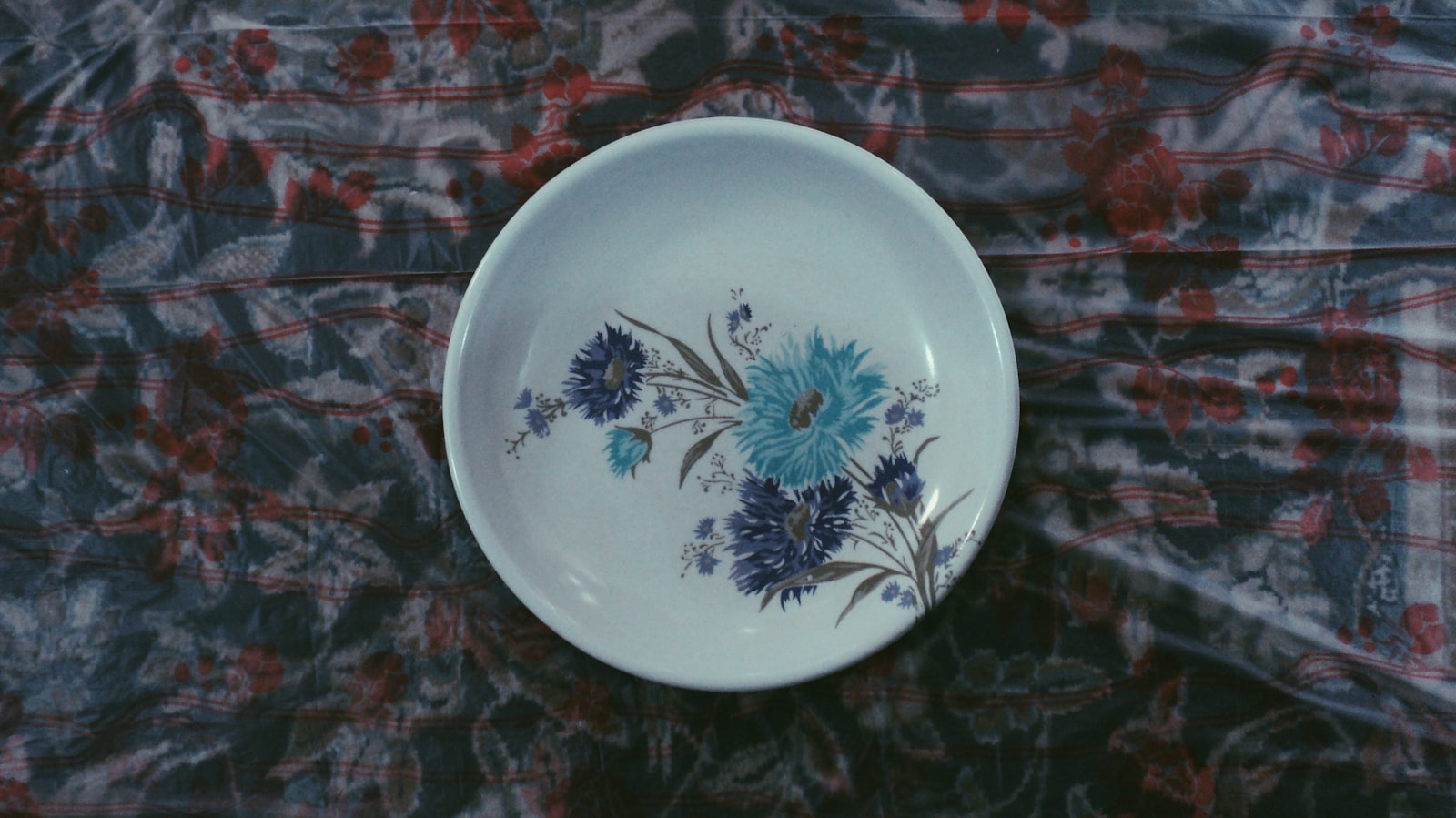
The visual language of Nonya cooking — the blue of pea-flower rice, the deep red-brown of a well-reduced curry, the intricate patterns of Peranakan porcelain itself — gives these chefs an unusually rich starting point for plating, and the better kitchens lean into it rather than reaching for generic fine-dining minimalism. A few have commissioned custom tableware echoing traditional Nonyaware patterns, a choice that sits naturally alongside the makers profiled in our piece on the ceramicists shaping the modern table, where craft objects and craft cooking increasingly inform one another.
Others go the opposite direction, stripping plating back almost entirely so the dish itself — the sambal, the achar, the kueh — is the only thing on the plate, trusting flavour rather than composition to carry the fine-dining register.
Dishes worth seeking out
- Buah keluak, reworked as a course of its own rather than a component of a larger curry.
- Kueh presented as a proper dessert course, with the layered, steamed varieties given the same attention as a Western pâtissier would give a mille-feuille.
- Otah reimagined with better fish and a lighter hand on the spice, served as a discrete course rather than a snack.
- Chap chye cooked slow enough that the cabbage has gone properly silken, not merely wilted.
The women whose knowledge made this possible
Almost every chef doing serious Peranakan cooking today will, if asked, credit a mother, grandmother, or aunt as the actual source of the recipe — the technique learned by watching rather than reading, corrected over years rather than taught in a single lesson. Formalising that knowledge into a fine-dining menu is, in its way, an act of preservation as much as innovation; several of these chefs have spoken about the anxiety of translating something never written down into something a kitchen brigade can reproduce consistently, night after night, without losing what made it worth cooking in the first place.
“My grandmother never measured anything,” one Singapore-based chef building a Peranakan tasting menu told us. “The hardest part of my job has been turning her hands into a recipe someone else can follow.”
Where this sits within Singapore’s wider food story
Peranakan fine dining is part of a broader pattern across the city’s dining and drinks scene, in which chefs are looking inward — to hawker technique, to home cooking, to ingredients long undervalued — rather than outward to imported fine-dining conventions. It echoes the sourcing instincts described in our piece on the farmers supplying Singapore’s best kitchens, where provenance and heritage matter as much as technique. Nonya cooking, built from Chinese, Malay, and Indonesian influences across generations of Singapore and the wider Straits, is arguably the most naturally ‘Singaporean’ cuisine there is, and its arrival in fine dining feels less like a trend than a correction — an overdue acknowledgement that this food was always sophisticated, it simply was not always priced or presented as such.
A cuisine finding its own fine-dining language
Part of what makes this movement genuinely interesting is that it has not simply borrowed the visual and structural conventions of French or Japanese fine dining and applied them to Nonya ingredients. The better kitchens have instead built a format specific to Peranakan food’s own logic: shared central dishes alongside individually plated courses, a pacing that allows for the kind of communal eating the cuisine was originally built around, and a willingness to let a dish look genuinely home-style if that is what serves the flavour best. It is a more confident, less imitative approach than fine dining in Singapore has historically taken toward its own heritage cuisines, and it may end up shaping how other regional cuisines eventually make the same transition.
For diners, the reward is a kind of eating that feels both unfamiliar and deeply rooted at once: dishes built on techniques generations old, served with the confidence of a cuisine that finally has nothing left to prove. It rewards patience, both from the kitchen and the guest, and it is, quietly, one of the more interesting things happening in Singapore food right now. A similar respect for regional cooking is shaping another coastline entirely, as our pick of Croatian and Adriatic dining shows.
Renée has covered Singapore's restaurants for over a decade, with a soft spot for the kitchens most people walk past.