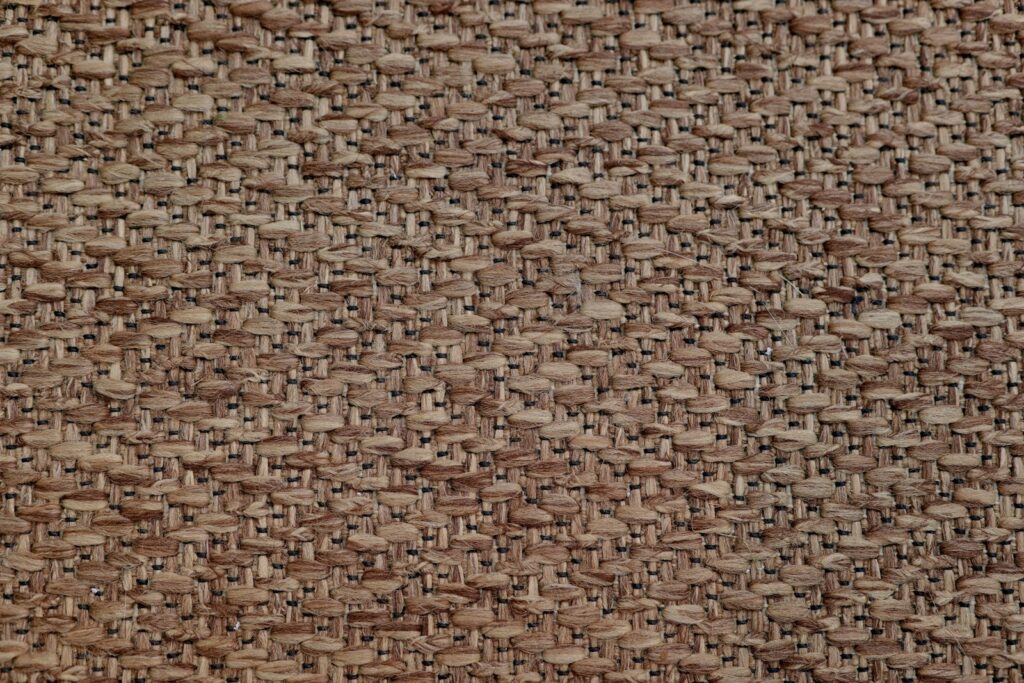
The Best Everyday Perlon and Woven Straps
Perlon and woven straps breathe, dry fast, and cost little to get right in Singapore's heat. Here's how to choose one that earns its keep on the wrist.
 By Daniel Koh
31 August 2026 · 7 min read
By Daniel Koh
31 August 2026 · 7 min read

There is a particular kind of watch owner who treats the strap drawer with more reverence than the watch box itself, and on a humid Tuesday in Singapore, that person is usually reaching for perlon. It is not the most expensive strap in the rotation, nor the most photogenic on a flat-lay, but it is the one that survives a lunch queue at a hawker centre, a downpour on the walk back to the office, and a gym session squeezed in before dinner without complaint. Woven straps have earned their place in the considered wardrobe precisely because they solve a problem leather and even rubber cannot: they breathe, they dry in minutes rather than hours, and they look no worse for having been worn hard.
Why perlon endures in the tropics
Perlon is a woven synthetic strap, originally a nylon weave developed in Europe decades ago, prized for a tight, almost silk-like weft that resists fraying far better than a basic canvas. Its structure is what matters here: rather than a single flat piece of material, it is threaded through a mesh of small holes, which means the buckle pin can sit almost anywhere along its length. That sounds like a minor convenience until you have worn one through a Singapore afternoon, when wrists swell slightly in the heat and a strap with only five or six holes suddenly feels either too tight or too loose. A perlon’s continuous adjustability removes that problem entirely, and it is a genuine, everyday reason to own one rather than a novelty.
The tropics are unkind to straps generally. Leather absorbs sweat and, without care, begins to smell and crack within a season. Perlon shrugs this off. A quick rinse under a tap, a squeeze of excess water, and it is wearable again within the hour. For anyone who swims, sails, or simply sweats through a commute on a motorcycle, this single property outweighs almost every aesthetic argument against it. Those who prefer a slightly heavier, more textured look with similar resilience may find our guide to sailcloth and canvas straps worth a read.
The weave: French perlon versus adjustable mesh
Not all perlon is equal, and the difference is in the weave density. French-made perlon, the benchmark most enthusiasts still chase, uses a tighter weft that holds its shape after years of washing and resists the slight fuzzing that cheaper Asian-made equivalents develop within months. Hold two straps side by side and the difference is visible in the edge finish: a well-made perlon has a clean, almost sealed border, while a poor one frays at the first snag on a cuff button.
Thickness matters too. A strap under one millimetre reads as flimsy on anything larger than a modest dress watch, while anything approaching two millimetres starts to compete visually with a chunkier sports case. The sweet spot for most everyday watches, from a slim field watch to a modest diver, sits around 1.2 to 1.4 millimetres — substantial enough to feel considered, thin enough to slide comfortably under a shirt cuff.
NATO, RAF, and other woven cousins
Perlon is often grouped loosely with NATO and RAF straps, and while all three are woven and share the practical virtues of quick drying and low cost, they are constructed quite differently. A true NATO is a single continuous piece of ballistic nylon that loops entirely under the case, meaning the watch never leaves your wrist even if a spring bar fails — a genuine safety feature, not just a styling quirk. An RAF variant is similar but typically uses a slightly heavier weave and a distinct keeper arrangement. Both sit thicker on the wrist than perlon and can make a slim watch feel top-heavy, which is worth testing before committing to one for daily wear.
For readers who already own a leather rotation and are considering their first woven strap, our guide to everyday textile and NATO straps is a useful companion piece, laying out the safety case for the through-the-case design in more detail.
A note on colour and pattern
- Solid navy or grey reads formally enough to survive a smart-casual office and pairs cleanly with most dial colours.
- Striped or regimental patterns work best on sports watches with some visual weight, where a plain steel bracelet might feel expected.
- Avoid high-contrast novelty patterns on a watch you intend to wear daily for years — they date faster than the strap itself wears out.
Matching strap to case and dial
A woven strap’s casual, textural quality means it rewards a certain kind of case: field watches, divers, and simple three-hand watches with some tool-like heritage. It is a poor match, almost universally, for a dress watch with a fine guilloché dial or a thin, elegant case — the strap’s bulk and informality fight the watch’s intent. If your rotation includes both a dress piece and a tool watch, reserve perlon and its woven relatives strictly for the latter.
Colour coordination is worth a moment’s thought as well. A strap that closely matches the dial colour — navy on navy, olive on a khaki dial — tends to look more intentional than a strap chosen purely for contrast. Readers building out a fuller collection may also find our piece on everyday leather watch straps useful for understanding when leather still earns its place despite the climate.
“I keep three perlon straps in rotation and one good leather one for meetings. The perlon straps have outlasted two leather ones already, and I’ve never once thought about them in a downpour,” says one Singapore-based collector who asked not to be named.
Care in Singapore’s climate
Looking after a woven strap is refreshingly undemanding, which is much of the appeal. Rinse it under fresh water after a swim or a particularly sweaty day, let it air dry away from direct sun to preserve colour, and avoid leaving it balled up damp in a gym bag, which can encourage mildew in a humid climate faster than most people expect. Unlike leather, there is no conditioning regime, no risk of the material drying out and cracking, and no need to rotate it off the wrist to “rest.”
The trade-off, of course, is longevity of a different kind. A quality leather strap can be recoloured and reconditioned for a decade or more; a woven strap is closer to a consumable, replaced every year or two as the weave loosens or the colour fades under Singapore’s relentless sun. Given the low cost of a good perlon relative to a leather equivalent, most owners find this an easy trade to make. For those exploring how a strap changes the character of a watch entirely, it is worth reading why the watch strap changes everything, which makes the broader case for treating straps as a genuine part of a collection rather than an afterthought.
Building a small, considered rotation
Nobody needs a drawer of forty straps. A considered everyday rotation might run to three or four woven pieces: a navy perlon for the office, an olive or khaki NATO for weekends, and perhaps one striped option for a watch that leans more playful. Pair this with a steel bracelet option for the pieces that suit it — our guide to everyday steel bracelet watches covers when a metal bracelet is simply the more practical everyday choice, particularly for divers worn in and out of water.
What unites all of this is a simple principle worth carrying into the rest of a Style & Watches wardrobe more broadly: buy fewer things, but buy the right thing for the actual conditions you live in. In Singapore, that means straps that dry fast, cost little to replace, and never once ask you to think about them again. A perlon strap, worn well and replaced without sentiment, does exactly that — quietly, and without ceremony, which is rather the point.
Daniel has spent fifteen years arguing that the best watch is the one you never take off.