The Best Everyday Leather Watch Straps
The right leather strap does more for a watch than most dials ever will. Here is how to choose one that earns its place on your wrist daily.
 By Daniel Koh
31 August 2026 · 6 min read
By Daniel Koh
31 August 2026 · 6 min read
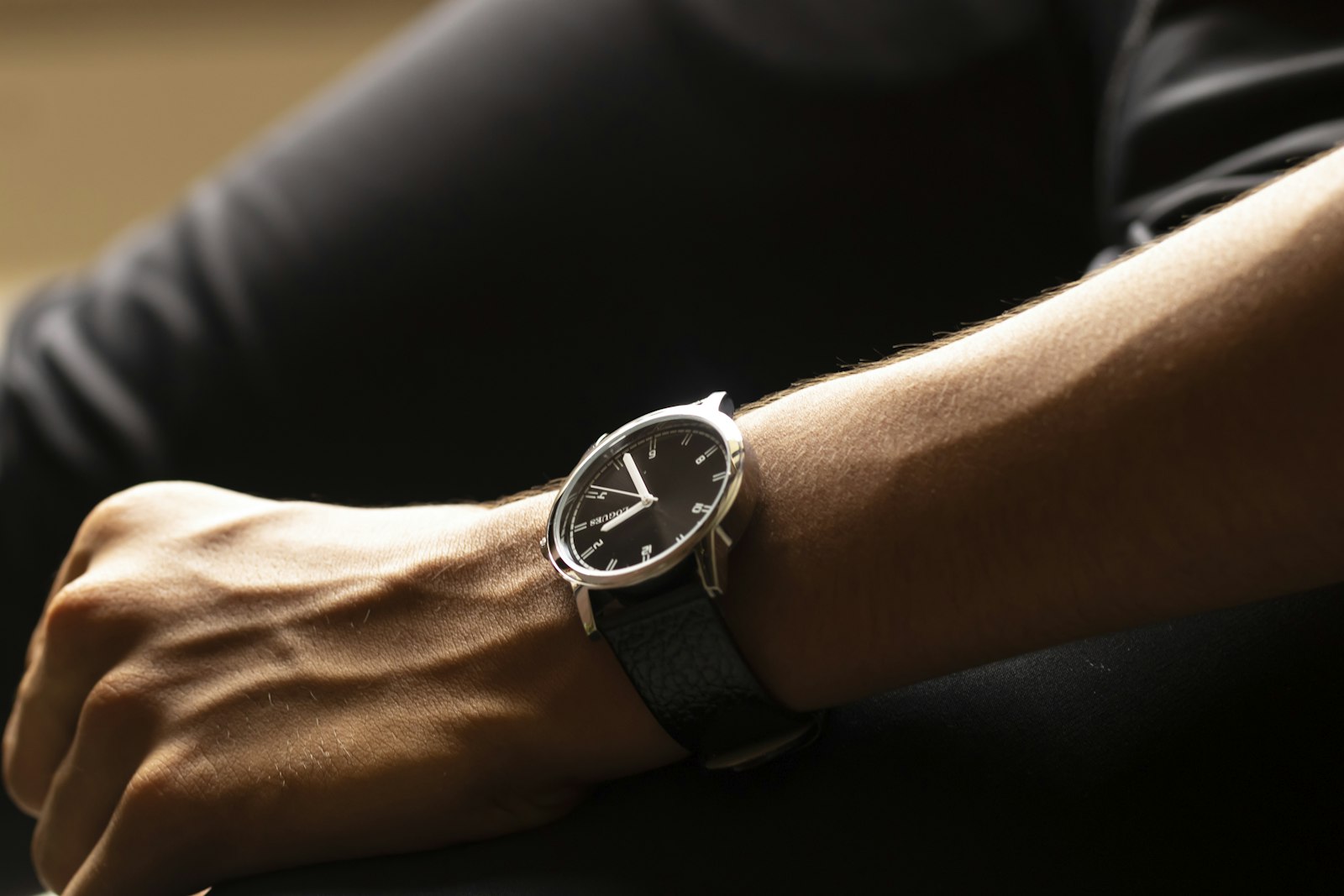
A watch strap is the part of the watch you actually touch. The case gets admired across a table; the strap is what sits against skin for sixteen hours a day, softening, darkening, taking on the particular creases of one wrist. Buy the wrong bracelet and you simply live with it. Buy the wrong leather strap and it looks, within a season, like a mistake you keep making. Getting it right is less about the label stitched inside than about understanding what leather actually does over time — and choosing a hide that does it gracefully.
Start with the tannage, not the finish
Most straps sold as “genuine leather” say nothing about how the hide was tanned, which is the single biggest factor in how it will age. Chrome-tanned leather is cheap, uniform and largely inert — it looks the same on day one and day nine hundred, which sounds convenient until you realise it will never develop the warmth that makes a good strap worth having. Vegetable-tanned leather, by contrast, is alive to its environment. It darkens with oil from skin, picks up a faint sheen at the places it flexes, and generally rewards a few years of ordinary wear with a character no amount of distressing can fake in a factory.
Calfskin remains the sensible default for an everyday strap: fine-grained, supple enough to break in within a fortnight, and available in a stitch and edge finish suited to almost any dial. Shell cordovan, made from the fibrous membrane of a horse’s hindquarters, is the connoisseur’s alternative — it resists creasing almost entirely and develops a glassy shine instead, but it is stiffer out of the box and unforgiving of a wrong size.
What to check before buying
- Lug width and taper. A strap that is technically the right width but tapers too aggressively will look thin and mean against a substantial case.
- Stitching. Hand stitching sits slightly proud and wears unevenly in a pleasing way; machine stitching is more uniform but less forgiving of long-term flex.
- Edge finish. A painted or burnished edge should be smooth to the touch with no leather fibres visible — a sign of care in construction rather than a quick trim.
One strap will not do everything
The temptation with a first serious watch is to find “the” strap and stop thinking about it. In practice, most collectors settle into a small rotation: a mid-brown calf strap for the working week, something darker or in alligator-effect embossing for evening, and perhaps a rugged tan or waxed option for weekends. The goal is not variety for its own sake but matching the strap’s formality to the day, the way a good smart-formal wardrobe pairs specific shoes with specific trousers rather than defaulting to one pair for everything.
Colour, too, deserves more thought than it usually gets. Mid-brown is the most versatile choice by some distance, reading correctly against navy, grey, tan and most metals. Black leather looks sharp with a dress watch but can feel severe on anything sportier. Cognac and chestnut tones are having a moment for good reason — they photograph beautifully and soften a case that might otherwise look clinical. For a more casual alternative that copes better with heat and water, our guide to sailcloth and canvas straps is worth reading.
“People replace a strap because it looks tired, not because it broke. The leather that lasts is the leather you chose well the first time,” says one Singapore-based strap maker who works largely by appointment out of a Tiong Bahru shopfront.
Fit, taper and buckle proportion
A strap that is correct in every material respect can still look wrong if its proportions fight the watch. As a rule, a strap should taper gently from the lug width down to the buckle — a dramatic taper reads sporty, a minimal one reads formal. The buckle itself should sit roughly in proportion to the case; an oversized pin buckle on a slim dress watch draws the eye for the wrong reasons, in much the same way an ill-chosen accessory can undercut an otherwise good outfit. The same attention to proportion applies to what is on the feet, as our guide to everyday trainers, reconsidered shows.
Length matters more than most buyers assume, particularly for anyone whose wrist sits at the smaller end of standard sizing. A strap cut too long leaves excess leather flapping past the buckle; the fix is either a proper trim from a leathersmith or buying pre-sized where the option exists.
Caring for the leather so it improves rather than degrades
Leather straps fail for two reasons almost exclusively: water and neglect. Sweat and humidity — a near-constant in Singapore — will eventually dry leather out unless it is conditioned occasionally with a light, unscented balm. The habit worth building is simple: wipe the strap after a humid day, let it breathe rather than storing it wrist-side down in a drawer, and rotate straps if one is getting daily wear in the tropics. Anyone building a small collection of straps alongside a watch or two should treat the pairing the same way they think about caring for leather goods generally — little and often beats occasional deep treatment.
Replacing the strap on a spring bar is one of the few genuinely satisfying five-minute jobs in menswear. A quick-release mechanism makes it trivial; a traditional spring bar tool takes a little more patience but works on virtually anything. Either way, having two or three straps in rotation, on hand and ready to swap, changes how one dresses more than most people expect — it is often the strap, not the watch, that changes everything about how a piece reads day to day.
Matching strap to lug width, properly
Buying blind on lug width is the most common mistake among first-time strap buyers. Manufacturers rarely make this obvious, and a strap one or two millimetres out will either gap visibly at the lugs or refuse to sit flush. Measuring the existing strap, or the distance between the lugs directly with callipers, takes thirty seconds and avoids returning three parcels. For anyone unfamiliar with how the numbers translate to visual proportion, it is worth spending time with a proper primer on watch straps and lug width before ordering anything expensive.
The final word
A leather strap is not an accessory in the decorative sense — it is structural to how a watch is read at a glance, and it is the one component of the whole assembly that a wearer can change without tools, expense or ceremony. Choose tannage over trend, fit over flourish, and expect to build a small rotation rather than a single perfect answer. For more on dressing with intention across the wardrobe, see our Style & Watches section, where strap, suit and shoe choices are treated as one continuous decision rather than three separate ones.
Daniel has spent fifteen years arguing that the best watch is the one you never take off.