
The Best Everyday Textile and NATO Straps
Leather curls in the humidity; a good textile strap does not. Here is how to choose, wear and rotate NATO and tropic-style straps for the tropics.
 By Daniel Koh
31 August 2026 · 6 min read
By Daniel Koh
31 August 2026 · 6 min read
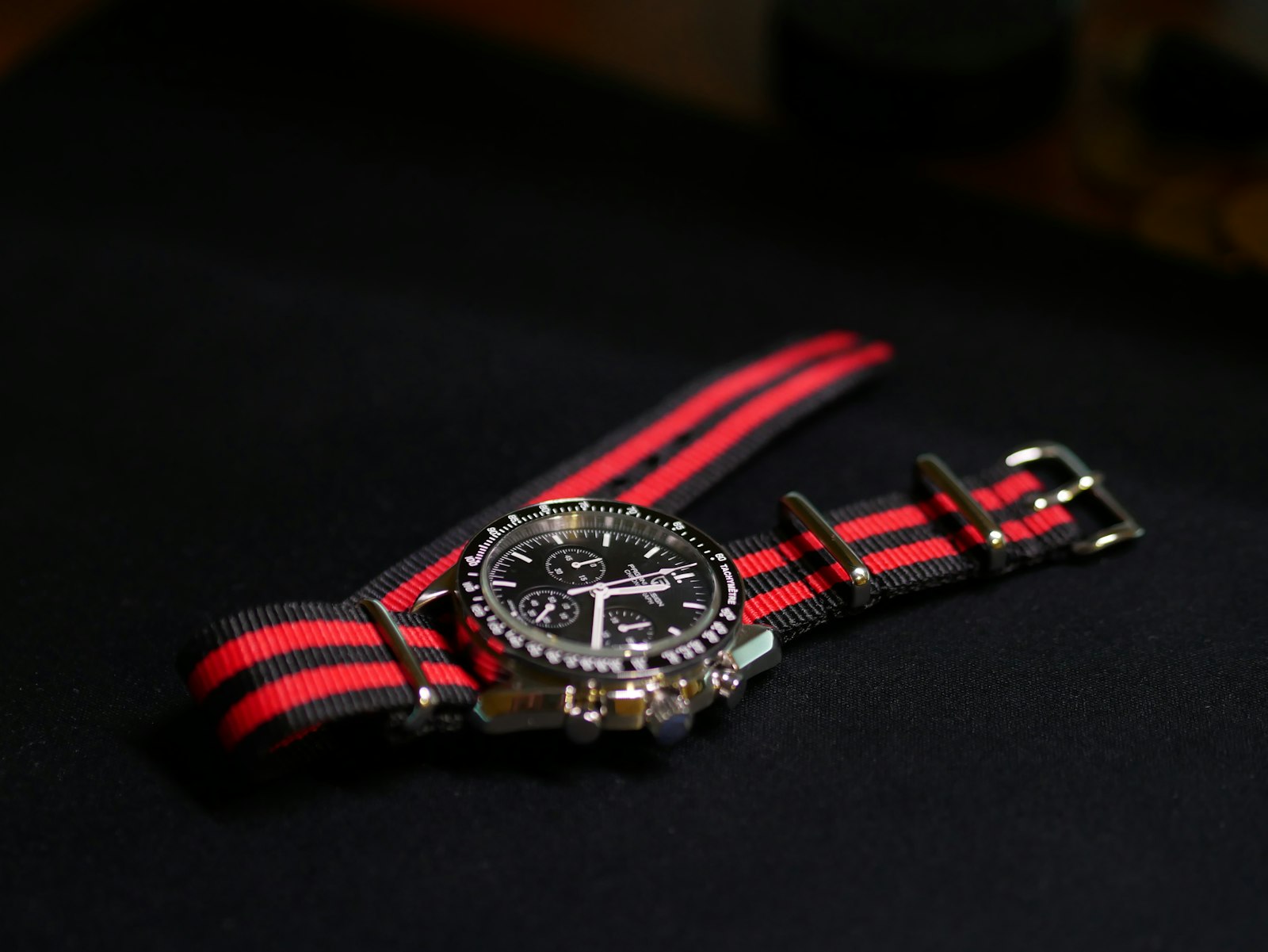
Singapore does not forgive a leather watch strap. By eleven in the morning, humidity has worked its way into the calfskin, the lining has begun to smell faintly of the wearer, and by the second week the edges have started to curl. This is why, quietly and without much fanfare, the textile strap has become the default in a certain kind of Singapore wardrobe — not as a downgrade from leather, but as the more sensible choice for a climate that treats natural materials unkindly. A good NATO or tropic-style strap dries in minutes, shrugs off a sudden downpour at the void deck, and looks, if anything, more purposeful with age.
Why a Textile Strap Earns Its Place in the Tropics
The case for a textile strap is not aesthetic first; it is practical. A woven nylon or a moulded rubber strap does not absorb sweat the way leather does, which means no clamminess by mid-afternoon and no lingering odour by the end of the week. It also does not need conditioning oils, cedar blocks, or the faint anxiety of leaving a good strap in a humid drawer for a fortnight. For a watch that is worn daily — through a run to the hawker centre, a swim at the condo pool, a work call in an air-conditioned office — a strap that can be rinsed under a tap and left to dry on a towel rail is simply the more rational choice. It is worth noting, too, that a well-made textile strap now costs a fraction of what an equivalent leather one does, freeing up a wardrobe budget for the watch itself, or for a second strap in a different colourway. Those who find buckles and holes a nuisance may also want to explore the softer, stretchier options in our guide to everyday elastic and ribbon straps.
The Anatomy of a Proper NATO
The original NATO — sometimes called a G10 — was designed with a single length of woven nylon threaded beneath the case, rather than two separate straps attached to spring bars. The point of this was redundancy: if one spring bar failed, the watch stayed on the wrist, held by the strap itself rather than by hardware. That single-pass construction is still the detail worth checking when buying one. A lesser strap will use flimsy, shiny nylon that frays at the cut edge within a season; a proper one uses a tightly woven grosgrain that holds its shape, with a stainless or brushed buckle and enough keepers to stop the tail flapping. The extra length behind the wrist is a feature, not an oversight — it is there so the strap survives a size change or a thicker wrist without needing replacement. Those who prefer the extra length kept away from the wrist may want to consider a different style altogether, covered in our guide to everyday bund and cuff straps.
Beyond Nylon: Tropic Rubber, Perlon and FKM Waffle
Nylon is the familiar option, but it is not the only — or always the best — one for this climate. A vulcanised rubber “tropic” strap, styled after the dive straps of the 1960s, is closer to waterproof than water-resistant, and its perforated pattern lets air circulate against the skin, which matters more than people expect after a humid commute. Perlon, a finer woven mesh strap with no fixed holes, adjusts infinitely and sits flatter under a shirt cuff, making it a better match for a dressier watch than a chunky NATO would be. More recently, FKM rubber straps with a waffle or honeycomb texture have become popular precisely because they solve the one real complaint about rubber — that it can feel airless against the skin in the heat. Owning one of each is not excessive; it is simply matching the strap to the day. For dressier occasions, when a textile strap feels too casual, our guide to the best alligator and croc straps offers the more formal alternative.
A Quick Way to Choose
- Office and smart-casual days: perlon or a fine ballistic nylon in navy or grey.
- Weekends, sport and travel: a tropic rubber or FKM waffle strap.
- Anything worn near a pool or the sea: rubber, always.
Matching Strap to Watch
The strap should read as though it was designed for the case, even when it was bought separately. As a rule, a slim dress watch with polished lugs looks wrong in a thick, sporty NATO — the proportions fight each other. A field or dive watch, by contrast, can carry a bolder stripe or a rubber weave without looking costume-like. Colour matters more than most people admit: a navy or bottle-green strap tends to flatter a wider range of dial colours than black does, and a strap in the same tone as the dial’s accent colour (a red seconds hand, say, matched to a burgundy stripe) is the kind of small, considered detail that separates a watch that is worn with intent from one that is simply worn. Anyone building a rotation of straps might also read our guide to watch straps and lug width before buying, since a strap that is even a millimetre too wide will never sit flush against the case.
Care and Rotation
Textile straps are low-maintenance, not maintenance-free. Rinse under the tap after a swim or a particularly sweaty day, work a little mild soap through the weave if it starts to look grey, and let it air dry flat rather than wringing it. A NATO stretches slightly with wear, which is normal; if it starts to feel loose at the usual hole, that is simply a sign it has broken in, not that it needs replacing. Most collectors we know keep three or four straps in rotation and swap them the way one might swap a tie — matched to the day’s plans rather than worn on autopilot. For anyone weighing a first textile strap against the leather they already own, our piece on how a strap changes everything about how a watch wears is worth reading first, as is a broader look at the best everyday leather straps for the days a slightly dressier hand is wanted.
“I own four watches and eleven straps,” one Singapore-based collector told us. “The straps do more of the work than people think.”
None of this requires an extravagant collection or a particular brand loyalty — the appeal of the textile strap is precisely that it is unpretentious. It solves a real, daily problem in a way that leather, for all its charm, simply cannot in this climate, and it does so at a price that makes experimentation easy rather than fraught. Start with one good navy NATO and one rubber tropic strap; most watches in a considered Style & Watches wardrobe will not need much more than that to feel dressed for whatever the day brings, whether that is a boardroom, a beach, or the unpredictable weather in between that defines life here for most of the year.
Daniel has spent fifteen years arguing that the best watch is the one you never take off.


