The Best Everyday Elastic and Ribbon Straps
Elastic and ribbon straps have quietly become the most comfortable way to wear a watch daily. Here is how to choose one that looks as good as it feels.
 By Daniel Koh
31 August 2026 · 6 min read
By Daniel Koh
31 August 2026 · 6 min read
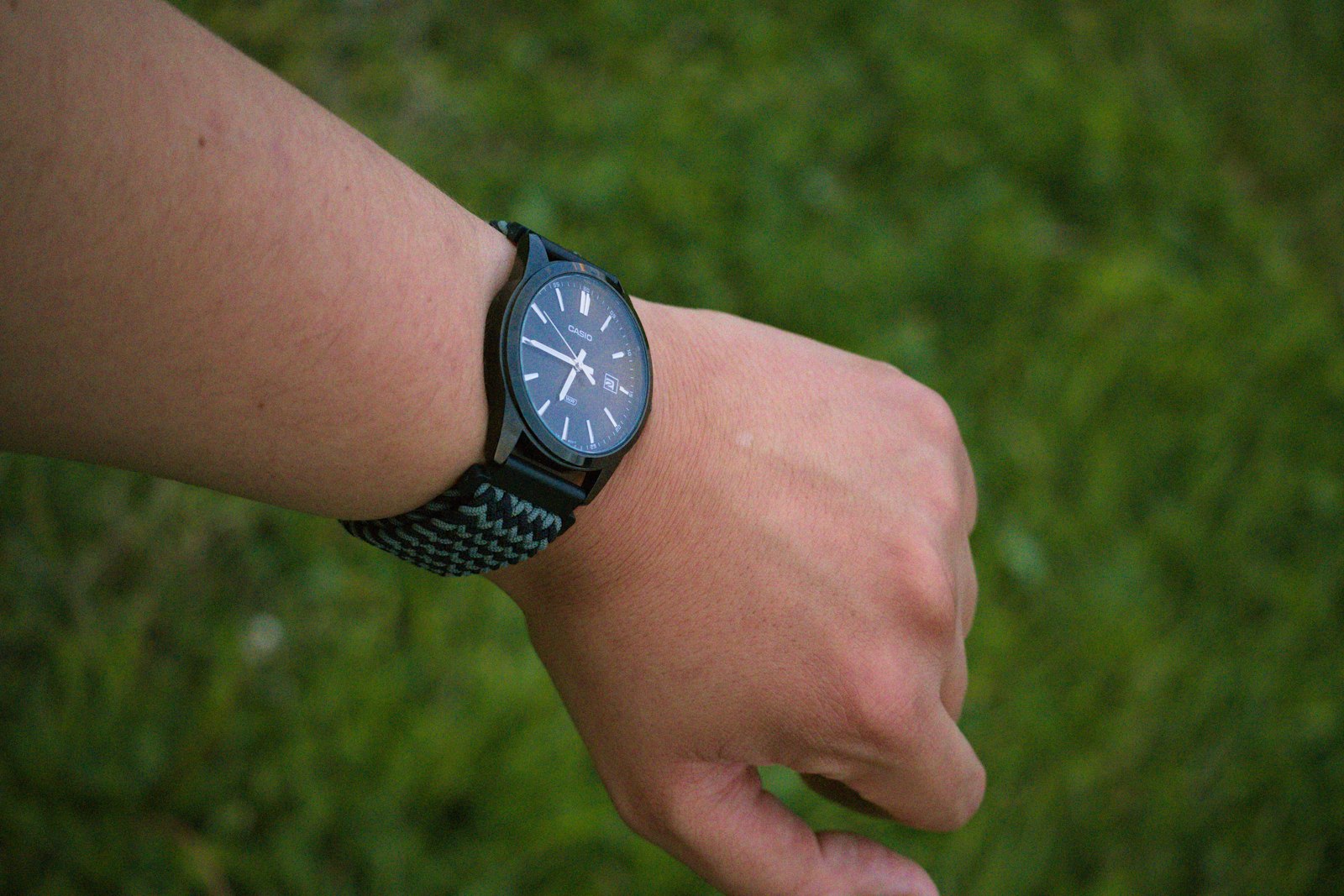
There is a particular kind of watch strap that never announces itself. It sits close to the wrist, moves with the arm rather than against it, and by the second week you have largely forgotten it is there. This is the quiet appeal of the elastic and ribbon strap — a category that has spent years on the margins of watch culture, worn mostly by people who had discovered it by accident, and is only now being taken seriously by the sort of collector who has already worked through leather and rubber and found both wanting for daily wear in Singapore’s climate.
What makes elastic and ribbon different
A ribbon strap, in its classic French form, is woven from a single continuous elastic thread on narrow looms, which gives it a slight give without any visible stretch mechanism. A true elastic strap, by contrast, uses a woven or braided elastic core threaded through a fabric sleeve, closer in construction to a shoelace than a textile band. Both differ meaningfully from the perlon straps that preceded them in popularity — perlon has stretch built into its weave pattern, whereas ribbon and elastic straps have stretch built into the material itself, which means they hold their shape and colour for longer under humidity and sweat.
The practical upshot, for anyone wearing a watch through a Singapore afternoon, is a strap that never needs adjusting after the first wear. There is no buckle to reposition as the wrist swells slightly in the heat; the strap simply flexes with it. This is not a small thing. Anyone who has tightened a leather strap at 9am only to loosen it by 3pm understands why elastic has found such a devoted following among people who wear a watch every day rather than for occasions.
Where the category came from
Ribbon straps trace their popularity to French sailors and, later, French watch collectors who wanted something that would survive being submerged repeatedly without the maintenance leather demands. The technique — weaving elastic thread on narrow ribbon looms originally built for trouser braces and military webbing — is decades old, but it stayed a niche pursuit until the broader menswear world rediscovered workwear and military surplus as style references. What began as a practical solution for people who genuinely needed their watch on their wrist in the water has since become a considered choice for anyone who simply prefers comfort to convention, regardless of whether they ever go near the sea.
Choosing the weave
Weave density matters more than most buyers realise. A loosely woven ribbon strap will feel airy and cool against the skin but tends to show wear faster, particularly at the point where it passes through the lugs. A tightly woven strap costs more to produce and looks it — the pattern reads as a single considered stripe rather than a scattering of individual threads. For daily wear, a mid-density weave in a solid or two-tone colourway tends to age most gracefully, hiding the inevitable fading that comes from repeated exposure to sun and skin oils.
A short list of details worth checking before buying
- Whether the strap is genuinely elasticated or simply a stretch-look fabric with no real give
- Stitching at the strap ends, which is where most failures begin
- Buckle-free or single-pin construction — fewer moving parts generally means longer life in humidity
- Colour saturation, since darker navy and forest tones resist visible fading better than pale grey or tan
Pairing with the right watch
Elastic and ribbon straps read casually almost by definition, which makes them a natural match for the kind of everyday watch discussed in our guide to field watches for every day — something with a matte dial and a case under 40mm that is not trying to make a statement. They work less well on dress watches with more formal proportions, where the visual weight of a woven strap can fight against a slim, polished case. A steel sports watch sits somewhere in the middle, and here the strap becomes a genuine style choice: a navy-and-white ribbon strap on a diver reads holiday-ready in a way that a bracelet never quite manages.
There is also a practical case for owning two or three in rotation. Because these straps are inexpensive relative to leather or metal, most collectors keep a small set — one in a neutral navy or grey for the office, one in a brighter colourway for the weekend, and perhaps one striped or regimental pattern borrowed from the world of ribbon belts. Swapping takes under a minute with most quick-release spring bars, and the difference in feel between a hot Tuesday commute and a Saturday at the coast is considerable.
Living with one day to day
Care is minimal but not nonexistent. Elastic straps should be rinsed under fresh water after exposure to seawater or heavy sweat and allowed to air dry rather than wrung out, which can distort the weave. Most will last a year or two of daily wear before the elastic begins to lose its snap, at which point replacement is straightforward and cheap enough that it barely registers as an expense. This disposability is, in its own way, part of the appeal — a strap you are not precious about is a strap you actually wear, rather than one saved for special occasions and left in a drawer.
A good ribbon strap should disappear on the wrist within a day of wearing it. If you are still thinking about it by Wednesday, it is the wrong one.
For anyone assembling a considered rotation of everyday straps rather than a single hero piece, elastic and ribbon deserve a place alongside the leather and textile options already covered in our wider style and watches coverage. They are unglamorous in the way that the best daily tools tend to be — reliable, comfortable, and quietly correct far more often than they are wrong.
The strongest argument for keeping one in rotation, though, has less to do with any of the above and more to do with how differently a watch sits on the wrist once you stop noticing it. Most strap decisions are made for how they look in a photograph on a table. Elastic and ribbon straps are made for how they feel at hour eleven of a long, humid day, which is ultimately the only review that matters for something worn against skin from morning until night.
Daniel has spent fifteen years arguing that the best watch is the one you never take off.