The Best Everyday Alligator and Croc Straps
Alligator and croc straps reward patience and a discerning eye. Here is how to choose one that still looks considered on the wrist after years of daily wear.
 By Daniel Koh
1 September 2026 · 6 min read
By Daniel Koh
1 September 2026 · 6 min read
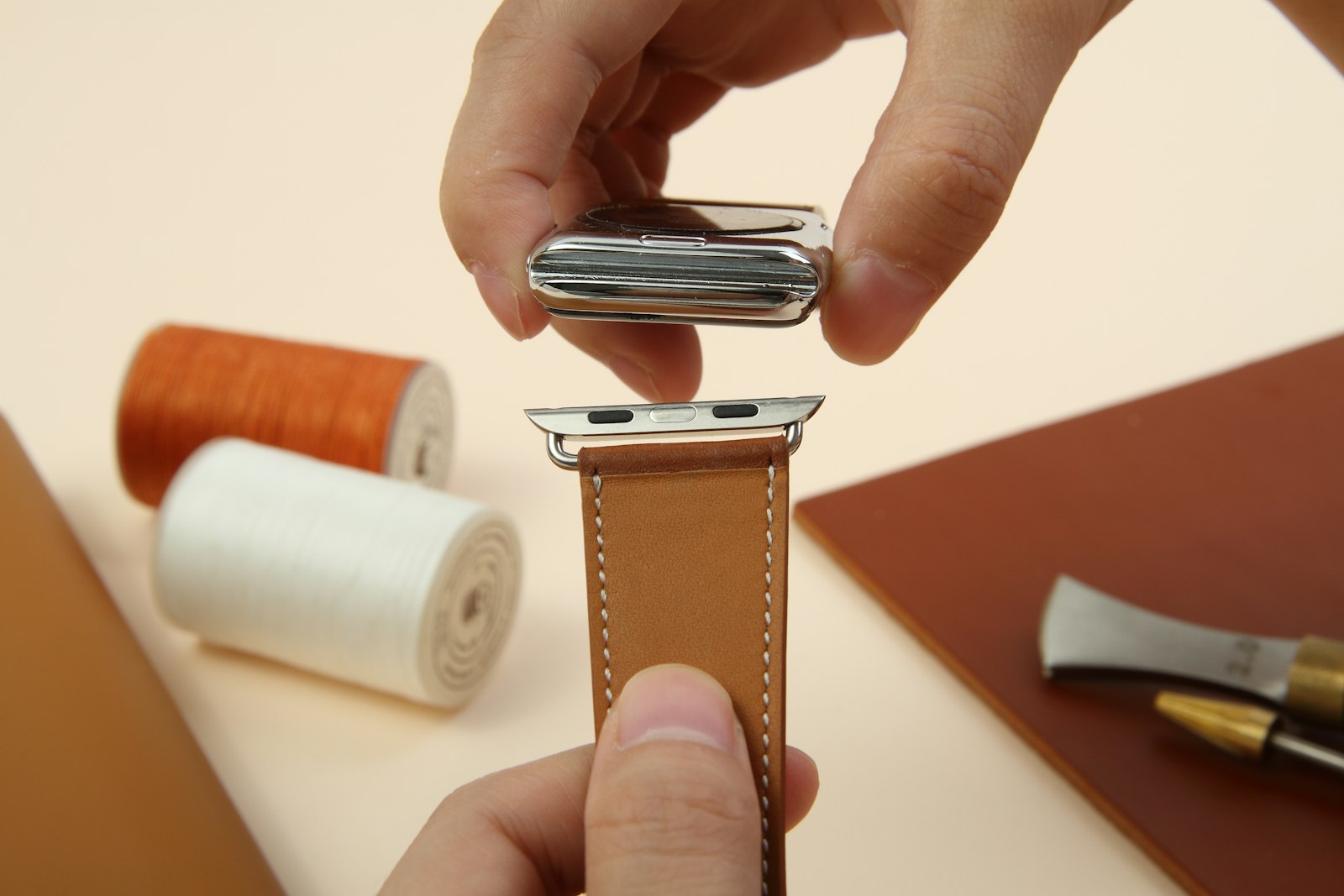
There is a particular pleasure in the first week with a good exotic strap — the faint resistance of new leather against the buckle, the way the scale pattern catches light differently at the wrist than it did on the counter. Alligator and crocodile straps are among the few accessories in a man’s wardrobe that improve with attention rather than simply wearing out, and for that reason they reward buying well the first time. This is not a piece about status leather. It is about choosing a strap that will still look considered in five years, long after the novelty of “exotic” has worn off.
Alligator versus Crocodile: What the Difference Actually Is
The two are often used interchangeably by shops that should know better, but the distinction matters to how a strap wears. Alligator skin tends to have a more symmetrical, almost architectural scale pattern, with a softer hand that breaks in gently. Crocodile skin, by contrast, carries small follicle marks — tiny dots visible within each scale — and a slightly stiffer, more assertive texture that some collectors prefer for its honesty; it looks like what it is. Neither is inherently superior. A dress watch on a fine dinner jacket suits the quieter symmetry of alligator; a field or dive watch worn with rolled sleeves can carry the more textural presence of crocodile without looking fussy.
What matters more than the species, in practice, is the cut. Straps taken from the flank of the animal, rather than the belly, show a coarser, less regular pattern and are usually the more affordable option — perfectly good for daily wear, if less refined than a belly-cut strap reserved for occasion pieces.
Reading a Good Skin Before You Buy
Hold the strap up to a window rather than under shop lighting. Even scale spacing, a consistent sheen and no visible glue lines at the edges are the marks of a well-finished piece. Cheaper straps are often stamped rather than genuinely scaled — a giveaway is a pattern that repeats too perfectly, since real skin is never quite uniform. Run a thumb across the surface: it should feel supple, not lacquered. A strap that feels like painted plastic usually is, whatever the tag claims.
Matte finishes have become the more sophisticated choice over the last decade, favoured by those who find high-gloss “glazed” alligator a little dated on anything other than a formal dress watch. A semi-matte finish, in particular, tends to age the most gracefully, hiding the inevitable scuffs of daily wear rather than showing every one under gallery lighting.
A Note on Colour
Chocolate brown and a deep, near-black navy remain the two colours that work with the widest range of dial and case combinations, but there is a case for cognac or tan on a summer-weight watch — something that reads as considered rather than merely conservative. Avoid anything overly glossy in black; it tends to look more costume than considered against a steel case.
Fit, Taper and the Buckle
A strap that tapers gently from lug to buckle — say from twenty millimetres down to sixteen — sits more comfortably against the wrist bone than one that stays a uniform width throughout. This detail is easy to overlook in a shop but becomes obvious after eight hours at a desk. Pair it with a buckle in a metal that matches the case, not simply whatever the strap arrived with; a mismatched buckle is one of the more common and most fixable style errors in a considered watch wardrobe. Readers building out a full rotation might also look at suede and nubuck straps for softer, more casual pairings, or at everyday leather watch straps as a less precious daily alternative that still photographs well.
Caring for an Exotic Strap
Exotic leather is more forgiving than its reputation suggests, provided it is kept away from direct sun and excessive moisture. A light leather conditioner applied sparingly every few months keeps the scales from drying and cracking at the flex points nearest the buckle, which is invariably where a strap fails first. Rotating between two straps — one for humid Singapore afternoons, one for air-conditioned evenings — extends the life of both considerably, since exotic leather needs time to fully dry out between wears in this climate more than most.
A good strap should disappear on the wrist within a week and reappear only when someone else notices it, one Singapore collector told us. That is really the whole test.
Avoid swimming or heavy exercise in an exotic strap regardless of any water-resistance rating on the case itself — the leather, not the movement, is almost always the weak point. If in doubt, a rubber or NATO alternative earns its place in the rotation for exactly these moments, freeing the alligator for the occasions it was bought for.
Storage matters more than most owners realise. A strap left coiled tightly in a drawer will crease at the fold and never quite recover its line, while one draped flat or over a soft roll retains its shape for years. Silica gel packets tucked into a watch box do useful work in Singapore’s humidity, drawing moisture away from the leather between wears and slowing the mould that can otherwise bloom on exotic skins left in an unventilated case overnight.
Where a Strap Goes Wrong
The most common mistake is not choosing a poor skin but choosing the wrong size for the case. A wide, heavy strap on a slender vintage-proportioned watch looks apologetic rather than considered, just as a delicate strap on a large modern sports case looks undersized and slightly comic. Measuring the lug width precisely, rather than estimating, avoids the single most frequent regret buyers report after an exotic strap purchase. The second mistake is buying for the photograph rather than the hand: a strap that looks striking under studio lighting can feel stiff and unyielding after three hours of typing, so trying one on and moving the wrist through its normal range before committing is worth the extra ten minutes in the shop.
Building the Case for Owning One
A well-chosen alligator or crocodile strap is not an extravagance so much as a quiet upgrade — the kind of detail that a tailor or a jeweller notices before anyone else does. It changes the character of a watch more dramatically, and more affordably, than any other single purchase, turning a sports watch formal enough for a boardroom or softening a dress watch enough to wear with a linen shirt on a Saturday. For anyone assembling a considered collection rather than simply accumulating watches, understanding how much a strap changes a watch is close to the first lesson worth learning, and it costs a fraction of the case itself to put into practice. Explore more from Style & Watches for further reading on building a wardrobe of considered accessories that age well rather than simply age.
Daniel has spent fifteen years arguing that the best watch is the one you never take off.