The Best Everyday Equation-of-Time Watches
The equation of time is horology's quietest complication — subtle, scientific, and oddly poetic. Here's how to wear one without it feeling like a museum piece.
 By Daniel Koh
31 August 2026 · 6 min read
By Daniel Koh
31 August 2026 · 6 min read

Of all the complications watchmakers have devoted themselves to over the centuries, the equation of time is arguably the most philosophical. It does not chime, it does not chronograph a race, and it will not impress anyone who cannot already explain what it does. What it shows, instead, is the small but persistent gap between the time your watch tells and the time the sun itself keeps — a gap that swings by as much as sixteen minutes across the year, owing to the earth’s elliptical orbit and the tilt of its axis. For a certain kind of owner, that quiet scientific truth, sitting on the wrist every day, is worth more than almost any other complication money can buy.
What the equation of time actually shows
Mean solar time — the time your watch, phone, and every clock around you keeps — is a human convenience, an average designed to make days consistently 24 hours long. True solar time, the time it would take to track the sun’s actual position directly overhead, varies constantly through the year because the earth’s orbit is not a perfect circle and its axis is tilted relative to that orbit. The result is that on some days the sun runs ahead of your watch, on others behind, and an equation-of-time complication simply displays that daily difference, usually via a small subdial or a sculpted blued hand that points to a number of minutes, plus or minus.
It sounds abstract until you actually live with one. The needle creeps almost imperceptibly day to day, reaches its extremes around mid-February and early November, and crosses zero four times a year — moments some owners genuinely mark on a calendar. It is, in effect, a tiny astronomical observatory worn on the wrist, and understanding what it is doing deepens rather than diminishes its appeal. Those curious about the astronomy and mechanics behind that creeping needle will find a fuller account in understanding the equation-of-time watch.
Reading the complication day to day
For daily wear, the practical question is legibility. Many equation-of-time watches bury the complication in a busy dial alongside a perpetual calendar or moonphase, which can make the actual reading — a needle against a small scale — genuinely hard to parse at a glance. The most successful everyday examples isolate the complication cleanly, often with a dedicated blued or gilt hand set apart from the main time-telling hands, so that even a quick glance distinguishes “the time” from “the equation.”
Readers who already enjoy calendar complications will find plenty of crossover appeal here — our guide to everyday perpetual calendar watches covers a related philosophy of complication as quiet daily ritual rather than spectacle, and the same instinct applies to choosing an equation-of-time piece for actual rotation rather than display-case ownership.
What to look for in an everyday piece
- A dedicated, clearly differentiated hand or subdial for the equation reading, separate from the main hour markers.
- A case size and weight comparable to your other daily watches — complications add thickness, and some pieces become unwieldy.
- Water resistance sufficient for genuine daily conditions; many equation-of-time pieces skew towards dress-watch specifications.
- A movement with a realistic, published accuracy tolerance, since the complication’s usefulness depends on the underlying timekeeping being sound.
Movements worth the wrist
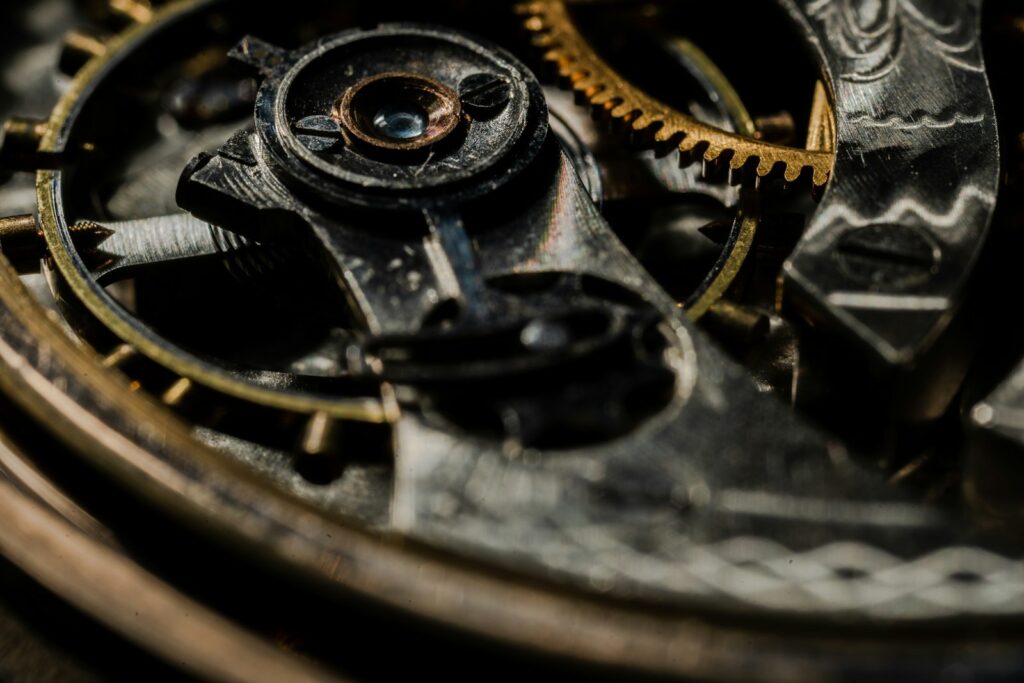
The equation of time is mechanically demanding because it requires a cam shaped precisely to the sun’s actual annual variation, cut to extremely fine tolerances and typically rotating once per year — meaning any manufacturing imprecision compounds slowly and visibly over months rather than being caught immediately. This is part of why the complication carries genuine horological weight even in a relatively simple three-hand format: the difficulty is entirely in the invisible cam, not in visible dial flourish.
For anyone comparing movement quality more broadly before committing to a piece with this level of mechanical ambition, it is worth reading understanding watch regulation and accuracy, which explains how a movement is tuned and what realistic daily variance actually looks like — knowledge that matters more, not less, once a watch is also tracking something as precise as solar deviation.
“It’s the complication I explain the least and think about the most,” one long-time collector said of wearing an equation-of-time watch daily for several years, “because nobody else ever notices, and that’s rather the point.”
Pairing complications sensibly
A pure equation-of-time watch, with no other complications, tends to be the most legible and the most genuinely wearable daily, since the dial stays relatively uncluttered. Combined with a moonphase — a natural pairing, since both track astronomical cycles — the dial gains poetry but loses some clarity, and is worth trying on in person before committing, since the density of information varies enormously between manufacturers. Our piece on everyday moonphase watches covers this adjacent complication in more depth and is a useful comparison for anyone deciding between the two, or considering a combined piece.
Power reserve is another practical consideration many owners overlook. Because an equation-of-time cam is often geared to run continuously and correctly even when the watch is off the wrist, an insufficient power reserve means resetting a genuinely fiddly complication more often than should be necessary. Readers should consult our guide to everyday power reserve watches for a sense of what constitutes a realistic reserve for a watch that will spend nights in a valet tray rather than on a wrist.
Living with the complication daily
The genuine test of an everyday equation-of-time watch is whether its owner still checks the reading months after the novelty has worn off, and in practice this comes down to how naturally the ritual folds into an existing routine. Some owners glance at it each morning alongside the date; others check it only around the four annual crossing points, when the needle briefly touches zero and mean time and solar time agree. Either habit is legitimate, and neither requires any particular expertise — the complication rewards curiosity, not study, which is part of why it suits daily wear so much better than its reputation as a “grand complication” might suggest.
Servicing is worth planning for honestly. A cam-driven complication of this precision benefits from a watchmaker experienced specifically with annual mechanisms, since a rushed or unfamiliar service can distort the cam’s calibration in ways that are not obvious until the readings begin drifting months later. Building a relationship with a trusted watchmaker, and servicing on a realistic schedule rather than deferring indefinitely, protects an investment that is, in the end, mechanically quite delicate beneath its understated dial.
A complication for the patient
An equation-of-time watch rewards a specific kind of owner: one who finds satisfaction in a fact rather than a spectacle, who is happy to explain the complication to precisely nobody, and who values a watch that quietly connects the abstraction of clock time back to the physical reality of the sun overhead. It will never be the loudest piece in a Style & Watches collection, and that reticence is exactly why it belongs in daily rotation rather than a safe — a complication worth wearing is, after all, one you actually wear.
Daniel has spent fifteen years arguing that the best watch is the one you never take off.