The Best Everyday Moonphase Watches
A moonphase complication does not have to be a special-occasion watch. Here is how to choose one restrained enough to earn a permanent spot in daily rotation.
 By Daniel Koh
31 August 2026 · 6 min read
By Daniel Koh
31 August 2026 · 6 min read
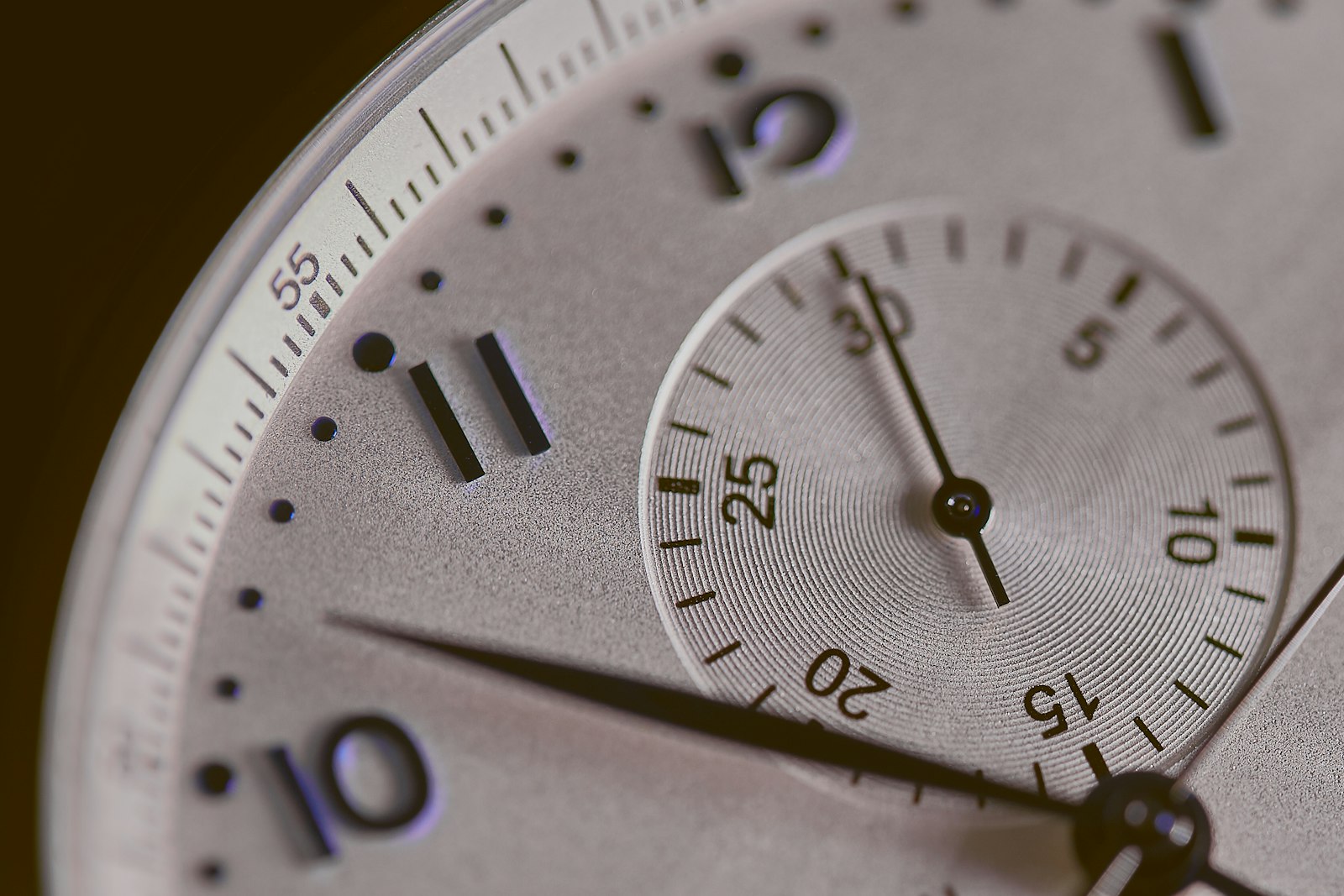
The moonphase has long carried a certain reputation: beautiful, poetic, and largely reserved for evenings when a watch is meant to be noticed rather than simply worn. That reputation is not entirely fair. A well-proportioned moonphase, chosen with the same discipline applied to any other daily watch, can be every bit as wearable to the office or on a weekend errand as a simple three-hand piece. The complication itself is not the obstacle — case size, dial busyness, and price positioning usually are.
Why the moonphase earns its precious reputation
Historically, moonphase watches leaned dressy because the complication was expensive to produce well and was often paired with other high complications — perpetual calendars, minute repeaters — that pushed the whole watch firmly into occasion territory. That association has stuck, even as manufacturers have since developed simpler, more affordable moonphase modules that can sit comfortably within an otherwise ordinary watch. The complication itself, mechanically, is not especially difficult to wear daily; it just needs to be presented with restraint.
What makes a moonphase suitable for daily wear
The single biggest factor is dial legibility. A moonphase aperture, by nature, adds visual information to a dial that already carries hour and minute hands, sometimes a date window, and often a sub-dial for running seconds. When all of this competes for space, the watch becomes fussy and slow to read at a glance — a real problem for a piece meant to be checked dozens of times a day. The best everyday moonphase watches solve this with a generous dial, a restrained colour palette, and a moon aperture positioned so it reads as a quiet detail rather than the dial’s main event.
Case size matters just as much. A moonphase complication needs enough real estate to render the moon disc clearly, which has historically pushed cases larger than is ideal for smaller wrists. The market has responded well here in recent years, with several manufacturers now offering moonphase pieces in the 38 to 40 millimetre range that manage the complication without feeling oversized.
What to check before buying
- Dial layout — does the moonphase sit comfortably within the design, or does it crowd the hour markers?
- Case diameter relative to wrist size, ideally tried on rather than judged from photographs
- Accuracy of the moonphase mechanism — most modules require a manual correction roughly every two to three years, some considerably less often
- Strap versatility — a moonphase on a metal bracelet reads more casual and daily-appropriate than one on formal leather
Colour and dial finish set the tone
A moonphase rendered against a deep navy or midnight-blue sky disc, dotted with stars, is unmistakably romantic and reads as an evening piece almost by default. For daily wear, a more neutral treatment — a simple grey, silver, or matte black moon disc set within a clean dial — shifts the whole watch toward something far more office-appropriate, without losing the charm of the complication itself. This is really the crux of the buying decision: the same mechanical function, presented two different ways, can produce watches with entirely different personalities.
A good moonphase should catch the eye on the second look, not the first. That restraint is what separates an everyday piece from an occasion watch.
Pairing a moonphase with the rest of a working wardrobe
Because a moonphase already carries a degree of visual interest, it pairs best with an otherwise understated wardrobe — plain shirting, unfussy tailoring, a simple leather strap or steel bracelet. Overdressing around a moonphase, with heavily patterned shirts or statement accessories elsewhere, tends to make the whole look feel busy rather than considered. The watch should be the one point of quiet detail, not one of several competing for attention.
For anyone weighing a moonphase against other complications for daily wear, it is worth comparing the mechanics and the wearing experience against a few alternatives. A GMT or chronograph tends to read more overtly “technical” and sporty, while understanding watch complications and value more broadly is a useful exercise before settling on any single complication, since the moonphase sits at a genuinely different price and craft tier depending on how it is executed. Those drawn specifically to the poetry of the complication may also enjoy the moonphase and other poetic complications, which looks at the tradition behind the astronomical watch functions more broadly.
Servicing and the long view
One detail buyers often overlook is that the moonphase module, however accurate, will eventually need correcting. Even the best mainstream modules drift by roughly one day every two to three years, since the true lunar cycle does not divide neatly into whole days. A small number of manufacturers have solved this with more precise gearing that stretches the correction interval out considerably, at a correspondingly higher price. For a piece worn daily, this is worth weighing seriously: a watch that needs regular fiddling with a correction pusher is a minor but real friction in daily use, and it is far better to know that going in than to discover it a year after purchase.
Buying with intent, not impulse
A moonphase is rarely an impulse purchase, and it should not be treated as one. Because the complication adds cost and, often, a degree of servicing complexity beyond a simple three-hander, it deserves the same deliberate approach applied to any serious watch purchase — trying the piece on the wrist, checking movement quality and servicing intervals, and being honest about whether it will genuinely get worn daily or end up reserved, ironically, for the very occasions its reputation suggests. Those thinking about a moonphase as part of a broader, considered rotation will find useful groundwork in how to build a watch collection with intent, which covers exactly this kind of decision-making before a purchase rather than after.
Done well, a moonphase is one of the more quietly satisfying complications to own — a small, private pleasure that only the wearer really notices, checked at odd moments throughout an otherwise ordinary day. For more on choosing pieces built for daily rotation rather than the display case, our Style & Watches section covers the complications, materials, and proportions worth understanding before any serious purchase.
Daniel has spent fifteen years arguing that the best watch is the one you never take off.