Understanding the Moonphase Complication
Understanding the moonphase watch, a romantic horological complication: how a moonphase works mechanically, why it endures, and how to choose one well.
 By Daniel Koh
1 September 2026 · 6 min read
By Daniel Koh
1 September 2026 · 6 min read
Among all the things a mechanical watch can be made to do, the moonphase is the least useful and among the most beloved. It tells you nothing you truly need to know, tracks a rhythm most of us have long stopped living by, and yet it endures on the dials of the finest watches precisely because it is so charmingly unnecessary. The moonphase is horology at its most poetic, a small mechanical poem about the sky, and understanding it deepens the pleasure of owning one.
What a moonphase does
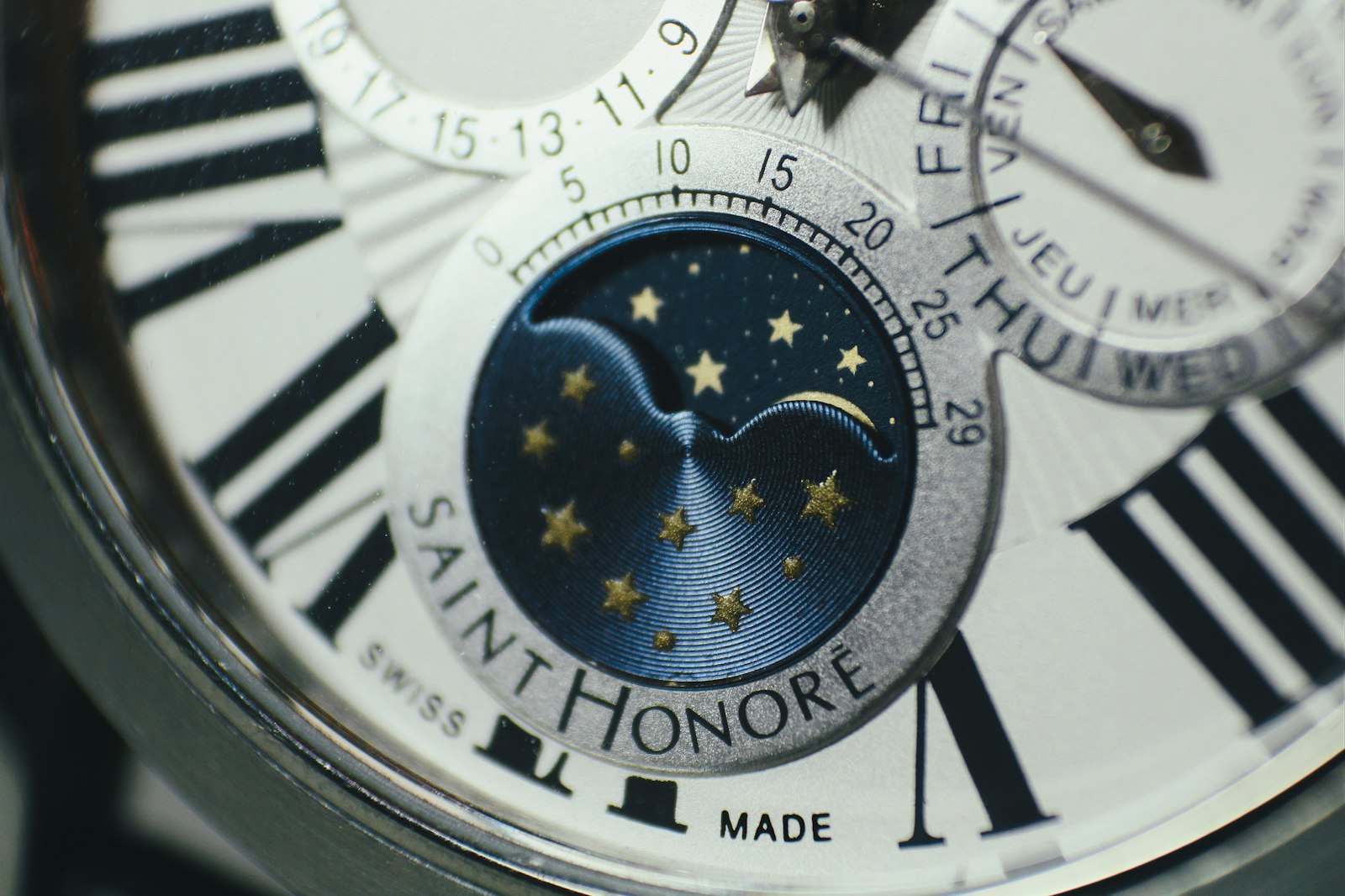
A moonphase complication displays the current phase of the moon, its slow monthly cycle from new to full and back again, usually through a little aperture cut into the dial. As the days pass, a painted or engraved moon drifts gradually across this window, waxing and waning in step, in theory, with the real moon overhead.
It belongs to the family of watch complications, the term horologists use for any function beyond simple timekeeping. Where the chronograph measures elapsed time and a date window tracks the calendar, the moonphase tracks the oldest clock of all, the one humanity read in the sky long before it built any of its own.
How it actually works
The mechanism, once you understand it, is beautifully simple. Behind the dial sits a disc, painted with two identical moons on a starry ground, so that one moon or the other shows through the aperture at any time. This disc is driven forward one step each day by a finger on the watch’s movement, and it is the number of teeth on the driving wheel that determines the accuracy.
The whole charm of the moonphase lies in a small mechanical fudge: the lunar cycle is not a neat number of days, so watchmakers approximate it, and the cleverness lies in how closely they manage to get.
A standard moonphase uses a disc of fifty-nine teeth, showing two moons over that cycle, which approximates the real lunar month well enough that the display drifts out of true by only a day every couple of years or so, requiring an occasional nudge to correct. The finest examples use a more complex gear train to track the moon so precisely that they would run for well over a century before needing adjustment, a feat of mechanical patience that watch lovers rightly prize.
Why it endures
In an age when a phone tells us the lunar phase instantly and exactly, the mechanical moonphase has no practical purpose whatsoever, and that is exactly the point. It is a survivor from a time when knowing the moon mattered, for tides, for planting, for finding one’s way home at night, and it carries that romance forward into the present. It shares that spirit with the wandering-hours watch, another complication valued more for its poetry than its practicality.
To wear a moonphase is to carry a small model of the heavens on your wrist, a reminder of a slower rhythm than the ticking second hand. It appeals to the same sensibility that values a watch not merely as an instrument but as an object of contemplation, the sensibility that draws people to a watch that never dates rather than to whatever is merely current.
Choosing a moonphase
The moonphase appears across every register of watchmaking, from the accessible to the astronomical, so there is one for almost any taste and budget. A few things to consider when choosing:
- The moon itself: some are simple golden discs on blue; the finest are exquisitely detailed, textured or even set with a real speck of meteorite, and the character of the little moon sets the character of the watch.
- Accuracy: a standard moonphase is charming and needs occasional correction; an astronomical one is a horological flex that will outlast you before it drifts.
- Context: a moonphase often arrives paired with other functions, a calendar, a date, so consider it as part of a dial’s whole composition.
Above all, a moonphase should be legible and balanced on the dial, the aperture placed so it enhances rather than clutters the design. A cluttered dial defeats the quiet poetry that is the whole reason to want one.
A small piece of the sky
The moonphase asks to be understood the way it asks to be worn, slowly and with a little wonder. It is a complication that does not save time or measure it, but simply marks the turning of the oldest wheel there is. For that reason it remains, after centuries, one of the most romantic things a watch can carry, and one of the most quietly satisfying to own. It is the sort of detail you might not mention to a stranger but would happily explain, at length, to anyone who asked.
Living with a moonphase
Owning a moonphase is a slightly different experience from owning a plainer watch, because it asks a small ongoing relationship of you. Unless you wear it constantly and keep it wound, the display will eventually run down and need resetting, a gentle ritual of consulting the actual sky, or a reliable source for the current phase, and nudging the little moon back into step. Far from being a chore, many owners find this one of the quiet pleasures of the complication, a monthly moment of looking up and reconnecting the watch to the thing it represents.
There is a knack worth knowing: the corrector for the moonphase, like other calendar functions, should not be adjusted during the hours around midnight when the movement’s own gears are engaged and shifting the display, as forcing it then can damage the mechanism. Consult the maker’s guidance, set it at a safe time of day, and the operation is simple and satisfying. It is the kind of small mechanical intimacy that draws people deeper into watches in the first place.
The moonphase also pairs beautifully with the other decorative arts of the dial, and a watch that carries one often carries fine finishing elsewhere too, the sort of hand-worked detail celebrated in guilloche dials. Together these small touches turn a mere instrument into an object of real craft and contemplation, which is exactly why a complication that tells you nothing you strictly need remains one of the most cherished things a watch can offer.
Learn how the little disc turns, correct it now and then, and enjoy the faint absurdity of a mechanical moon riding your wrist through the month. For more on the complications and quiet obsessions that make mechanical watches so endlessly interesting, the rest of our Style & Watches writing is full of them, from the practical to the purely beautiful.
Daniel has spent fifteen years arguing that the best watch is the one you never take off.