The Best Fabrics for a Shooting Jacket
Tweed, moleskin, waxed cotton: the fabrics that built the shooting jacket still make the best case for country tailoring worn well beyond the field.
 By Daniel Koh
31 August 2026 · 6 min read
By Daniel Koh
31 August 2026 · 6 min read
The shooting jacket was never designed for comfort in the way a modern soft-shell is. It was designed to survive brambles, rain, a long day of standing still in cold wind, and the recoil of a shotgun braced repeatedly against the shoulder. Every fabric choice in its construction traces back to one of those functional demands, which is precisely why the garment has aged so well as a piece of city tailoring — a cloth engineered to survive a shooting party in Scotland turns out to be exactly what a Singapore wardrobe needs for the handful of genuinely cold, wet days that international travel and air-conditioned offices still throw up.
Tweed: The Foundation Cloth
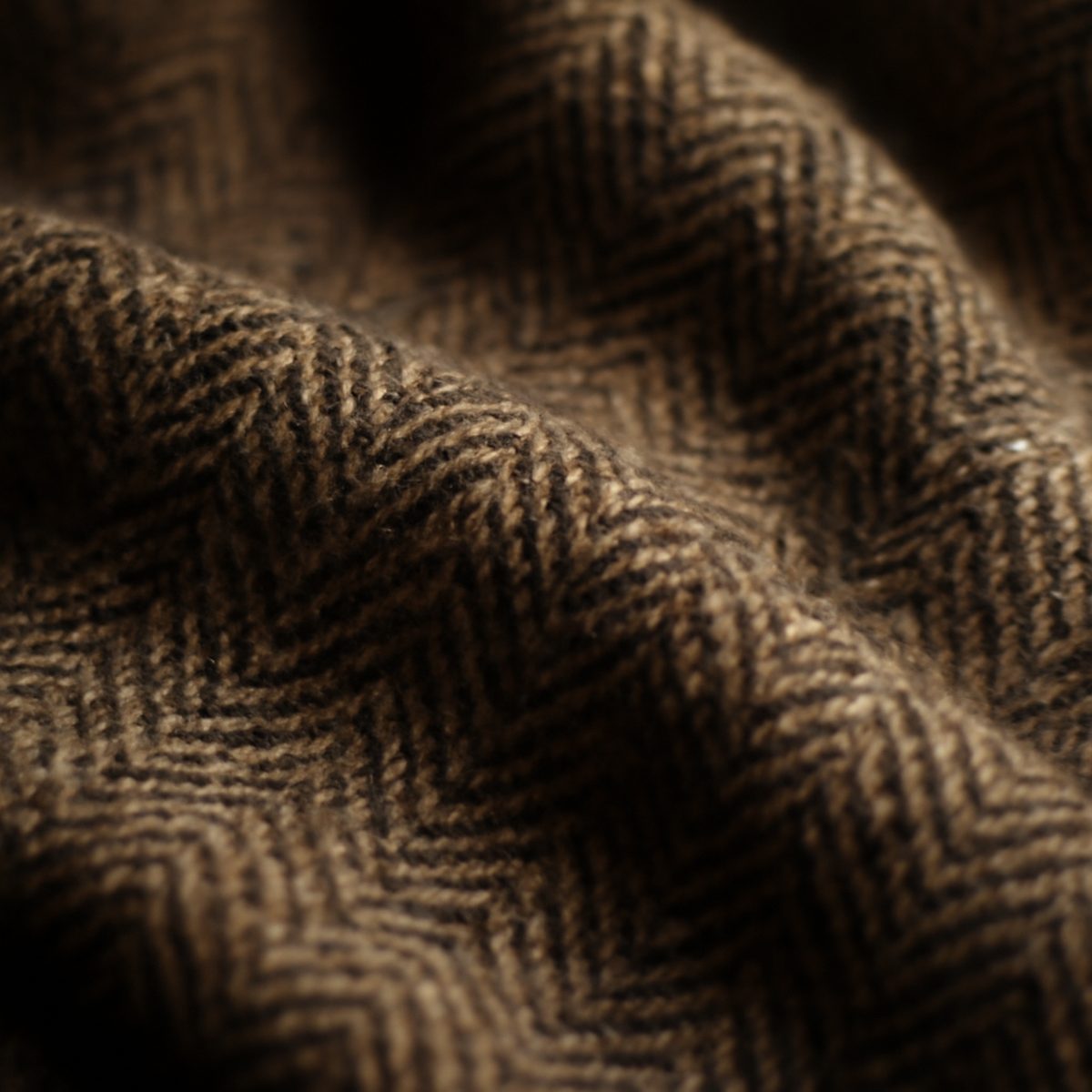
Tweed remains the default shooting jacket fabric for good reason. Its rough, slightly oiled wool fibres shed light rain rather than absorbing it, its density blocks wind far better than a smooth worsted of the same weight, and its texture hides the wear of a hard day outdoors in a way that a finer cloth cannot. Weights matter enormously here: a 13–15oz tweed is genuinely built for field use and reads as heavy for anything but the coldest city day, while an 11–12oz tweed splits the difference well, giving enough structure for a shooting jacket’s cut without becoming unwearable indoors. Herringbone and houndstooth are the two weaves seen most often, both chosen originally less for pattern than for the way a diagonal or broken weave disguises soil and scuffing.
Reading a tweed by district
- Donegal tweed — flecked, textured, historically the roughest and most hardwearing of the group.
- Harris tweed — hand-woven, dense, with a distinctive slightly oily hand that softens over years of wear.
- Estate tweeds — muted checks originally commissioned by individual country houses to identify staff and guests at a distance.
Moleskin: The Quieter Alternative
Moleskin cotton — brushed, dense, and almost suede-like to the touch — offers much of tweed’s durability with a fraction of its bulk and none of its pattern. It is the fabric of choice for anyone who wants the functional benefits of a field jacket without the country-house signalling that tweed inevitably carries. A moleskin shooting-style jacket in a mid-brown or olive reads as considered urban outerwear as easily as it reads as field kit, which makes it a genuinely versatile choice for a Singapore wardrobe that will use the jacket far more often in a city than in a field. Its belted, pleated cousin raises a similar set of questions, as our guide to fabrics for a Norfolk jacket explains. Formal daywear calls for a very different set of cloths, as our guide to the best fabrics for a morning coat explains.
Waxed Cotton and Weather Protection
Where genuine wet-weather performance is the priority, waxed cotton earns its place. The wax coating sheds water almost entirely while the cotton base remains breathable enough for a long day’s wear, and the fabric develops a soft, cracked patina with age that many wearers come to prefer over the pristine original finish. It is heavier and stiffer when new, softening only after months of use and repeated re-waxing — a maintenance ritual that suits anyone who enjoys the process of ageing a garment deliberately rather than buying it to look permanently new.
“A good tweed jacket is the one piece in my wardrobe that has genuinely improved with every year I’ve owned it. Nothing else ages quite like it.”
Construction Details That Affect the Cloth’s Performance
Fabric alone does not make a shooting jacket work; the construction around it either supports the cloth’s function or undermines it. A leather or suede shoulder patch, traditionally placed on the right shoulder to cushion the recoil of a shotgun stock, also happens to reinforce the area of heaviest wear on any jacket carried with a bag strap or worn through repeated arm movement — a detail worth retaining even on a jacket that will never see a shooting field. Bellows pockets, cut with an expandable pleat, were designed to carry cartridges and game but translate just as usefully into pockets that hold a phone, gloves or a folded map without distorting the jacket’s line. A generous action back, with a pleat across the shoulder blades, allows the freedom of movement a rigid cut cannot, and is worth checking for in any jacket regardless of whether the wearer will ever raise a gun.
Buttons and closures deserve equal attention. Horn or leather-covered buttons suit tweed and moleskin far better than shiny metal, which reads as too formal against a rough-textured cloth. A storm flap over the front closure, seen on most genuine field jackets, adds a further layer of wind protection precisely at the point — the chest, facing into weather — where it is needed most.
Choosing for a Singapore Wardrobe
For a wearer who will use a shooting-style jacket mostly for travel and the occasional genuinely cold snap, the lighter end of each fabric family is the sensible choice: an 11oz tweed rather than a 15oz, a lightweight moleskin rather than the heaviest brushed cotton, a single-layer waxed cotton rather than the insulated field versions built for standing still in winter. The jacket should earn its keep across a range of temperatures rather than being reserved for the coldest week of a single trip. A mid-brown or olive colourway, rather than a bold estate check, also travels better between contexts — equally at home over a jumper on a European weekend and, dressed down further, on a cool evening at home.
Care matters too, particularly for a jacket that will spend most of the year in a humid wardrobe between trips. Tweed and moleskin should be aired and brushed rather than dry-cleaned after every wear, since repeated cleaning strips the natural lanolin that gives wool its water resistance; waxed cotton needs occasional re-waxing, roughly annually with regular use, to maintain its performance. Stored properly, on a wide wooden hanger with room to breathe rather than compressed in a garment bag, any of these fabrics will comfortably outlast a decade of intermittent wear. Paired thoughtfully, the jacket sits well alongside the rest of a considered outerwear rotation — our notes on the field jacket and tweed and country jackets cover adjacent territory, while a look at fabrics for a country jacket is a useful companion piece for anyone building out a fuller wardrobe in this register. The wider Style & Watches section carries further guidance on choosing cloth and cut for pieces meant to last.
What unites all three fabrics, ultimately, is a refusal to prioritise appearance over function — each was chosen originally because it worked, and each still looks better for having been asked to. That is a rare quality in modern tailoring, where most cloth is chosen for how it photographs rather than how it performs, and it is exactly why the shooting jacket, in any of its proper fabrics, remains one of the more honest garments a considered wardrobe can hold.
Daniel has spent fifteen years arguing that the best watch is the one you never take off.