The Art of the Hanky Panky
Equal parts gin and sweet vermouth would be forgettable on its own. It is the dash of Fernet Branca that turns the Hanky Panky into something worth remembering.
 By Renée Tan
31 August 2026 · 6 min read
By Renée Tan
31 August 2026 · 6 min read
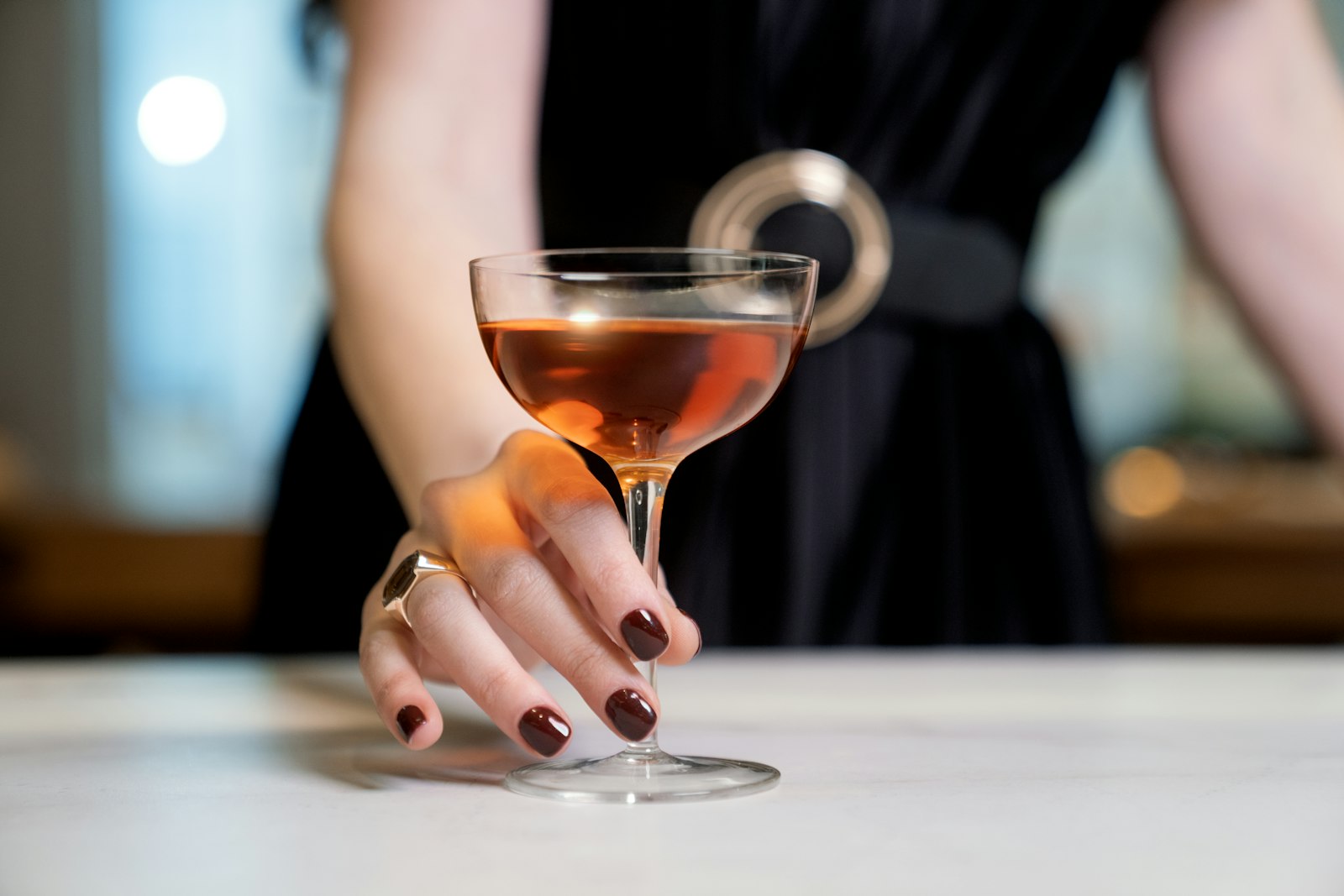
The Hanky Panky is a drink built on a rumour that happens to be true. The story, repeated in nearly every serious cocktail book, credits Ada Coleman, head bartender at London’s Savoy Hotel in the early twentieth century, with inventing it for the actor Charles Hawtrey, who arrived at her bar exhausted and asked for something with a bit of punch. She obliged with equal parts gin and sweet vermouth, sharpened with a few dashes of Fernet Branca, and Hawtrey is said to have declared it “the real hanky-panky” on tasting it. Whether the exchange happened exactly this way is impossible to verify a century on, but the drink itself has more than earned its place regardless of the anecdote’s precision.
Why the Formula Works
On paper, equal parts gin and sweet vermouth sounds like it should be cloying — a Martinez without the interesting edges. What saves it, and what makes the drink genuinely distinctive rather than merely pleasant, is Fernet Branca: a bitter, herbal Italian amaro with notes of menthol, saffron and dried bark that most drinkers either love immediately or need several attempts to appreciate. In a Hanky Panky, Fernet is used sparingly — a few dashes, not a full measure — enough to cut through the vermouth’s sweetness and leave a lingering, faintly medicinal bitterness on the finish without overwhelming the gin underneath.
The result is a cocktail that manages to be both comforting and slightly severe at once, which is a difficult balance for any drink to strike. It is stirred, not shaken, and served up in a coupe with an orange peel expressed over the top — the citrus oil rounding off the bitterness just enough to keep the drink approachable rather than austere.
How to Build One Properly
- Combine 45ml London dry gin and 45ml sweet vermouth in a mixing glass with ice.
- Add two dashes of Fernet Branca — no more, unless you have already developed a taste for it.
- Stir for around 30 seconds, until well chilled and slightly diluted.
- Strain into a chilled coupe glass.
- Express an orange peel over the surface, then either discard it or drop it in, depending on preference.
The choice of gin matters more here than in many classic cocktails, since it has to hold its own against both the vermouth and the Fernet rather than disappear into a supporting role. A gin with a firmer juniper backbone tends to survive the mix better than a softer, more floral style, which can get lost entirely once the Fernet arrives. For a gin cocktail softened with honey rather than sharpened by Fernet, our piece on the art of the Bee’s Knees makes a pleasing counterpoint. Another gin-led classic with a similarly bold supporting cast is the Corpse Reviver, where absinthe rather than Fernet supplies the defining note.
Where the Drink Sits Among the Classics
The Hanky Panky belongs to a small family of gin-and-vermouth cocktails sharpened with a bittering agent, alongside relatives like the Aviation in spirit if not in formula — both drinks reward patience and precision over showmanship. It is a considerably less forgiving drink to make badly than a gin and tonic, since there is nowhere for a poor ratio to hide once the Fernet is in the glass. A bartender at one considered cocktail counter, who has poured the drink for regulars for years, put the challenge plainly: “Most people over-pour the Fernet the first few times. It’s meant to be a whisper, not the whole sentence.” That instinct — restraint over flourish — is really what the entire drink is teaching a home bartender, if they are paying attention.
Where to Order It in Singapore
Not every bar carries Fernet Branca, and fewer still carry it in enough volume to pour it with any real generosity, so the Hanky Panky tends to separate the considered cocktail bars from the ones simply working through a laminated menu. Look for bars that stock a proper range of aperitif-style vermouths rather than a single bottle kept mostly for Negronis, since the quality of the vermouth affects this drink more directly than most. The city’s craft-driven cocktail bars are the most reliable places to find it done properly, and a handful of classic-format bars enjoying a quiet revival across the island have made a point of keeping pre-Prohibition drinks like this one on their menus rather than chasing seasonal trends.
A Drink for the Curious, Not the Cautious
The Hanky Panky is not a drink for someone looking for something safe and familiar — it demands a tolerance for bitterness that not every palate arrives with. But for a drinker willing to sit with something a little more challenging than a standard gin cocktail, it offers real reward: a drink with genuine history, genuine complexity, and a formula simple enough to master at home with the right three bottles on the shelf. Order one the next time a bar’s menu lists it, or better still, ask a bartender you trust to make you one even if it isn’t listed — a good bar will usually have Fernet Branca somewhere behind the counter, waiting for exactly this kind of request. For the wider landscape of Singapore’s bar and drinks culture, our Dining & Drinks section tracks where the city’s more considered pours are being made.
Building a Home Bar Around It
Part of the appeal of the Hanky Panky, beyond the drink itself, is how little it asks of a home bar once the three core bottles are in place. A decent London dry gin, a sweet vermouth kept properly refrigerated and used within a few weeks of opening, and a bottle of Fernet Branca — which, being fortified and highly alcoholic, keeps almost indefinitely on a shelf — are enough to make not only this drink but several of its close relatives. Vermouth is the ingredient most home bartenders get wrong, treating it as a shelf-stable spirit rather than the wine it actually is; an oxidised, tired vermouth will flatten even a well-made Hanky Panky into something dull and one-note. Buy smaller bottles more often rather than a single large one that sits open for months, and the improvement in every vermouth-forward cocktail, this one included, is immediate and obvious. It is a small piece of discipline that separates a home bar that merely owns the right bottles from one that actually uses them well, and it is the same discipline, in miniature, that separates a competent bartender from a genuinely careful one behind any counter in the city.
Renée has covered Singapore's restaurants for over a decade, with a soft spot for the kitchens most people walk past.