The Art of the Bee’s Knees
The Bee's Knees is deceptively simple: gin, lemon and honey syrup in careful proportion, born of an era when the honey was there to mask worse things.
 By Renée Tan
31 August 2026 · 6 min read
By Renée Tan
31 August 2026 · 6 min read
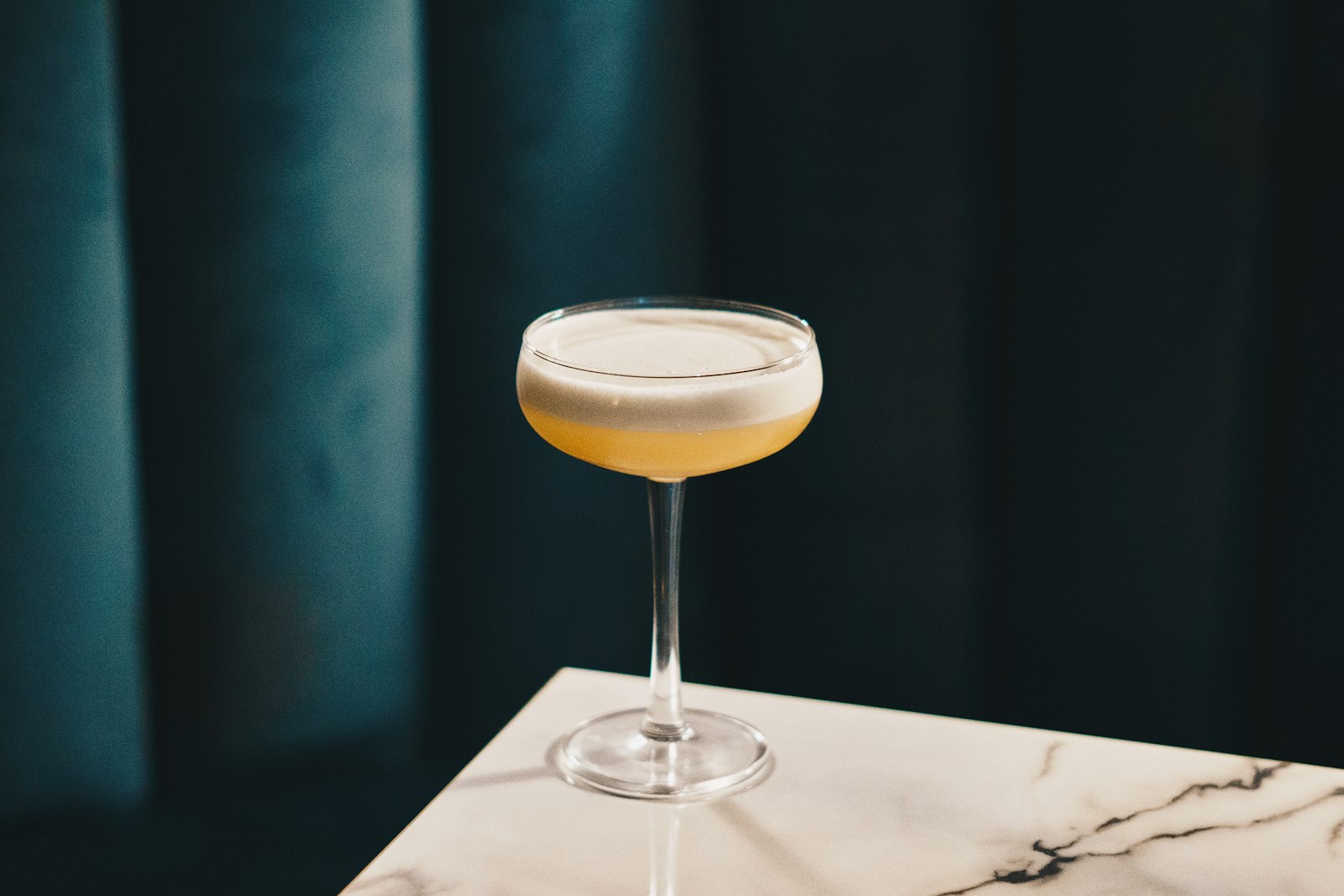
The Bee’s Knees is one of the few Prohibition-era cocktails whose backstory actually improves the drink rather than merely decorating it. In the 1920s, bathtub gin was frequently rough enough to need masking, and honey — sweet, viscous, easy to source even under Prohibition’s constraints — became a favourite way to round off the sharper edges of homemade spirit. What began as damage control has, a century later, become a genuinely elegant drink in its own right, one that modern gin, made properly and without the need for disguise, allows to shine rather than merely survive.
The Proportions That Matter
At its simplest, the Bee’s Knees is gin, fresh lemon juice and honey syrup, shaken hard and served up in a chilled coupe. The ratio most bartenders settle on is roughly two parts gin to three-quarters part each of lemon and honey syrup, though the honey syrup itself deserves attention: a straight 1:1 honey-to-water blend, warmed gently until it dissolves, keeps the sweetness bright rather than cloying. Too much honey and the drink turns heavy and one-note; too little and you have essentially made a gin sour with extra steps. The best versions we have had strike a balance where the honey is present but never announces itself — you should taste warmth and roundness before you taste sweetness specifically.
Gin choice matters more here than in many classic cocktails, because the drink has so few components to hide behind. A gin with a pronounced juniper backbone and a citrus-forward botanical profile tends to work best; anything too floral competes with the honey rather than complementing it.
A Reliable Home Recipe
- Combine 45ml gin, 20ml fresh lemon juice and 20ml honey syrup in a shaker.
- Add ice and shake hard for a full ten to twelve seconds — longer than you think, to properly aerate and dilute.
- Double-strain into a chilled coupe.
- Garnish with a lemon twist, expressed over the glass rather than simply dropped in.
Where It Sits Among the Classics
The Bee’s Knees belongs to a small family of sour-adjacent cocktails built on the same architecture — spirit, citrus, sweetener — that includes the Aviation and the Whisky Sour, and understanding it deepens your appreciation of the category as a whole. If you enjoy tracing that lineage, the gin, maraschino and violette balance of the Aviation makes a useful companion piece, since both drinks depend entirely on proportion rather than complexity to work. Both are also drinks that reward a bar willing to make their syrups fresh rather than reach for a bottled substitute, which is, in our experience, the single clearest signal of whether a bar takes its classics seriously.
Ordering It Well
At a bar, the Bee’s Knees is a useful test drink precisely because it is so simple — there is nowhere for a lazy bartender to hide. Watch whether the honey syrup looks freshly made (it should be pourable, not gluey) and whether the lemon is squeezed to order rather than batched hours earlier and left to oxidise. A good bar will also ask, unprompted, whether you would like it slightly less sweet, because they understand the ratio is a starting point rather than gospel. If you are exploring Singapore’s better cocktail programmes more broadly, our coverage of the renewed interest in classic cocktail bars across the city is a good place to start, since many of the bars doing the Bee’s Knees well are the same ones treating the wider Prohibition-era canon with real seriousness.
“People think a three-ingredient drink is easy to make,” one bartender told us. “It’s the opposite. There’s nothing to hide behind if any one part is off.”
Variations Worth Trying
Once you have the base drink right, small variations open up without straying from the spirit of the original. A few bars swap standard honey syrup for a single-varietal honey — lavender or chestnut, say — to add a more distinct character, though this can tip the balance toward novelty if overdone. Others add a dash of orange bitters to lift the aromatics, or use a small amount of grapefruit alongside the lemon for a slightly more bitter, complex finish. None of these are necessary, but they are worth trying once you trust the base recipe, if only to understand why the classic proportions endure. For serious home bartenders, it is also worth keeping the raw ingredients on hand consistently, and our guide to the pantry staples worth stocking for cocktails at home covers honey syrup alongside the other building blocks that make a well-stocked bar cart genuinely useful rather than decorative.
Why It Endures
What makes the Bee’s Knees worth returning to, a century after its invention, is precisely its lack of pretension. It does not require an obscure ingredient or a piece of specialist equipment; it asks only for good gin, real lemon, and honey treated with a little care. That simplicity is, in its own way, a discipline, and it is why the drink has outlasted countless more elaborate inventions from the same era. Order one at a bar you are visiting for the first time, and you will learn more about that bar’s standards from this single drink than from almost anything else on the list — a small, honest test, hiding in plain sight on every serious cocktail menu in Dining & Drinks.
A Word on Honey Sourcing
Serious bars are increasingly thoughtful about which honey they use, and it is worth asking rather than assuming a single generic syrup is behind the bar. Wildflower honey tends to give a rounder, less assertive result, while single-origin varieties can push the drink in interesting directions — though, as with the Aviation’s violette or the Sour’s egg white, restraint matters more than novelty. A bartender who can talk you through why they chose a particular honey, rather than simply pouring from an unlabelled bottle, is usually a bartender worth trusting with the rest of the list too. This attentiveness to a single ingredient is, in miniature, the whole argument for why the Bee’s Knees remains a useful yardstick: it asks so little of its maker in terms of components that any shortcut becomes immediately, unmistakably obvious in the glass, and there is nowhere for indifference to hide once the drink reaches the table.
Renée has covered Singapore's restaurants for over a decade, with a soft spot for the kitchens most people walk past.