How to Build a Charcuterie Board
Most charcuterie boards default to the same three cured meats and a fan of crackers. Here is how to build one with real variety, texture, and intention.
 By Renée Tan
29 August 2026 · 7 min read
There is a version of the charcuterie board that has become so ubiquitous it barely registers anymore — a fan of pre-sliced salami, a wedge of supermarket brie, some crackers, a handful of grapes arranged with more hope than intention. It is not a bad way to feed a room quickly, but it is a missed opportunity, because a properly considered charcuterie board is one of the more rewarding things a home cook can put together, requiring almost no cooking at all and rewarding thoughtfulness far more than technique.
Start with variety of type, not just brand
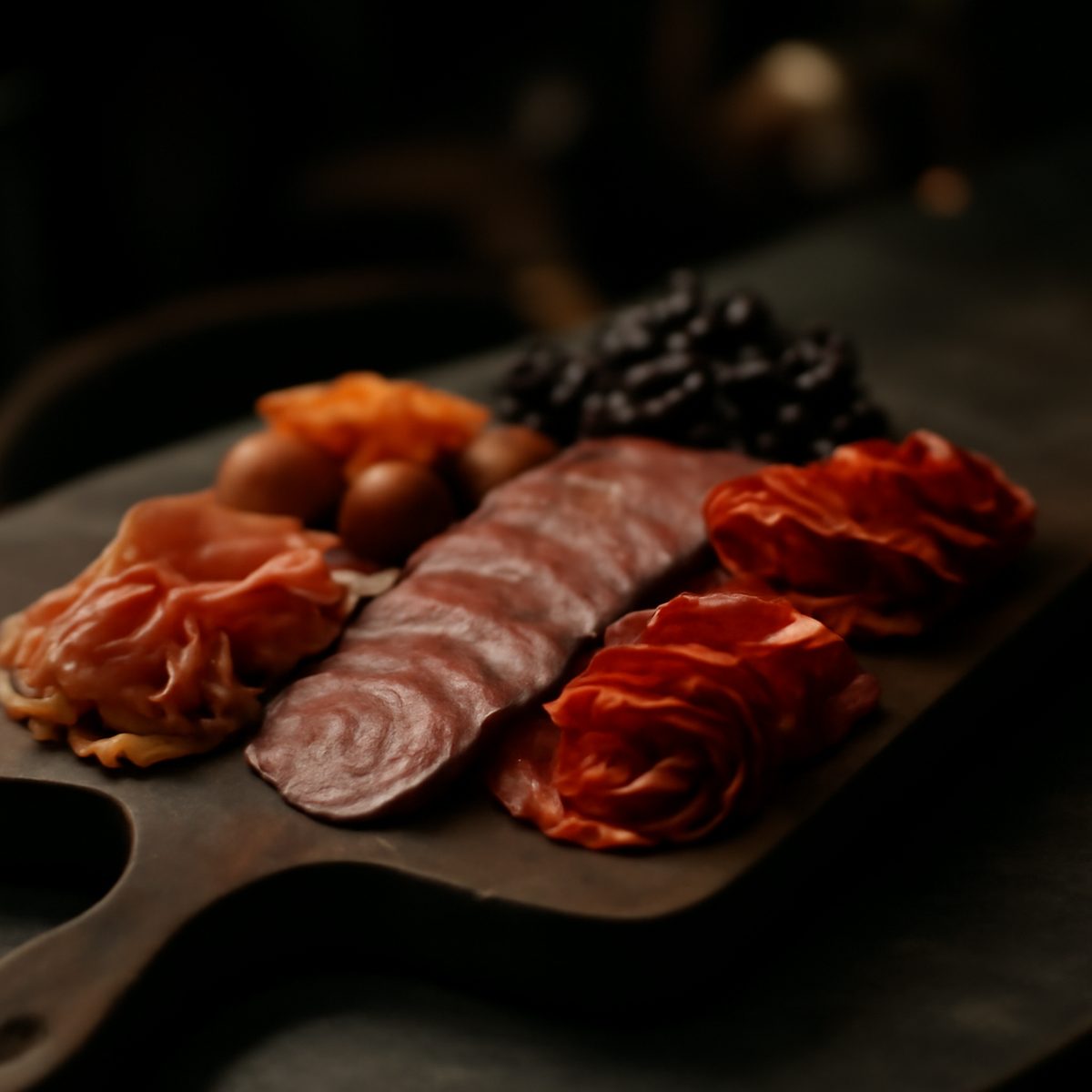
The most common mistake is choosing three or four cured meats that all occupy the same textural register — several dry-cured salamis, say, with nothing to break up the monotony. A well-built board instead moves across categories: something dry-cured and firm, something softer and more spreadable like a rillette or pâté, something smoked, and ideally something whole-muscle like a prosciutto or bresaola, sliced thin enough to be nearly translucent. This range does more to make a board feel considered than any amount of money spent on a single premium item.
A useful framework for the meat selection
- One dry-cured salami — fennel, black pepper, or a regional specialty, sliced thin.
- One whole-muscle cure — prosciutto, coppa, or bresaola, for a delicate, almost silky contrast.
- One spreadable — a rillette or good pâté, which also gives guests something to do with bread beyond simply stacking meat on top.
- One smoked or cooked option — a good smoked ham or cooked sausage, which broadens the flavour range considerably.
Cheese deserves the same range-first thinking. A board with three hard cheeses tells a far less interesting story than one balancing a hard aged cheese, a soft bloomy rind, and something blue or washed-rind for anyone willing to be adventurous. Our guide to how to build a cheese board worth sharing goes into this in more depth and pairs naturally with the meat selection discussed here.
The supporting cast matters more than people think
Crackers and bread are too often an afterthought, grabbed last-minute from whatever is available. A considered board includes at least two textures here — something thin and crisp, something denser like a good sourdough or a fruit-and-nut loaf — because different meats and cheeses genuinely suit different vehicles. A soft, spreadable pâté wants a sturdier bread that can hold its weight; a delicate prosciutto is better served by something thin enough not to compete with it.
Sweetness and acidity are the other two elements most boards get wrong, usually by relying entirely on grapes. Dried fruit — figs, apricots — offers a more concentrated sweetness that pairs particularly well with salty cured meats, while something pickled, whether cornichons or a quick-pickled shallot, cuts through richness in a way fresh fruit alone cannot. A good fruit mustard or a thin honey drizzled sparingly over a hard cheese rounds out the board considerably.
“People overload on meat and forget the acid,” one cheesemonger told us. “The pickle is doing half the work of making the whole board taste balanced.”
Building for pacing, not just abundance
A board built purely to look abundant often eats poorly, because there is no natural progression for a guest to follow. Arrange with pacing in mind: lighter, more delicate items toward one side, richer and more assertive flavours toward the other, so a guest naturally moves from subtle to bold rather than encountering the most intense flavour first and dulling their palate for everything that follows. This same logic of pacing runs through good hosting more broadly, a subject explored further in our guide to how to host a dinner party effortlessly.
Pairing it properly
Wine pairing for a charcuterie board benefits from the same variety-first approach as the board itself — rather than choosing a single bottle to cover everything, consider offering two contrasting options, perhaps a lighter, higher-acid white alongside a medium-bodied red, so guests can match their own glass to whatever they are eating in that moment. For those wanting to source more thoughtfully, our piece on the rise of the neighbourhood wine shop is a good starting point for finding bottles suited specifically to this kind of grazing, unhurried meal.
Quantities worth planning around
A common failure of even well-chosen boards is simply getting the quantities wrong, either running out embarrassingly early or, more often, over-catering so heavily that half the spread goes to waste. As a rough guide for a pre-dinner board rather than a full meal, plan for roughly seventy-five grams of cured meat and a similar weight of cheese per guest, adjusted upward if the board is meant to serve as the meal itself rather than an opener. It is far better to build a smaller, more considered board and refresh it partway through an evening than to overload a single table from the start and have everything sitting out, warming and drying, for hours.
Assembling it well
Work in layers rather than placing everything down at once — cheese and larger items first, since they anchor the board, then meats folded or draped rather than laid flat, which adds visual texture and makes portions easier to pick up. Fill remaining gaps with the smaller items: nuts, olives, dried fruit, pressed into the empty spaces so nothing looks sparse. Serve at room temperature wherever possible; cold cheese and cured meat straight from the refrigerator mute flavours considerably, so pull everything out at least thirty minutes before guests arrive.
A final, easily overlooked detail is the board itself. Wood retains odours and can taint delicate cheeses over repeated use, so it is worth keeping a separate board for particularly pungent items or lining a shared one with parchment beneath the strongest cheese. Marble or slate, by contrast, stays neutral and also has the practical benefit of keeping items slightly cooler for longer during a warm evening — a small consideration, but one that shows the same care already evident in the choices made further up the board.
A charcuterie board, done with this level of intention, becomes less a pre-dinner filler and more a genuine centrepiece — the kind of spread that rewards slow eating and unhurried conversation, which is, after all, the entire point of gathering people around a table in the first place. It fits naturally within the wider spirit of considered entertaining found across our Dining & Drinks section.
Frequently asked questions
What meats should go on a charcuterie board?
Aim for variety of type: one dry-cured salami, one whole-muscle cure such as prosciutto, coppa or bresaola sliced almost translucent, one spreadable like a rillette or pâté, and one smoked or cooked option such as smoked ham. That range of textures makes a board feel considered far more than one expensive item does.
How much charcuterie and cheese do you need per person?
For a pre-dinner board, plan roughly 75 grams of cured meat and a similar amount of cheese per guest. Increase it if the board is the meal itself. It is better to build a smaller board and refresh it during the evening than to set out too much that sits warming and drying for hours.
What should you put on a charcuterie board besides meat and cheese?
Include two kinds of bread or crackers, one thin and crisp and one sturdier like sourdough for pâté. Add dried figs or apricots for concentrated sweetness, cornichons or pickled shallots for acidity, plus olives and nuts to fill gaps. A fruit mustard or a little honey over a hard cheese rounds it out.
How far ahead should you take charcuterie out of the fridge?
Take cheese and cured meats out at least 30 minutes before guests arrive. Served straight from the fridge, their flavours are muted and fats taste waxy. In a warm Singapore home, keep the board out of direct sun, and consider marble or slate, which stays cooler for longer than wood.
What wine goes best with a charcuterie board?
Offer two contrasting bottles rather than one: a lighter, higher-acid white and a medium-bodied red. Guests can then match their glass to what they are eating, since a delicate prosciutto and a rich pâté want different partners. Acidity is useful throughout, cutting through the fat of cured meat and creamy cheese.
Renée has covered Singapore's restaurants for over a decade, with a soft spot for the kitchens most people walk past.