A Guide to Regional Chinese Cuisine
"Chinese food" flattens a continent of distinct regional traditions. Here is a proper guide to the major cuisines, and where Singapore treats each with care.
 By Renée Tan
29 August 2026 · 6 min read

“Chinese food” is one of the more useful shorthand terms in everyday conversation and one of the least accurate descriptions of an actual cuisine. China’s regional culinary traditions are, in reality, more distinct from one another than many European national cuisines are from each other — a Sichuan banquet and a Cantonese one share a language family but very little else in terms of technique, flavour priority, or even the basic architecture of a meal. For a dining public increasingly curious about precision, it is worth understanding these traditions individually rather than lumping them under a single umbrella.
Cantonese: restraint and the primacy of freshness
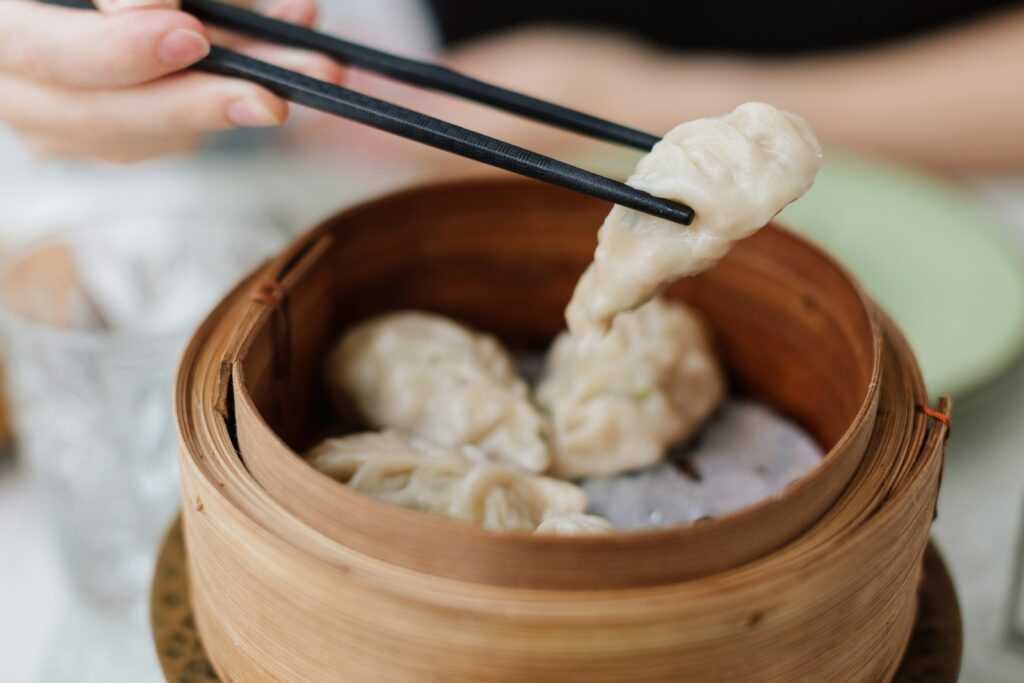
Cantonese cuisine, the tradition most familiar to Singapore given the city’s demographic history, prizes the natural flavour of an ingredient above all else. Steaming, quick stir-frying, and gentle braising dominate, with seasoning kept deliberately light so the core ingredient — a piece of fish, a vegetable, a cut of meat — remains the clear star of the dish. This is also the tradition behind dim sum, roast meats, and much of what Singapore considers its everyday Chinese food. For a closer look at how this tradition has evolved locally, our review of the best modern Cantonese restaurants covers the current generation of kitchens reinterpreting it.
Sichuan: heat as architecture, not decoration
Sichuan cuisine is frequently reduced to “spicy food” in casual conversation, which badly undersells what is actually a highly sophisticated tradition built around a specific sensory phenomenon: the numbing, tingling quality of Sichuan peppercorn, known as má, combined with chilli heat, known as là, to create málà, a combination that is genuinely difficult to replicate outside the region’s specific pepper varieties. The tradition also relies heavily on fermented bean pastes, pickled vegetables, and a wide vocabulary of distinct cooking techniques — dry-frying, twice-cooking, fish-fragrant preparations that contain no fish at all but borrow the seasoning profile traditionally used with it.
Other major regional traditions worth knowing
- Hunanese — closely related to Sichuan in its love of chilli, but drier, smokier, and generally without the numbing peppercorn.
- Shanghainese — sweeter, richer, built around braising and a generous hand with sugar and Shaoxing wine, exemplified by dishes like red-braised pork.
- Northern/Beijing — wheat-based rather than rice-based, home to Peking duck, hand-pulled noodles, and heavier use of fermented soybean products.
- Chaozhou/Teochew — light, often seafood-forward, prizing clear broths and minimal seasoning, historically significant to Singapore’s own culinary identity.
Peking duck deserves particular mention as a dish that has travelled far beyond its northern origins to become something of a citywide standard in Singapore, and our closer look at the best Peking duck in Singapore traces exactly how the city has come to host both major schools of the dish.
Why banqueting reveals a region’s priorities
Nowhere is the difference between regional traditions clearer than in how each treats a formal banquet. A Cantonese banquet moves through a careful sequence designed to showcase variety of ingredient and technique in roughly ascending order of richness; a Sichuan gathering leans into shared intensity from the outset, with dishes designed to be eaten together rather than in careful sequence; a Shanghainese banquet often centres on one or two showstopping braised dishes around which everything else orbits. For readers planning a larger group meal, our guide to the best Chinese restaurants for a banquet is worth cross-referencing, since the format itself varies meaningfully by tradition.
“People ask for ‘authentic Chinese food’ like it’s one thing,” a Singapore-based chef trained in both Cantonese and Sichuan kitchens told us. “I always ask them which region they mean. The answer changes everything about how I’d cook for them.”
Reading a menu with this in mind
A restaurant confident in a specific regional tradition will usually say so plainly, rather than offering a scattered menu that dabbles across five or six regions without real depth in any of them. This is not to say fusion or eclectic Chinese menus cannot be good, but a kitchen that has chosen to specialise — genuinely Sichuan, genuinely Teochew — tends to demonstrate a level of technical command that a broader, less focused menu rarely matches. Dim sum offers a particularly useful test case here, since the format is so exacting technically; our guide to where to find the best dim sum in Singapore is worth reading as a companion piece.
Hokkien, Hainanese, and the traditions Singapore knows best
Beyond the major mainland traditions, Singapore’s own culinary history has been shaped enormously by two dialect groups often overlooked in broader discussions of Chinese regional cuisine: Hokkien and Hainanese. Hokkien cooking, brought by migrants from Fujian province, favours braising, a generous use of soy, and a fondness for noodle dishes cooked with a rich, dark stock — the ancestor of much of what Singapore now considers distinctly local. Hainanese cuisine, meanwhile, gave the region its most famous culinary export in Hainanese chicken rice, a dish built on the same principle of restraint found in Cantonese cooking but with its own distinct approach to poaching and rendering fat for the rice.
These two traditions matter enormously to understanding Singapore’s food culture specifically, since so much of what the city now considers uniquely its own — from bak kut teh to the particular local style of char kway teow — descends directly from these regional roots, adapted and localised over generations rather than preserved in an unchanged form. A diner genuinely curious about the city’s culinary DNA would do well to trace these threads back to their regional origins rather than treating local hawker food as a category entirely separate from mainland Chinese tradition.
Building a more informed palate
The simplest way to develop a genuine appreciation for these distinctions is to seek out single-region specialists deliberately, ordering dishes specifically associated with that tradition rather than defaulting to familiar favourites regardless of where you are eating. Over time, the differences become obvious in a way no amount of reading alone can teach — the particular numbing hum of a properly made mápó tofu, the clean brightness of a Teochew braised duck, the sweet depth of a Shanghainese red-braised pork belly. Singapore’s Dining & Drinks scene, unusually well stocked with specialists across nearly every major regional tradition, remains one of the more rewarding places in the world to do exactly this.
Renée has covered Singapore's restaurants for over a decade, with a soft spot for the kitchens most people walk past.