Where to Find Great Dumplings and Xiao Long Bao
Great xiao long bao comes down to a handful of small, exacting details. Here is what to look for, and exactly where the standard runs highest today.
 By Renée Tan
29 August 2026 · 6 min read
By Renée Tan
29 August 2026 · 6 min read
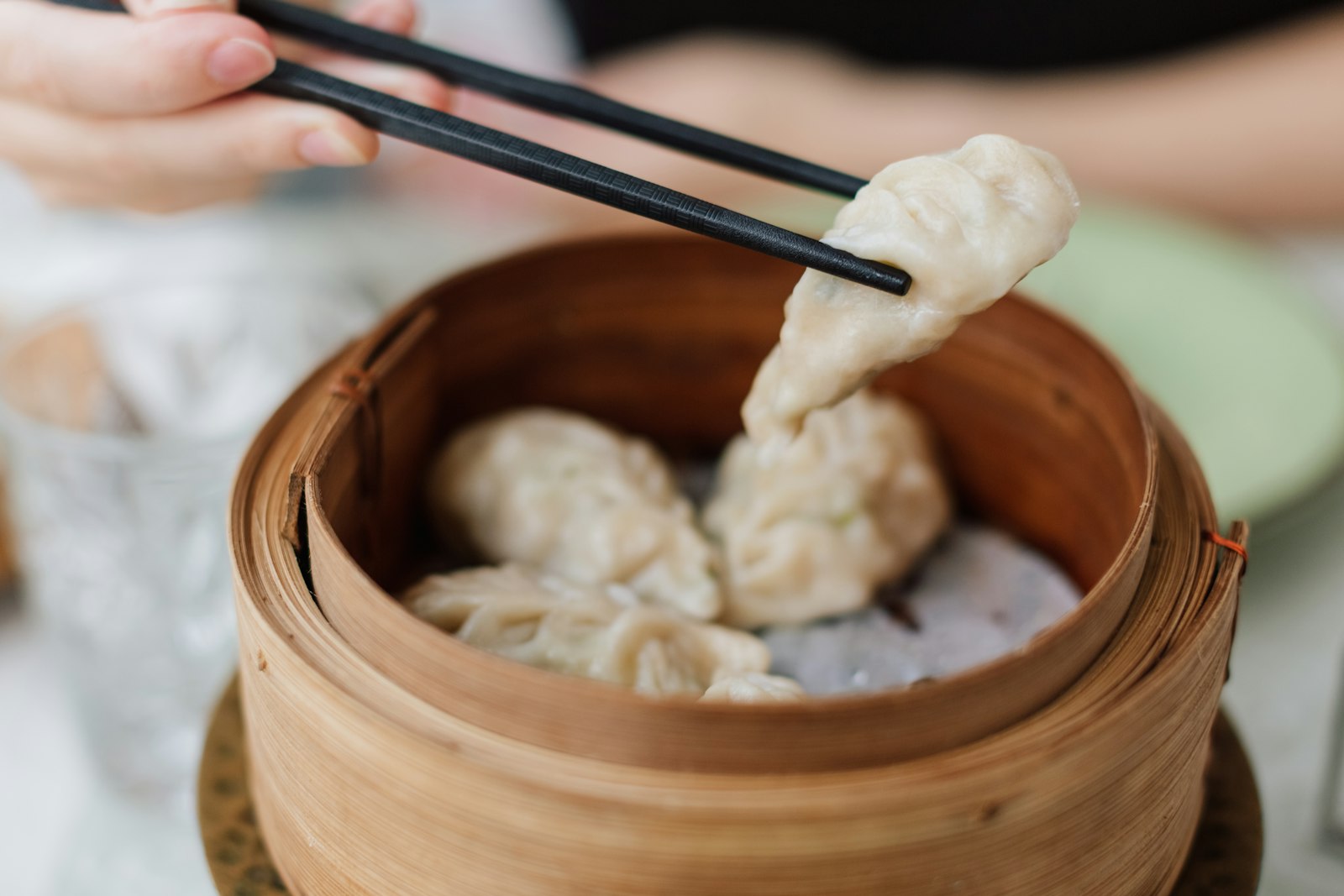
A great xiao long bao is a small feat of engineering disguised as a snack — a skin thin enough to be almost translucent, holding a precise measure of hot, gelatinous broth without splitting under the weight of its own filling. Singapore has no shortage of dumpling counters, but the gap between competent and exceptional is wider here than in almost any other hawker category, because the margin for error is so small. Getting it right is a matter of technique refined over years, not a recipe that can be shortcut.
Counting the Pleats
The fold at the top of a xiao long bao is not decorative — it is the seal that keeps the broth in during steaming, and the number and evenness of the pleats is a genuine indicator of a chef’s training. Traditionally trained cooks aim for somewhere around eighteen folds, each one even and tightly closed. Fewer, looser folds usually mean a faster, less careful kitchen, and often a dumpling that leaks broth onto the steamer before it ever reaches your plate. Watching the fold, if the kitchen allows a view of the counter, tells you almost everything before you have tasted anything.
The Broth-to-Filling Ratio
A properly made xiao long bao should deliver a distinct mouthful of hot soup on the first bite, not just a moistened meatball. That soup comes from an aspic — a gelatinous stock set with pork skin or bones — folded into the filling before steaming, which melts back into liquid under heat. Too little aspic and the dumpling reads dry; too much and the skin cannot hold structure long enough to reach the table intact. Getting this ratio consistent, basket after basket, across a busy dinner service is the real test of a kitchen’s discipline.
How to Eat One Properly
- Lift gently by the top knot, never by the sides, to avoid tearing the skin
- Rest briefly on a spoon and nibble a small opening to release steam first
- Sip the broth before eating the rest, then finish with a touch of vinegar and ginger
Beyond Shanghainese Style
Xiao long bao gets most of the attention, but Singapore’s dumpling scene is broader than one regional style. Northern-style boiled dumplings, thicker-skinned and heartier, reward a different kind of attention — the dipping sauce matters more here than the fold. Cantonese har gau, with its near-transparent wheat-starch skin wrapped around whole prawns, is its own separate discipline entirely, closer to dim sum craftsmanship than to Shanghainese soup dumplings. Trying a range across a single meal, rather than sticking to one style, is the fastest way to understand what separates a serious dumpling kitchen from an average one. The same instinct for looking past the familiar applies to other cuisines, as our guide to great Thai food beyond the basics shows.
The Vinegar and Ginger Question
The condiment dish that arrives alongside a basket of dumplings is not an afterthought either. A black vinegar too sharp will overwhelm the delicate broth inside, while one cut with a little sugar tends to balance better against the richness of pork filling. Julienned ginger, cut fine and fresh rather than pre-minced, adds brightness without the harshness of a coarser cut. The better kitchens make a point of offering a house-blended vinegar rather than a bottled one straight from the shelf, a small detail that signals a kitchen thinking about the whole plate rather than just the centrepiece.
Watching for Consistency, Not Just a Great First Bite
Any competent kitchen can produce one excellent basket on a slow afternoon with a fresh team and a light service. The real test is whether that same quality holds at the seventh table on a packed Saturday night, when the folding station has been running for three straight hours. Returning on a busy evening rather than judging solely on a quiet lunch visit is the fairest way to separate a kitchen with genuine systems in place from one that simply got lucky with your particular order. Consistency, more than any single exceptional basket, is what actually defines the best dumpling counters in this city.
Where the Standard Holds
The most reliable kitchens tend to be small, focused operations rather than sprawling menus trying to do everything — a shop that makes dumplings as its primary craft, rather than as one line among fifty, generally shows it in the folding and the broth. Watch for a visible steamer station near the entrance; kitchens confident enough to let diners see the folding happen in real time are usually the ones worth trusting. For dim sum more broadly, where to find the best dim sum in Singapore covers adjacent ground, while the zi char stalls worth seeking out offers a heartier, more boisterous counterpoint to the precision of a dumpling counter.
If dumplings are simply your entry point into a longer night of eating, late-night eats, quietly elevated is a natural next stop, and the broader Dining & Drinks section tracks the city’s best kitchens across every category worth knowing.
A Note on Ordering for a Table
Dumplings are one of the few dishes where ordering strategy genuinely changes the experience. A single basket shared across four people cools too quickly for anyone to enjoy the broth properly, while ordering by the individual portion keeps each basket arriving hot and freshly steamed. The better approach at a table of any size is to order in staggered rounds rather than all at once, so each basket reaches the table at its peak rather than sitting under a heat lamp waiting for its turn. It is a small logistical choice that makes a meaningful difference to how good the same kitchen’s food actually tastes by the time it reaches you.
A Dish Worth Taking Seriously
It is easy to treat dumplings as a casual, forgiving food — cheap, familiar, hard to get badly wrong. In truth, few dishes expose a kitchen’s discipline as clearly. The fold, the broth, the timing of the steam: every element is small enough to overlook and consequential enough to ruin the whole bite if neglected. Seek out the kitchens that treat it with the seriousness it deserves, and a plate of xiao long bao becomes one of the more quietly impressive things you can eat in this city.
Renée has covered Singapore's restaurants for over a decade, with a soft spot for the kitchens most people walk past.