The Zi Char Stalls Worth Seeking Out
Zi char rewards the patient and the curious. Here is how to find the stalls still cooking with real fire, and how to order like a true regular.
 By Renée Tan
29 August 2026 · 6 min read
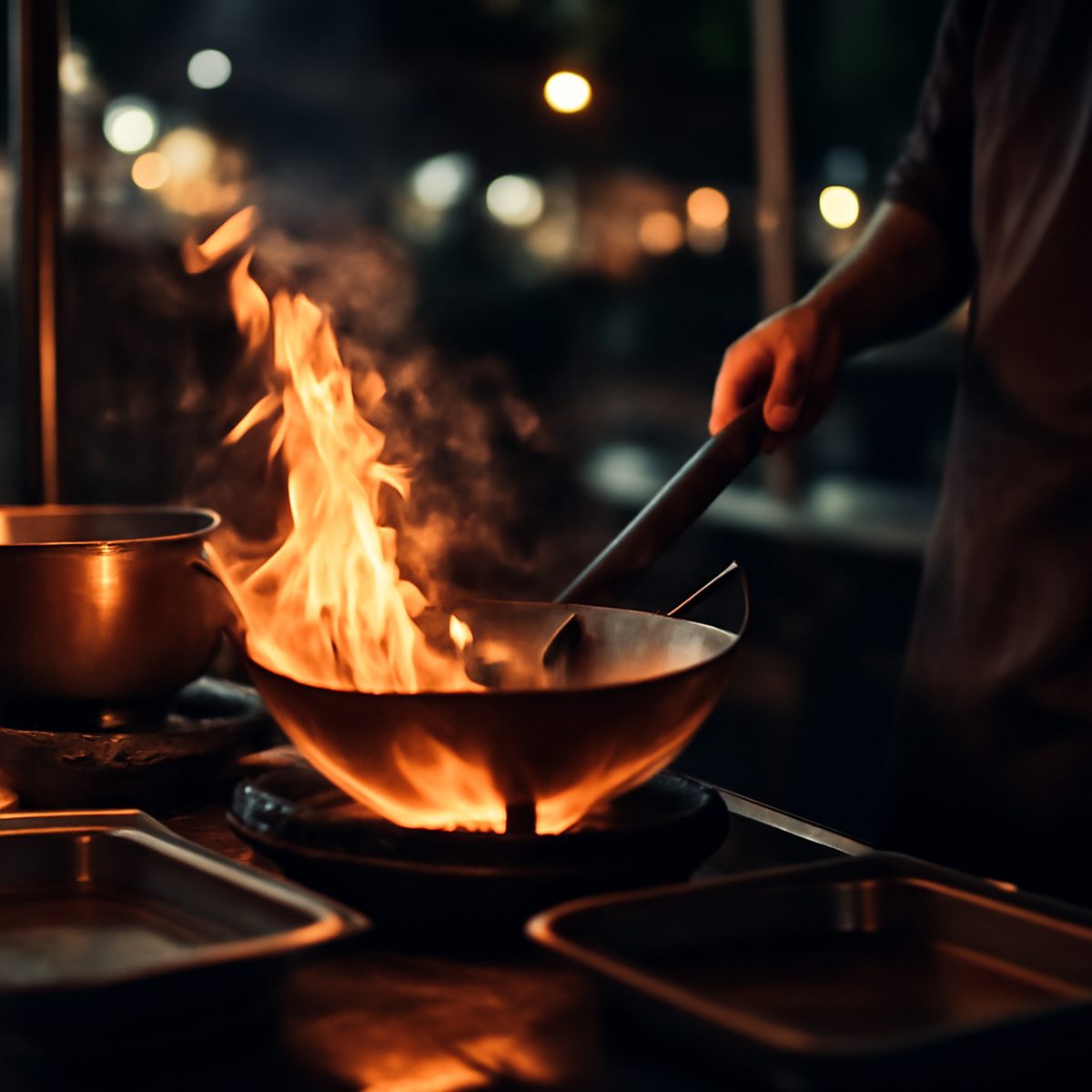
There is a particular hour, somewhere between seven and nine in the evening, when Singapore’s zi char stalls hit their stride. Plastic stools scrape against concrete. A runner in a damp singlet threads between tables balancing four plates on one forearm. Somewhere behind a corrugated awning, a wok meets a flame hot enough to singe the air, and for a few seconds the whole street smells of char and garlic. This is not fine dining. It never wanted to be. But it is, in its own unbothered way, one of the most reliable pleasures this city has to offer.
What Zi Char Actually Means
The term translates loosely from Hokkien and Teochew as ‘cook and fry’, and it describes less a cuisine than a format: a menu of dozens of dishes, cooked to order, meant to be shared across a table of four to eight people rather than plated for one. Zi char sits in the space between the hawker stall and the restaurant — more ambitious than a single-dish stand, less formal than anywhere requiring a reservation. It is, at its best, a masterclass in what a wok and a very hot flame can do in under ninety seconds.
The dishes lean heavily on what the trade calls wok hei — the faint char and smoke that only comes from cooking at ferocious heat in a seasoned carbon-steel wok, tossed rather than stirred. It cannot be replicated on a domestic stove, which is precisely why the format has endured even as home kitchens have improved.
The Stalls That Still Have It
Ask a Singaporean where to eat zi char and you will get a fiercely specific answer, usually tied to a childhood memory or a particular uncle’s cooking. There is the corner operation near the East Coast, run for three decades by a family that still closes for two weeks each Chinese New Year and reopens to a queue. There is the void-deck stall in a mature housing estate that only takes cash and only turns on the exhaust fan once the first order lands, as if conserving energy for the rush. And there is the Geylang institution, open past midnight, where the crab dishes alone are worth the detour and the wait.
What separates the exceptional from the merely adequate is rarely the size of the operation. It is consistency — the same hand on the wok night after night, the same supplier for the greens, the same restraint with the cornstarch. A stall that has been run by one family for two generations has usually already made every mistake worth making, and corrected for it.
Signs of a Serious Kitchen
- A visible flame and an open kitchen — zi char has nothing to hide
- A menu that changes slightly by season, following what is fresh
- Har cheong gai (prawn-paste chicken) that is crisp, not greasy, with no lingering fishiness
- Regulars who order without looking at the menu
What to Order, and How
The instinct among first-timers is to over-order in the direction of familiarity — sweet and sour pork, fried rice, the safe choices. Resist it. A well-run table works through texture and temperature as much as flavour: something leafy and lightly oiled (kailan with garlic, or sambal kangkong), something with bite (salted egg prawns, or the har cheong gai), a claypot dish that arrives bubbling, and, if the kitchen does it well, a whole steamed fish, which tells you more about a stall’s standards than any stir-fry can.
Order for the table, not the individual. Zi char was never designed around one appetite, and the joy of it is in the negotiation — someone insisting on the salted egg squid, someone else quietly claiming the last piece of fish before anyone notices.
“You can tell everything about a zi char stall from the four-hour queue before nine on a Friday and the fact that nobody minds waiting,” says one longtime patron of a stall near the old airport. “That kind of loyalty is not bought. It is earned one plate at a time.”
The Etiquette of Sharing a Table
Zi char culture runs on unwritten rules that reward observation. Beer arrives in large bottles, poured for others before yourself. The lazy Susan, where present, turns slowly and deliberately — nobody spins it towards their own plate. And nobody rushes the last dish; it is considered proper form to let it sit until someone else reaches first.
It is also, refreshingly, a democratic format. The tables sit beside each other regardless of who is paying, and the best stalls treat a solo diner requesting a smaller portion with the same warmth as a table of ten. This has always been the quiet appeal of zi char against the more theatrical end of the city’s dining scene — for those exploring the wider landscape of Black Cow’s Dining & Drinks coverage, it is a useful reminder that some of the most considered cooking in Singapore happens without linen tablecloths at all.
Beyond the Usual Names
The temptation with any ‘best of’ list is to default to the stalls that already have queues, but the more rewarding approach is geographic — find the zi char stall closest to where you actually live, eat there enough times to understand its rhythms, and let it become yours. Singapore’s food culture rewards this kind of loyalty more than most; for a broader sense of what else rewards regular attention, the hawker stalls worth queuing for this year make a useful companion list, as does a look at the Bib Gourmand gems worth the detour, several of which began exactly this way — a neighbourhood stall that got too good to stay a secret.
For those who prefer their evenings a touch more composed, it is worth remembering that zi char and its dumpling-and-tea-cart cousin occupy very different registers; anyone comparing notes should also read the guide to where to find Singapore’s best dim sum, if only to appreciate how differently the same instinct for shared eating can express itself.
What makes zi char worth seeking out, in the end, is not novelty. It is the opposite — a format that has resisted trend cycles, stayed loyal to the wok, and kept faith with the idea that the best meal is the one eaten quickly, communally, and a little too hot to touch. Find the stall near you, learn its rhythms, and go back before the queue does.
Renée has covered Singapore's restaurants for over a decade, with a soft spot for the kitchens most people walk past.