A Primer on Salt, the Finishing Touch
Not all salt behaves the same way. A guide to the finishing salts worth keeping in a considered kitchen, and when each one earns its place on a plate.
 By Renée Tan
29 August 2026 · 6 min read
By Renée Tan
29 August 2026 · 6 min read
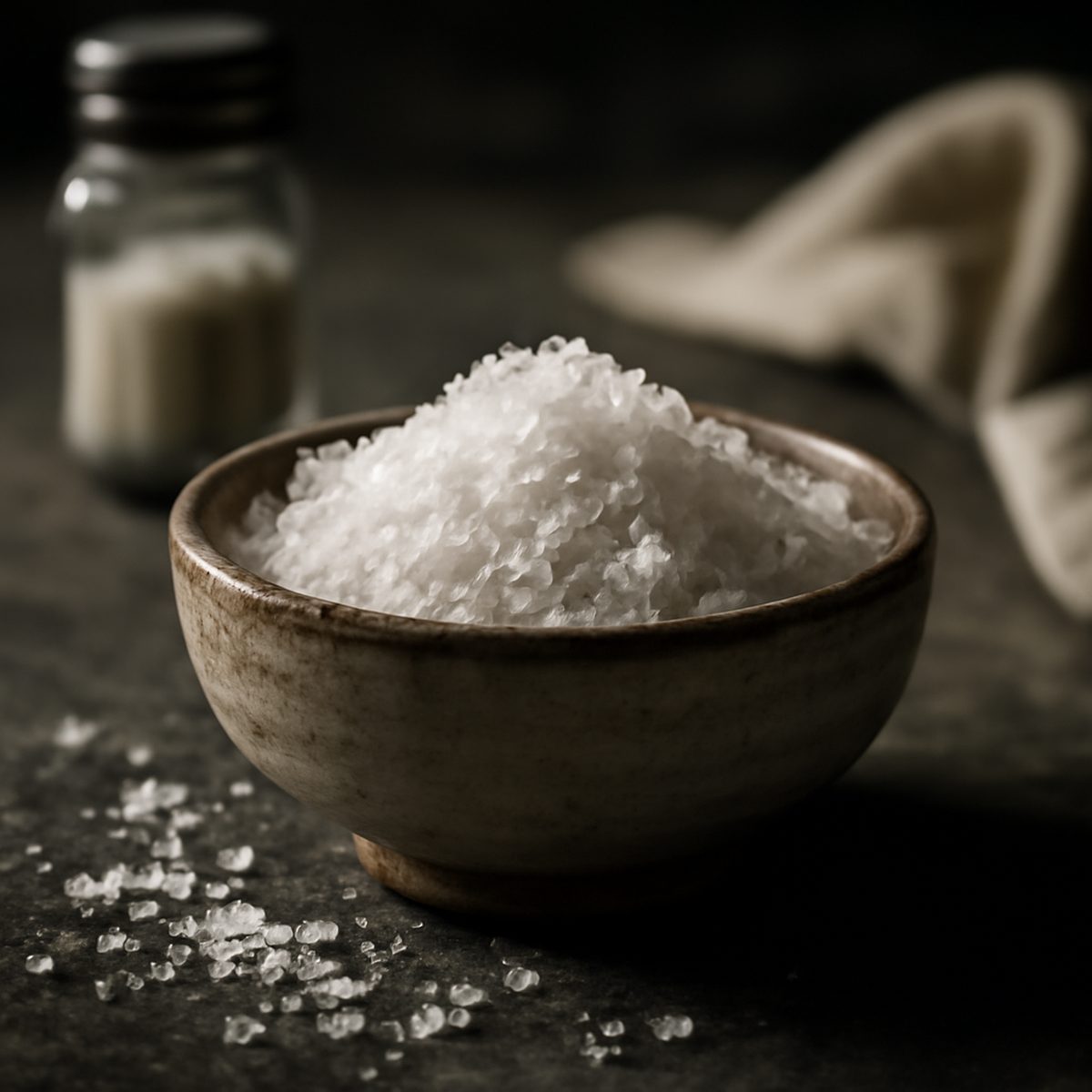
Of all the ingredients that quietly separate a competent home cook from a genuinely considered one, salt is perhaps the most overlooked. Most kitchens own exactly one kind — usually a fine table salt or, at best, a generic sea salt — and use it identically whether seasoning a braise at the start of cooking or finishing a slice of tomato moments before it reaches the table. This is a missed opportunity, because different salts behave in genuinely different ways, and knowing which to reach for, and when, is one of the simplest upgrades available to anyone who cooks.
Cooking salt versus finishing salt
The first distinction worth understanding is functional. Cooking salt — fine, inexpensive, dissolves quickly — is what should go into a pot of pasta water, a braise, or a marinade, where its job is to season evenly throughout the dish as it cooks. Finishing salt is a different category entirely, added at the very end, its job less about seasoning in the technical sense and more about texture and a final, deliberate hit of salinity and, often, a small crunch. Using an expensive finishing salt throughout the cooking process is both wasteful and, in most cases, pointless, since its distinctive texture dissolves away long before the dish is plated.
The finishing salts worth owning
- Flaky sea salt (Maldon and similar) — large, irregular flakes that shatter pleasantly underfoot, ideal on roasted meats, good chocolate, or a ripe tomato.
- Fleur de sel — hand-harvested from the surface of salt pans, delicate and slightly moist, best on delicate proteins like fish or scallops where you do not want an aggressive crunch.
- Smoked salt — genuinely smoked over wood, useful for adding a whisper of char to dishes that never see live fire, such as a simple egg or a vegetable soup.
- Grey sea salt (sel gris) — coarser, mineral-rich, holds moisture well, good for pre-salting meat before a long roast.
Understanding this hierarchy changes how a kitchen is stocked. There is no need for a large pantry of specialty salts; two or three, used with intention, will outperform a shelf of ten used indiscriminately. It is the same principle that governs a well-run pantry more broadly, one explored at greater length in our guide to olive oil, the good stuff, where a small number of well-chosen ingredients, used correctly, consistently beats a larger, less considered collection.
How to actually use a finishing salt
The most common mistake is applying finishing salt too early, before a dish has had a chance to rest or before its surface has dried slightly, at which point the flakes dissolve into the moisture and lose the very texture that justified using them. Salt a roasted piece of meat with flaky sea salt only after it has rested and any excess moisture has been patted away. Salt a tomato just before serving, never in advance, since salt draws out moisture and will leave the fruit weeping on the plate if applied too soon.
Timing matters just as much with delicate items. A piece of raw fish, destined for a crudo or a simple sashimi preparation, should be salted at the very last moment, ideally with fleur de sel rather than a coarser flake, since its moisture and gentler dissolve suit the texture of raw protein far better than a large, crunchy shard would. Salt plays a more fundamental role in an old preserving tradition, as the slow revival of the brandade explains.
“Most people under-season and then over-correct with the wrong salt,” one chef told us. “Learn to salt in layers, and finish with something that has texture, not just flavour.”
Salt and pairing: reading the whole plate
A good finishing salt should be chosen in relation to what else is on the plate, not applied as a default. A rich, fatty dish — a slow-roasted pork shoulder, say, or a properly marbled steak — can carry a coarser, more assertive salt, since the fat mutes some of its intensity. A leaner, more delicate dish needs a gentler hand and often a gentler salt to match. This same logic of pairing intensity to intensity runs through much of considered cooking, and is worth reading alongside our guide to how to match wine and cheese, where a similar principle of matching weight to weight governs a good pairing.
Dessert, too, has quietly become one of salt’s more interesting frontiers. A pinch of flaky salt over dark chocolate, caramel, or even a simple butter cake does not make the dish taste salty so much as it sharpens every other flavour already present, cutting through sweetness in a way sugar alone cannot balance. Pastry chefs across the city have leaned into this over recent years, a trend worth following alongside our profile of the pastry chefs redefining Singapore dessert.
A note on storage
Finishing salts deserve better storage than most kitchens give them. Kept in a damp, humid spot near the stove, flaky sea salts can clump and lose the crisp shatter that makes them worth owning in the first place. A small, wide-mouthed dish or tin, kept somewhere dry and within easy reach of the pass, keeps the salt loose and pinchable — a detail that matters more than it sounds, since a flake that has to be crushed between fingers before use has already lost some of its point. Buying in smaller quantities more often is generally wiser than stockpiling a large tin that sits half-used for a year, since even well-stored salt can pick up ambient moisture and odours over time.
Building a considered salt drawer
Start small. A good flaky sea salt and a reliable fine cooking salt will cover the overwhelming majority of a home kitchen’s needs. Add a smoked or a grey sea salt only once you find a specific use you keep returning to — a soup that wants smokiness, a roast that wants the moisture retention of sel gris. Salt is, in the end, the one ingredient every kitchen already has an opinion about, whether it realises it or not. It simply rewards a slightly more considered opinion than most of us currently hold, in the same spirit as the rest of our Dining & Drinks coverage.
Renée has covered Singapore's restaurants for over a decade, with a soft spot for the kitchens most people walk past.