A Slow Weekend in Girona
Girona rewards the unhurried: a walled Catalan city of ochre riverside houses, Gothic lanes and long lunches, an hour inland from the noise of the coast.
 By Marcus Lim
2 September 2026 · 6 min read
By Marcus Lim
2 September 2026 · 6 min read
You arrive in Girona expecting a stopover and leave having quietly rearranged your idea of a Catalan weekend. The city sits an hour inland from the Costa Brava, close enough to the coast to catch its light but far enough to have kept its own rhythm, and that distance is the whole point. Where the seaside towns run on a summer clock of arrivals and departures, Girona keeps the older pace of a place that has been lived in for two thousand years and feels no urgency to prove it.
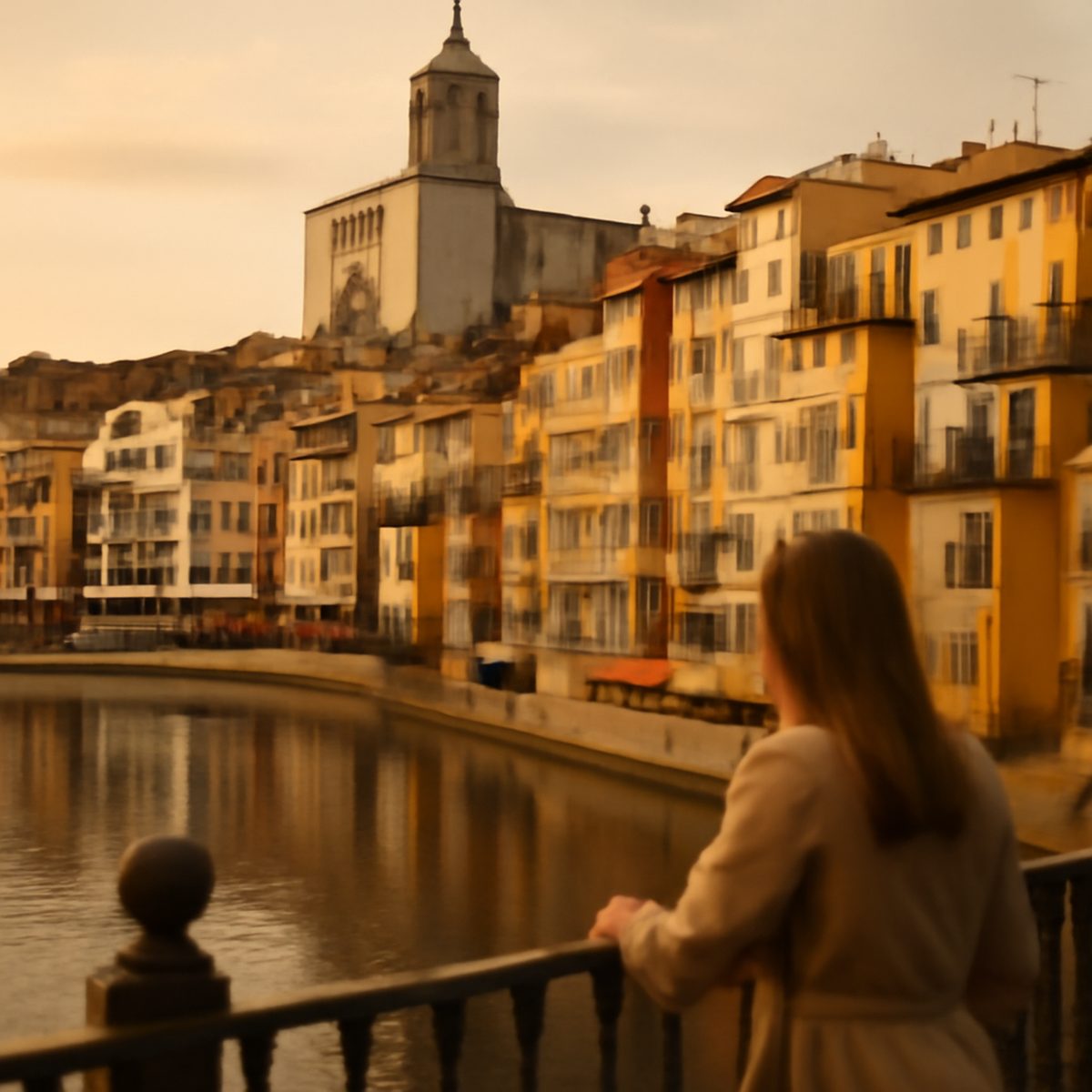
The first thing you notice is the river. The Onyar cuts the old town in two, and along its eastern bank a terrace of houses rises straight from the water in ochre, rust and faded pink, their reflections trembling in the current below. Cross one of the footbridges early, before the day has warmed, and you have the view more or less to yourself. This is a city best taken slowly, and a slow weekend here is less an itinerary than a series of unhurried decisions about where to sit.
The old town on foot
Girona’s medieval core climbs a hill in a tangle of stone lanes, and the pleasure of it is that you cannot really get lost in a way that matters. Every wrong turn delivers you to something worth seeing: a sudden flight of steps, a shuttered courtyard, a cathedral that announces itself at the top of an improbably grand staircase. The Call, the old Jewish quarter, is among the best preserved anywhere, its passages so narrow in places that you instinctively lower your voice.
Walk the city walls in the cooler hours. The Passeig de la Muralla runs along the ramparts with the rooftops on one side and the hills on the other, and it gives you the shape of the place in a way no map can. The traveller who values this kind of layered, walkable density will recognise the appeal of the hill villages of the Vaucluse, another landscape where the built and the natural fold into one another.
A table worth lingering at
Catalan cooking is generous and unfussy, and Girona treats it with quiet seriousness. A composite of the city’s better tables might run to a plate of grilled prawns still tasting of the coast, a slow-braised beef cheek, a wedge of local sheep’s cheese with membrillo, and a glass of something red and honest from the Empordà. Lunch is the main event; dinner comes late and lightly.
You do not rush a meal here, one local told me over a second coffee. You let it decide when it is finished.
That patience extends to the coffee ritual, the mid-afternoon vermouth, the evening walk taken purely to see who else is out. If your appetites run to the wider Catalan table, the best Catalan and Barcelona-style dining maps the terrain more fully, but in Girona the pleasure is in narrowing rather than expanding your choices.
Where to stay
The considered move is to stay inside the walls, in one of the small hotels carved from a former townhouse where the stone stays cool and the windows open onto a lane rather than a car park. Rooms tend to be few, breakfast is unhurried, and the location means you can return to your room in the flat heat of the afternoon and set out again refreshed as the light turns gold. A weekend here has a natural three-act shape: morning walking, afternoon resting, evening wandering. Andalucía offers its own version of this three-act weekend, as our slow weekend in Ronda sets out for a town perched above its gorge. Those who take to this unhurried rhythm will find it suits Spain’s northern meseta just as well, as our account of a slow weekend in León suggests.
If a city break suits your temperament, you might pair Girona in your imagination with a slow weekend in Bologna or a slow weekend in Porto, two other mid-sized European cities that reward the traveller who stays put and looks closely rather than dashing between sights.
The unhurried case
What Girona teaches, gently, is that a weekend does not have to be a checklist. You could see the cathedral, the walls, the river houses and the Call in an efficient morning. But the city gives more to the traveller who returns to the same bridge twice, who notices how the ochre facades change colour between eleven and five, who orders the second glass and watches the swifts turn over the rooftops. Luxury here is not a room rate; it is the permission to do very little, very well.
Getting there, and when to go
Part of Girona’s calm is a function of its geography. It sits on the main line between Barcelona and the French border, close to a small airport and well under an hour by fast train from the Catalan capital, which means you can be walking its walls a couple of hours after landing. That accessibility is a quiet luxury: the slow weekend does not have to be earned with a long transfer, and the ease of arrival sets the unhurried tone of everything that follows.
Season matters more than most people expect. High summer brings heat and a thin scatter of coach parties on their way to the coast, and while the city absorbs them easily, the light is at its harshest. The shoulder seasons are the reward. Spring dresses the river gardens in green and fills the squares with the particular optimism of a Mediterranean city waking up; autumn brings a golden, forgiving light that flatters the ochre facades and cools the lanes just enough for long walking. Come out of season and you have the medieval core almost to yourself in the early mornings, which is when Girona is at its most beautiful. Book two full days and a pair of nights, resist the urge to make a day trip to the coast, and let the city be the whole point of the trip rather than a way station on the road to somewhere louder.
Leave without seeing everything. That is the correct way to leave Girona, because it means you have understood it. For more on the slow-travel philosophy that a city like this rewards, the wider edit of our Travel & Stays writing makes the case across a dozen landscapes. Come back in a different season and the walled town will feel like a place you are only beginning to know.
Marcus writes on travel and hospitality across Asia, and is happiest a long way from a lobby.