Forty-Eight Hours in Tokushima
Tokushima rarely makes a first-time Japan itinerary, which is exactly its appeal. Whirlpools, indigo dyeing and mountain gorges, without the crowds.
 By Marcus Lim
31 August 2026 · 6 min read
By Marcus Lim
31 August 2026 · 6 min read

Tokushima sits on Shikoku, the smallest and least-visited of Japan’s four main islands, and it rarely appears on a first-time visitor’s itinerary — overshadowed by Kyoto’s temples, Tokyo’s density, or Hokkaido’s snow. This is precisely the case for going. A well-planned forty-eight hours here delivers genuine natural drama, a distinctive craft tradition, and a food culture built around dashi rather than tonkotsu, all without the crowds that now define much of mainland Japan’s more famous circuits.
Day One: Whirlpools and the Old Town
Begin at the Naruto Strait, where powerful tidal currents between Shikoku and Awaji Island create genuine whirlpools, among the largest in the world, visible from an observation deck or, for a closer look, from a boat that ventures near the strait’s edge at the right tidal window. Timing matters considerably here — the whirlpools are strongest around the spring and neap tide cycles, so checking a tidal chart before planning the visit is worth the extra effort rather than arriving to find the strait comparatively calm. From there, return to central Tokushima for an afternoon wandering the old merchant quarter, where narrow lanes and preserved wooden storefronts hint at the city’s Edo-period prosperity, built substantially on the indigo trade that once made this region one of Japan’s wealthiest.
End the first day at a small izakaya serving Tokushima ramen, a regional style built on a soy-and-pork-bone dashi darker and slightly sweeter than the tonkotsu broths more familiar from Fukuoka, often topped with a raw egg and thin slices of pork belly simmered directly in the broth rather than added separately.
Day Two: Indigo and the Iya Valley
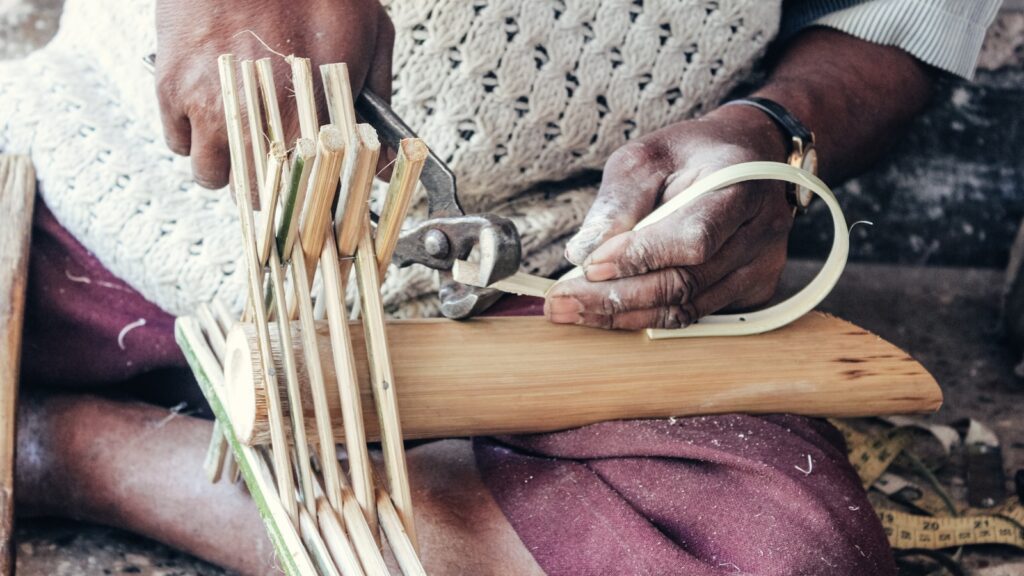
- Morning: an indigo dyeing workshop. Tokushima’s aizome, or indigo dyeing tradition, dates back centuries and nearly disappeared before a handful of dedicated dyers revived it; a hands-on workshop, dyeing a small piece of fabric in a genuine fermented indigo vat, offers a far more tactile understanding of the craft than simply viewing finished textiles.
- Midday: a detour toward the Iya Valley, one of Japan’s most dramatic and historically isolated mountain gorges, reachable by car or a scenic but sparse local bus route, worth the journey for the vine bridges alone — suspended crossings originally built, according to local tradition, to be cut quickly in the event of pursuit during an earlier era of conflict.
- Afternoon: a soba lunch in a small mountain settlement, where buckwheat grown on steep terraced slopes produces a distinctly earthy, rustic noodle unlike the more refined soba found in larger cities.
A dyer who has worked with indigo for over thirty years described the appeal of the craft to a visiting group: “The colour changes every time you dip the cloth. You never fully control it, and that’s the whole beauty of the work.” It captures something of Tokushima’s wider appeal too — a place that rewards visitors willing to let a trip unfold a little unpredictably rather than following a rigidly planned itinerary. Hot spring country closer to Tokyo rewards the same unhurried approach, as our itinerary for forty-eight hours in Hakone suggests.
Getting There and Getting Around
Tokushima is reachable from Osaka by highway bus in around three hours, or by a combination of train and ferry for travellers preferring a more scenic route across the Seto Inland Sea. A rental car is genuinely useful for the second day’s excursion into the Iya Valley, where public transport options thin out considerably once away from the city centre; those without a car should plan the mountain portion of the itinerary carefully around the limited bus schedule, or consider a guided day tour instead. Those extending a Shikoku trip further will find useful onward planning in our guide to planning a grand tour of Japan, and rail-focused travellers may want to consult our broader guide to Japan rail travel before committing to a car-based itinerary instead.
Where Tokushima Fits in a Wider Japan Trip
Tokushima works particularly well as an extension of a longer Japan itinerary rather than a standalone destination, ideally paired with time on Shikoku’s other prefectures or connected onward toward the islands of southern Japan for travellers continuing further afield. Visitors drawn to quieter, less-visited corners of the country more generally will find a natural companion in our guide to autumn escapes in Japan’s north, which applies a similar logic — trading famous names for genuine atmosphere — to an entirely different region.
A Worthwhile Detour
Forty-eight hours is not long enough to properly know Tokushima, but it is enough to understand why the region deserves more attention than it typically receives. Between the drama of the Naruto whirlpools, the quiet discipline of an indigo dyeing workshop, and the raw, isolated beauty of the Iya Valley, the prefecture offers a version of Japan that feels considerably less mediated than the country’s more heavily touristed circuits. For more of the country’s overlooked corners and considered itineraries, our Travel & Stays section continues to track the destinations worth the extra effort to reach.
Where to Stay
Tokushima’s accommodation options lean toward smaller, family-run inns rather than large international hotel chains, a reflection of the region’s modest visitor numbers compared with mainland Japan’s more famous circuits. A traditional ryokan near the old merchant quarter offers a convenient base for the first day’s exploration, with the added benefit of an onsen bath to unwind after a long day of walking. For the second day’s excursion into the Iya Valley, a handful of small guesthouses in the mountains themselves allow travellers to break the itinerary into a more relaxed three-day version rather than a rushed round trip from the city — worth considering for anyone with a little extra time, since the valley’s beauty rewards an early morning start before day-trippers arrive from the coast. Travellers who enjoy this kind of small-inn, unhurried Japan will find a natural companion in our guide to forty-eight hours in Beppu.
What to Pack and Plan For
The Iya Valley’s vine bridges and mountain paths call for sturdy, comfortable footwear rather than anything designed primarily for city walking, and the region’s weather can shift quickly given its mountainous terrain, so a light waterproof layer is worth carrying regardless of season. Cash remains more useful than cards in the smaller mountain settlements, where card acceptance lags well behind the mainland’s larger cities. Above all, building in a little slack around the itinerary — rather than treating both days as a tightly scheduled checklist — tends to produce the more memorable trip, since some of Tokushima’s best moments, a quiet street in the old town, an unplanned conversation with a shopkeeper, tend to arrive precisely when there is room left for them.
Marcus writes on travel and hospitality across Asia, and is happiest a long way from a lobby.