The Best Fabrics for an All-Season Suit
The right all-season cloth solves a very specific problem: one suit that performs in the tropics and travels convincingly to a colder climate.
 By Daniel Koh
30 August 2026 · 6 min read
By Daniel Koh
30 August 2026 · 6 min read
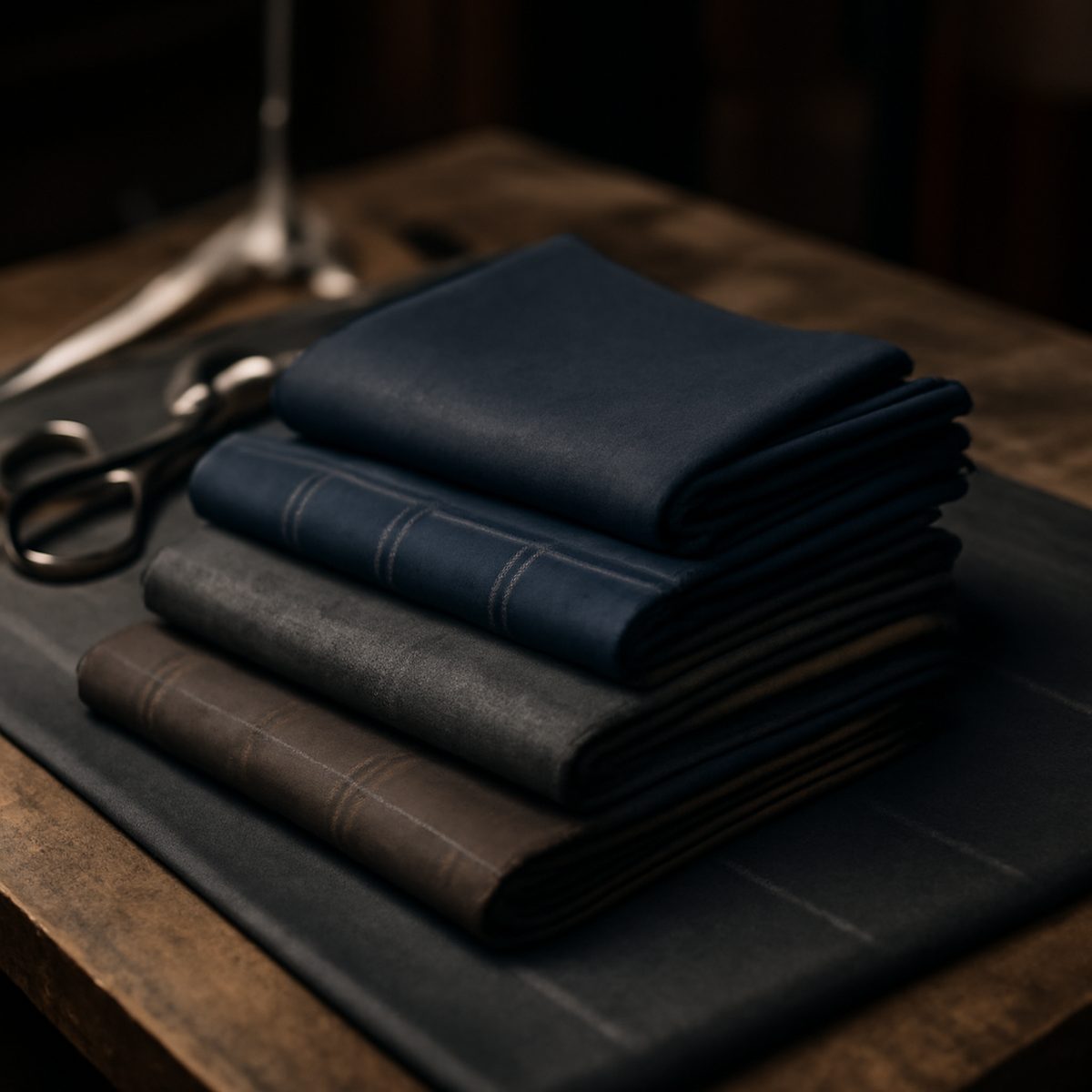
Ask a Singapore-based tailor what the hardest brief in the shop is, and most will not say a wedding suit or a black-tie jacket. It is the all-season suit — the one piece meant to work equally well in a humid boardroom on Robinson Road and a chilled conference room in London three days later. It is a genuinely difficult ask of a single cloth, and getting it right depends far more on understanding fabric construction than on chasing a fashionable colour or cut.
Why “All-Season” Is Mostly About Weight and Weave
A suit’s seasonality has less to do with the fibre than most buyers assume. Wool, in particular, is often unfairly blamed for feeling hot, when the real culprit is almost always weight and weave density. A tightly woven worsted wool at around 260–280 grams per metre, cut with an open, breathable weave called a fresco or a tropical weight, will move air far more effectively than a lighter but densely woven synthetic blend. The goal for an all-season fabric is a cloth light enough not to feel oppressive in Singapore’s heat, but with enough structure and drape to hold a crease and look intentional in an air-conditioned room several degrees cooler.
This is a different brief from choosing fabric for a dedicated winter suit, which can lean into heavier flannel and denser cloth without penalty, or from summer suiting built purely for heat, which can go lighter and more open-weave than an all-season cloth ever should. The all-season fabric sits deliberately in the middle, trading a little of each extreme’s specialist performance for genuine versatility.
The Best Fibre Choices
Tropical-weight worsted wool
Still the benchmark. A good tropical wool, spun fine and woven open, breathes surprisingly well and resists creasing far better than most alternatives. It also takes a crease cleanly, which matters if the same suit needs to look sharp after a long-haul flight.
Wool-mohair blends
Mohair adds a subtle sheen and a crispness that helps a suit shed wrinkles and stay cool, though a blend with too much mohair can look better suited to evening wear than a Monday client meeting. A blend around 10–20% mohair strikes a useful balance.
High-twist wool
Woven from tightly twisted yarns, high-twist cloths resist creasing exceptionally well and have a slight, almost mechanical crispness that photographs and travels beautifully. It is a more expensive category but tends to reward the investment over years of hard wear.
What to Avoid
- Poly-wool blends marketed as “wrinkle-free” — they resist creasing at the cost of breathability and often look faintly synthetic under bright light
- Anything under 230gsm for a suit expected to hold structure in a cold room — it will feel and drape as flimsy as it sounds
- Very dark, dense weaves for a genuinely tropical climate — they absorb heat visibly and show perspiration marks faster than a mid-weight mid-tone cloth
Colour Does Real Work Too
A mid-grey or a slightly lighter charcoal reads as more genuinely all-season than true black or navy, both of which behave beautifully in cooler light but can feel unnecessarily heavy and formal under Singapore’s brighter, warmer daylight. This is one reason a well-chosen grey suit tends to outlast trend cycles better than either extreme — it photographs well in an evening setting and reads as entirely appropriate for a daytime meeting in full tropical sun.
“The suit I wear most is the one nobody remembers noticing,” says one Singapore tailor’s longtime client. “It’s not the boldest fabric in my wardrobe. It’s just the one that works everywhere I actually go.”
Building the Suit Around the Fabric
Once the cloth is chosen, construction should follow its lead. A half-canvas or full-canvas build breathes far better than fused construction, allowing air to move between the cloth and the body rather than trapping heat against fused interlining. Half-lining, or no lining at all through the jacket body, further improves airflow — a fully lined jacket in an all-season cloth undoes much of the fabric’s good work. Trousers cut with a touch more room through the thigh, rather than a slim taper, also help considerably with comfort in humid conditions without sacrificing a clean line when seen from the front.
Interlining choice matters more than most buyers realise. A traditional hair canvas, floating freely inside the jacket rather than glued to the outer cloth, moves with the body and allows air to pass between the layers — one reason a well-made canvassed jacket often feels cooler than a cheaper fused one, even in an identical fabric weight. It also ages considerably better, softening and moulding to the wearer over years rather than bubbling or delaminating the way fused interlining eventually does in humid conditions. This is a genuine long-term investment consideration: a well-constructed all-season suit, properly cared for, can outlast three or four cheaper suits bought on fabric appeal alone.
Caring for an All-Season Suit in a Humid Climate
A suit doing double duty across climates needs a slightly different care routine from a single-season garment. After a day in Singapore’s heat, hang the jacket on a proper shaped wooden hanger and let it air for at least a full day before returning it to a crowded wardrobe — trapped moisture is what actually damages wool fibres and canvas structure over time, far more than the heat itself. A cedar-lined section of the wardrobe, or cedar blocks tucked into jacket pockets, helps deter moths, which find wool considerably more appealing in a humid environment than in a dry one.
Dry cleaning should be kept to a minimum — perhaps twice a season rather than after every wear — since the solvents involved gradually strip natural oils from the wool and shorten the cloth’s working life. A gentle steam and brush after most wears does the bulk of the maintenance work without the wear and tear of full cleaning.
For anyone assembling a working wardrobe rather than a single suit, the same logic that governs choosing fabric for a dedicated travel suit applies here in miniature: prioritise performance you will actually use over specifications that look impressive on a swatch card but rarely matter in daily wear. An all-season suit does not need to be exceptional in any single climate. It needs to be reliably good in most of them, which is a genuinely different — and in some ways harder — design brief.
The end result, worn well, is a suit that quietly disappears into the background of a working life: equally credible stepping off a flight from a cold city or walking into a client meeting on a humid Tuesday afternoon. That reliability, more than any single technical spec, is what “all-season” should actually mean. For more on building a wardrobe with the same discipline, the style and watches section covers fabric, cut, and accessories with the same considered eye.
Daniel has spent fifteen years arguing that the best watch is the one you never take off.