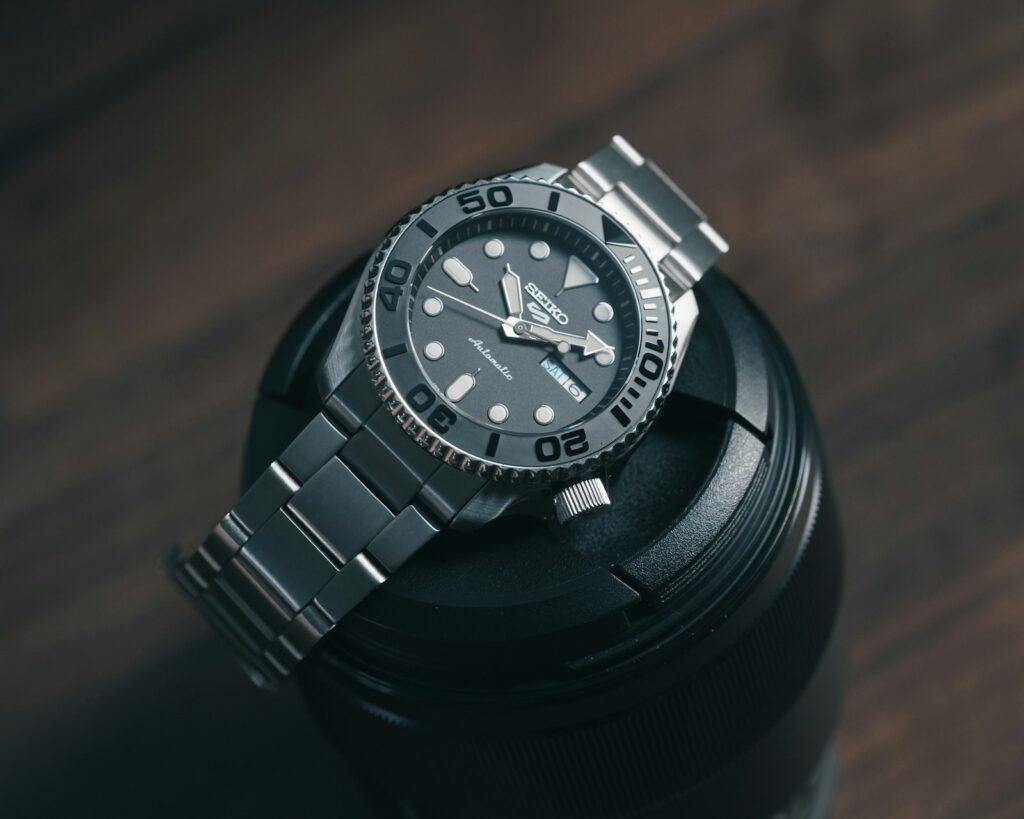
The Best Everyday Watch Winders and Storage
The right winder or roll says less about spending power than about understanding what a working watch collection actually needs, day in, day out.
 By Daniel Koh
30 August 2026 · 6 min read
By Daniel Koh
30 August 2026 · 6 min read

The watch drawer tells you more about a collector than the watches themselves. Open it in a considered Singapore home — a shophouse conversion off Joo Chiat, a high floor apartment with a view of the strait, a family bungalow near Holland Village — and you rarely find chaos. You find order: rolls lined in soft leather, a winder turning quietly on a shelf, straps coiled like sleeping things. Watch storage is where restraint meets ritual, and getting it right has little to do with spending big and everything to do with understanding what a collection actually needs.
Start With What You Actually Own
The first mistake is buying storage for the collection you wish you had rather than the one sitting in front of you. A single automatic dress watch worn most days needs nothing more elaborate than a soft pouch and, if it is worn intermittently, a modest single-post winder. A working rotation of four or five pieces — perhaps something in the spirit of a reliable field watch alongside a dive-proportioned everyday piece — calls for a proper case with individual cushions, so nothing scratches its neighbour when the lid closes. Collectors who lean further into complications, gathering pieces the way others gather a GMT for crossing time zones, tend to need winders with programmable rotation directions and turns-per-day settings, because not every automatic movement wants the same treatment.
Be honest about how often you actually reach for each piece. A watch that sits for three months between wears does not need a winder at all — it needs a case that protects the crystal and keeps dust out, ready for the twenty seconds it takes to reset the date and time when you finally pick it up again.
The Case for Winders — and Against Them
Winders exist to solve one specific problem: an automatic movement that stops loses its power reserve, and some complications, particularly a perpetual calendar, are genuinely tedious to reset. For those pieces, a winder earns its keep. But not every watch benefits from constant motion. Vintage movements, in particular, can wear faster under needless winding, and a watch you are not currently rotating into your week is arguably better off resting than turning on a shelf for no purpose beyond looking impressive.
A good single or double winder, well made, with a quiet motor and a timer that lets it rest as well as turn, will outlast most fashions in watch design. Look for adjustable turns-per-day — most modern automatics are happy between 650 and 950 — and a directional setting, since some movements wind only clockwise, some anticlockwise, and some both ways.
What to Avoid
- Winders with a visible, noisy motor — you will hear it in a quiet study within a week
- Cheap velvet-lined boxes that shed fibre into the case back
- Anything with a magnetic clasp near the watch compartment, which can affect movement accuracy over time
Rolls Are Underrated
For anyone who travels, a leather roll does more useful work than a winder ever will. It protects two to four watches in transit, takes up almost no room in hand luggage, and — unlike a hard case — will not draw attention at airport security the way a branded box sometimes does. The best rolls use a soft, tightly woven interior fabric that will not scratch a polished case, and enough padding between compartments that watches cannot knock against each other when the roll is folded closed.
Buy one size larger than you think you need. A roll built for exactly three watches has no give for the day you decide a fourth piece — a dress watch for an evening event, say — needs to come along too.
“I used to think winders were the serious collector’s tool and rolls were for beginners,” says one Singapore-based collector who asked not to be named. “It’s the other way round. The roll goes everywhere with me. The winder just sits in a drawer looking expensive.”
Building a System, Not Just Buying Boxes
The best watch storage in any home functions as a small system rather than a single purchase. A drawer insert with individual watch pillows for the daily rotation. A winder for the one or two complicated pieces that genuinely need continuous motion. A travel roll by the door for anything leaving the house. And, for anyone with pieces worth insuring properly, a small dehumidifying pouch or silica packet tucked into the storage drawer — Singapore’s humidity is not kind to leather straps left unattended for weeks at a time.
Materials matter as much as mechanism. Look for cases lined in a breathable microsuede rather than plastic-backed velvet, and hinges rated for daily use rather than the flimsier hardware found in gift-set boxes. A case that feels solid when empty will still feel solid in five years, long after the cheaper alternative has started to sag on its hinges.
A Simple Framework
- One to three watches worn in weekly rotation: a soft case with individual cushions, no motor required
- An automatic with a complication that resists easy resetting: a single-post winder, timer set to rest overnight
- Anything travelling: a compact leather roll, sized generously
- Long-term storage for pieces not currently worn: an airtight case with a humidity pack, checked twice a year
Where Style Meets Function
None of this needs to look clinical. The best examples sit happily on an open shelf rather than hidden in a wardrobe — a walnut valet box with a soft-close lid, or a woven-leather case that looks equally at home holding cufflinks as it does a rotation of watches. Storage that you enjoy looking at is storage you will actually use properly, rather than something whose lid stays permanently shut because it feels like a chore to open. For readers building out the rest of a considered style and watches edit at home, the same principle that governs a good wardrobe rail applies here: buy fewer, better pieces, and give them somewhere proper to live.
In the end, the right winder or roll is simply the one that matches how you actually wear your watches — not the one that photographs best on a shelf. Build the system around your real rotation, not an imagined one, and the drawer will do its quiet job for years without you ever having to think about it again.
Daniel has spent fifteen years arguing that the best watch is the one you never take off.