The Best Prawn Noodles and Hae Mee
Singapore's prawn noodle bowl rewards patience. Here is how to read a good one, and where the city's most considered versions are quietly simmering.
 By Renée Tan
30 August 2026 · 6 min read
By Renée Tan
30 August 2026 · 6 min read

There is a particular kind of quiet that settles over a hawker centre table when a bowl of prawn noodles arrives correctly made. The broth is the colour of dark amber, faintly smoky, and the prawns still hold a faint brine of the sea. Hae mee, as it is known in Hokkien, is one of Singapore’s most unforgiving dishes to get right, because the entire dish rests on a stock that cannot be faked, rushed, or disguised with shortcuts. Get the stock wrong and no amount of garnish will save the bowl. Get it right, and you have one of the most quietly moving dishes in the republic’s culinary canon.
What separates a good bowl from a forgettable one
The defining test of prawn noodles is the stock, built traditionally from prawn heads and shells, pork bones, and often a portion of pork ribs, simmered for hours until the liquid turns cloudy and deeply savoury. The best versions in Singapore still char their prawn shells before they go into the pot, a step that separates a merely competent broth from a transcendent one. That extra layer of roasted sweetness is what lingers on the palate long after the bowl is finished, and it is the single detail worth seeking out when you are trying to judge a new stall.
Texture matters almost as much as flavour. The yellow noodles should have enough bite to hold the broth without turning soft, and the thin bee hoon, when used, should soak up just enough stock to carry its perfume without disintegrating. A well-balanced bowl offers both textures side by side, along with kangkong, a scattering of fried shallots, and, for those who want it, a spoonful of chilli that should complement the broth rather than mask it.
The charcoal question
Ask any serious hae mee cook in Singapore and they will tell you that charcoal changes everything. A handful of the city’s remaining charcoal-fired stalls still exist, mostly tucked into older hawker centres where the extraction systems were built around them decades ago, and the smoky depth that comes from an open charcoal flame is nearly impossible to replicate on gas. These stalls tend to open early, sell out by early afternoon, and rarely advertise themselves beyond a queue. If you find one, the wait is almost always worth it, though be prepared to eat standing, tray balanced on one arm, because seating disappears first.
What to order alongside the noodles
- A side plate of extra prawns, deveined and butterflied, for tables that want to taste the crustacean on its own
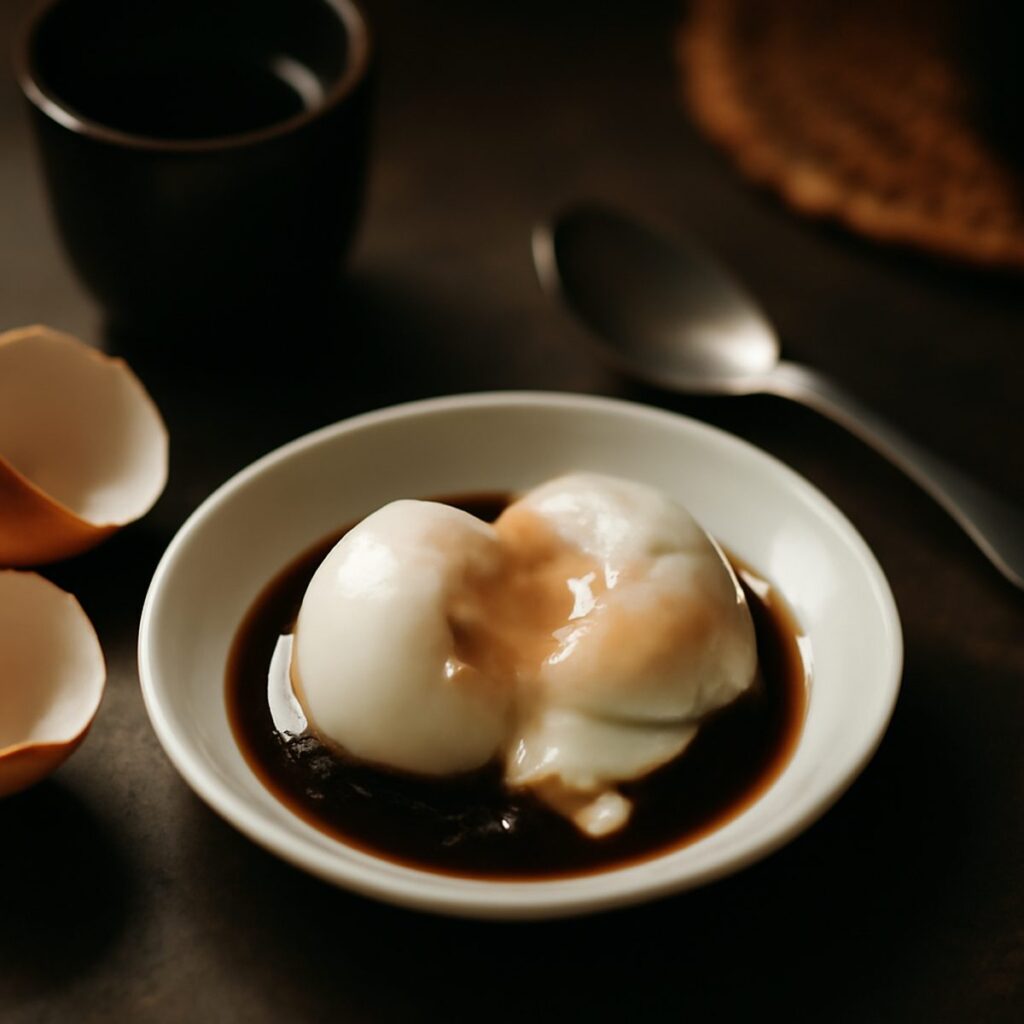
- A soft-boiled egg, which some stalls fold directly into the broth for extra richness
- Braised pork belly, when available, which turns the dish from a snack into something closer to a full meal
The new generation of hae mee
A newer wave of cooks, many trained in fine-dining kitchens before returning to hawker or coffee-shop formats, have begun treating prawn noodles as a dish worth refining rather than simply preserving. Some reduce their stocks further for concentration, others introduce a touch of dried shrimp or scallop for added complexity, and a few have started serving the broth on the side, dry-style, so the noodles themselves can be tossed in a reduction that clings rather than pools. Purists sometimes bristle at these reinventions, but the best of them honour the original spirit of the dish even as they push its technique forward. It is a similar impulse to what is reshaping other corners of the city’s hawker landscape, where old formats are being handled with new rigour rather than replaced outright.
“You can tell a cook’s whole philosophy from their prawn stock,” one veteran hawker centre regular told us. “It’s the one dish here that has nowhere to hide.”
Reading the bowl like a regular
Seasoned diners tend to taste the broth on its own before touching the noodles, a habit worth adopting if you want to judge a stall properly. A stock that tastes flat or purely salty, without the layered sweetness of shell and bone, is usually a sign of a shortcut somewhere, whether that is stock powder, a shorter simmer, or prawn heads that were not fresh enough to begin with. The best bowls announce themselves in the first spoonful, before the noodles have even been stirred in.
It is also worth noting how a stall treats its chilli. A good sambal for prawn noodles should carry heat and a faint funk from dried shrimp or belachan, not simply sugar and vinegar. Many regulars ask for it on the side rather than mixed in, precisely so they can taste the unadulterated broth first and adjust from there. This kind of small ritual, repeated across a thousand hawker tables every morning, is part of what makes the dish feel less like a meal and more like a shared cultural memory, not unlike the devotion Singaporeans hold for their morning kopitiam eggs.
Where the dish sits in the wider noodle culture
Prawn noodles belong to a broader family of Singapore noodle dishes built on painstaking, hours-long stocks, alongside cousins such as mee siam and the more austere, hand-pulled ban mian. What unites them is a shared insistence that broth is not an afterthought but the entire architecture of the dish. Understanding hae mee, in that sense, is a useful entry point into understanding what Singaporeans actually mean when they talk about a “good” bowl of noodles: not novelty, but depth achieved through unglamorous, repetitive labour.
For visitors wanting a wider survey of the island’s noodle and rice-bowl culture before narrowing in on prawn noodles specifically, our broader Dining & Drinks coverage is a reasonable place to start, if only to understand how many of these dishes share the same DNA of stock, char, and patience.
Final word
Prawn noodles are not a dish that photographs particularly well, nor one that lends itself to easy superlatives. It is unglamorous, faintly messy, and best eaten quickly while the broth is still hot enough to fog a spoon. But approached properly, seeking out the stalls that still char their shells and simmer for hours rather than minutes, it remains one of the most rewarding bowls in Singapore, a dish that asks nothing of you except a willingness to queue, and to taste the broth before you touch anything else.
Renée has covered Singapore's restaurants for over a decade, with a soft spot for the kitchens most people walk past.