The Best Lebanese and Levantine Dining
Singapore's Levantine dining scene has quietly matured. Here is what defines a genuinely good mezze spread, and where the city's kitchens are excelling.
 By Renée Tan
30 August 2026 · 6 min read
By Renée Tan
30 August 2026 · 6 min read
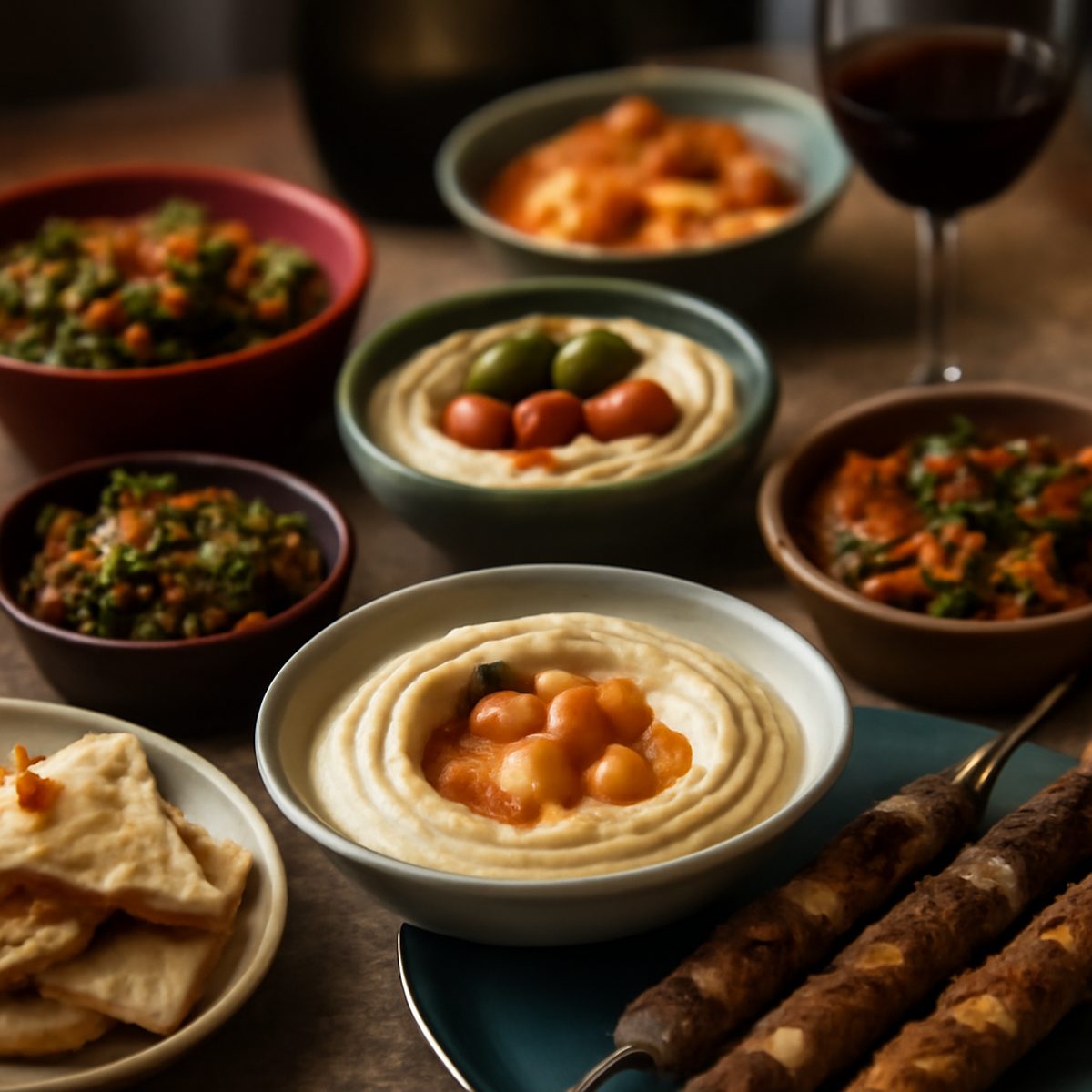
Levantine cooking has always been an exercise in generosity, built around a table crowded with small plates meant to be shared, argued over, and returned to throughout an evening rather than consumed in a single tidy course. Singapore’s Lebanese and broader Levantine dining scene has grown considerably more sophisticated in recent years, moving beyond a handful of long-standing institutions to include kitchens that treat mezze with real technical seriousness. The best of these restaurants understand that the cuisine’s apparent simplicity, hummus, flatbread, grilled meats, is precisely what makes it so difficult to execute with real distinction.
What defines a serious mezze spread
A good mezze table is judged less by any single dish than by its range and internal balance. There should be something bright and acidic, typically a tabbouleh built with far more parsley than bulgur, alongside something creamy such as a properly whipped hummus or a labneh finished with good olive oil. Texture matters as much as flavour: a spread that is entirely soft and dip-based, without the crunch of a fattoush or the char of a grilled vegetable, tends to feel one-note by the third course. The best kitchens treat the mezze course as a full meal in miniature, with its own internal rhythm, rather than a mere prelude to the grill.
Bread deserves particular attention. Fresh, warm flatbread, ideally made in-house or sourced from a dedicated bakery rather than bought frozen, transforms a mezze spread from good to memorable, since so much of the eating experience involves scooping, wrapping, and tearing. A kitchen that treats its bread as an afterthought is usually cutting corners elsewhere too.
The charcoal grill as the meal’s centre of gravity
Where Lebanese dining distinguishes itself most clearly from other cuisines with similar mezze traditions is at the grill. Marinated lamb, chicken, and kofta cooked over live charcoal carry a smokiness that gas simply cannot replicate, and the best Levantine kitchens in Singapore have invested in proper charcoal setups despite the additional operational complexity this involves in a hawker-centre-and-mall-dominated dining landscape. A well-grilled kofta should be charred at the edges while staying juicy within, seasoned with warm spices such as allspice and cinnamon rather than overwhelmed by them.
Dishes worth seeking out specifically
- Muhammara, a walnut and roasted red pepper dip with a gentle heat, less common than hummus but worth asking for
- Freekeh, a smoked green wheat often served pilaf-style with lamb, offering a nuttier alternative to rice
- Kibbeh, whether fried or served raw, as a marker of a kitchen’s technical confidence
How the scene has matured
A decade ago, Singapore’s Levantine dining options leaned heavily towards a handful of long-running institutions serving a fairly standard, crowd-pleasing menu. The current scene is broader and more considered, with newer kitchens drawing distinctions between Lebanese, Syrian, and wider Levantine traditions rather than flattening them into a single generic “Middle Eastern” menu. This mirrors a wider shift across the city’s dining scene towards more specific, less generalised regional cooking, visible too in how kitchens have begun distinguishing Turkish and Anatolian cooking from its neighbouring Levantine and Greek and wider Mediterranean traditions, rather than treating them as interchangeable.
“People used to ask for ‘Middle Eastern food’ as if it were one cuisine,” one Singapore-based Levantine chef told us. “Now guests actually ask what region a dish is from, and that changes how seriously you have to cook it.”
Dining considerations worth knowing
Many of the city’s better Levantine kitchens now offer strong halal certification, which is worth confirming directly if that matters to your table, and several sit comfortably within our wider guide to the island’s halal fine dining scene. Portions at a proper mezze table tend to run larger than diners expect, so ordering with restraint for a first visit and adding dishes as the meal progresses is usually the wiser approach than over-ordering from the outset. Sharing is genuinely built into the format here, not merely a suggestion, and tables of four or more tend to get the fullest, most representative experience of what a kitchen can do.
For a broader view of how this cuisine sits within the city’s wider culinary landscape, our Dining & Drinks section carries further coverage of Singapore’s evolving regional dining scenes, of which Levantine cooking remains one of the more quietly confident additions.
Wine and arak, an underused pairing
Levantine tables in Singapore have historically leaned on soft drinks or mint tea, but a growing number of kitchens now offer proper wine lists drawing on Lebanon’s own long winemaking tradition, particularly from the Bekaa Valley. These wines, often built on varietals like Cinsault or Obaideh, tend to have the structure and acidity to stand up to a heavily spiced grill in a way that many European reds cannot. Arak, an anise-forward spirit traditionally diluted with water and ice until it turns a cloudy white, remains the more traditional pairing, and a handful of Singapore’s Levantine restaurants now stock it properly rather than as a novelty, understanding it as essential to the meal as the bread itself.
Dessert, when ordered, tends to be an afterthought at most Levantine tables given how filling the mezze and grill courses already are, but a properly made kunafa, its shredded pastry crisped in butter over a layer of soft cheese and soaked in rosewater syrup, is worth the extra room. Few Singapore kitchens make it fresh to order rather than pre-portioned, and the difference in texture between the two is considerable, with a freshly made version offering a crackling top layer that a reheated portion simply cannot replicate.
Final word
The best Lebanese and Levantine dining in Singapore rewards patience and generosity of order, a table willing to work through several small plates rather than a single centrepiece. Look for kitchens that grill over real charcoal, bake their own bread, and treat regional distinctions with genuine care rather than flattening an entire region into one menu. Done properly, it remains one of the most sociable, generous ways to eat in the city, an occasion as much as a meal.
Renée has covered Singapore's restaurants for over a decade, with a soft spot for the kitchens most people walk past.