Why the Farmhouse Endures
The farmhouse was never meant to be stylish, and that is exactly why it endures. How the working farm became our lasting template for a warm, honest home.
 By Priya Nair
1 September 2026 · 6 min read
By Priya Nair
1 September 2026 · 6 min read
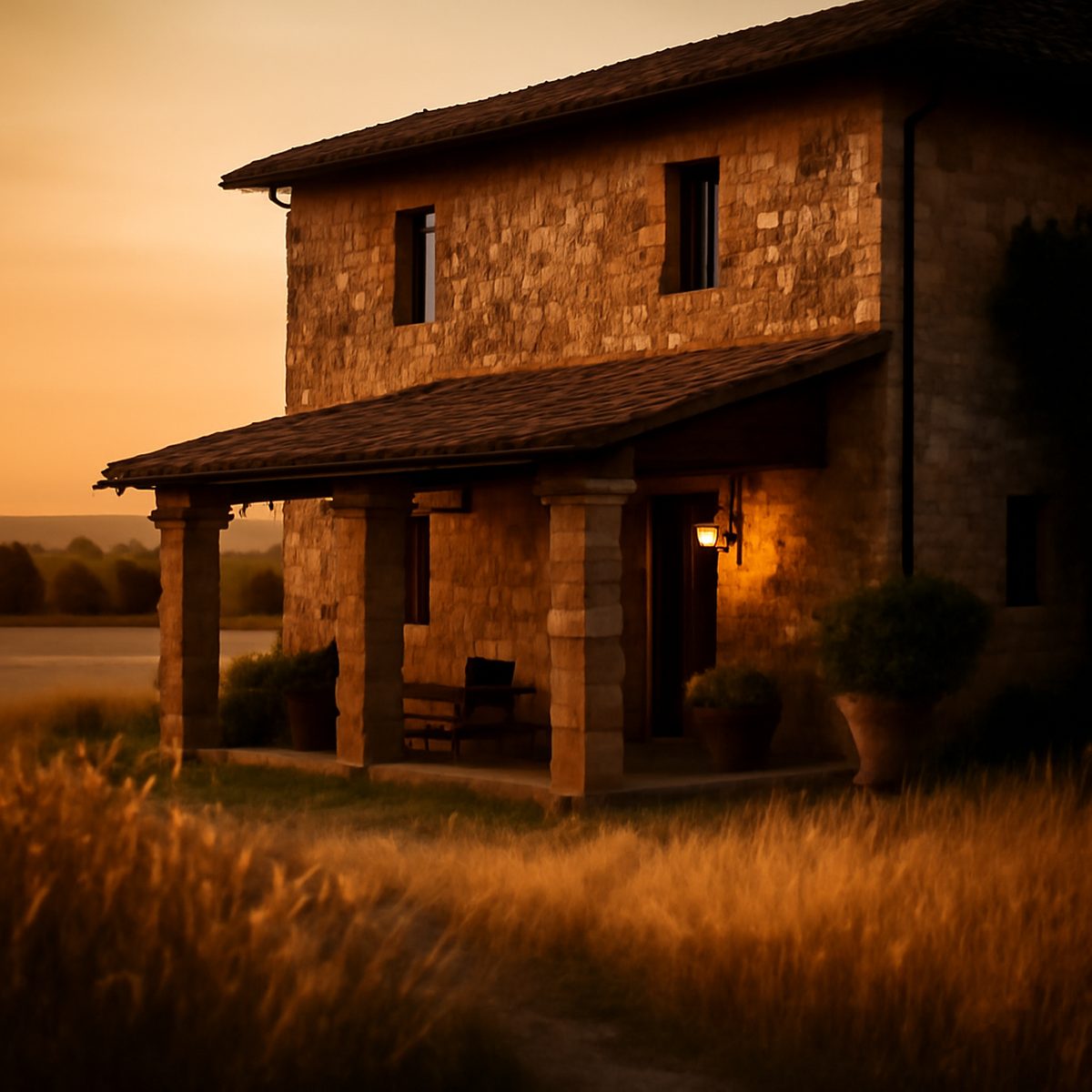
Of all the forms a house can take, the farmhouse holds a peculiar and lasting grip on the imagination. It sells magazines, launches paint colours and shapes new-builds that have never seen a field. And yet the real farmhouse was never designed to charm anyone. It was a working building, raised by people who needed shelter, warmth and utility, with beauty arriving only as a by-product of doing sensible things well. That, precisely, is the secret of its endurance. The farmhouse is the template for a home built around use rather than show, and in an age weary of show, its honest appeal only deepens.
Form born of function
Everything we love about the farmhouse began as a practical answer to a practical problem. The thick stone or brick walls that give it such solidity were built to hold warmth through hard winters and keep out summer heat. The deep porch was a working threshold, a place to shed muddy boots and wet coats before entering. The generous kitchen at the heart of the house was where the household actually lived, gathered around the warmth of the range because that was the warmest room.
This is why the farmhouse feels so right underfoot and overhead: nothing in it is arbitrary. The exposed beams were the structure, honestly shown. The flagged or timber floors were what could be laid and would last. The whole building is an argument for form following function, and it shares that DNA with the other great vernacular houses this magazine admires, from why the courtyard house endures to the tropical logic of why the verandah house endures. Each solved the problem of shelter in its own climate, and each became beautiful by solving it well.
The warmth at the centre
If the farmhouse has a soul, it lives in the kitchen. In the working farm this was the true centre of the house, a room kept warm by the range around the clock, where meals were cooked, clothes were dried, children did their lessons and the whole life of the household concentrated. It was never a room for best. It was the room for living, and its warmth, both literal and social, is what people most reach for when they invoke the farmhouse ideal.
That gravitational pull towards a single warm heart is something modern homes, with their zoned heating and specialised rooms, have largely lost and are now trying to recover. The revival of the wood-burning stove is part of the same longing, the desire for a real, radiant source of heat to gather around; we have written on the return of the wood-burning stove for exactly this reason. The farmhouse understood, centuries before the word existed, the value of a hearth at the centre of family life.
The farmhouse was built to work, not to impress. Its beauty is entirely accidental, which is why it never dates.
The materials that age well
A farmhouse is a lesson in materials that improve with time. Stone weathers and lichens. Timber silvers and settles. Flagstones wear smooth and dark in the paths of daily traffic. Everything about the building is designed, if only by long trial and error, to look better for being used, not worse. This is the antithesis of the modern finish that is pristine on the day it is fitted and disappointing ever after.
That is why the farmhouse pairs so naturally with reclaimed and honest materials in any renovation. Old timber, salvaged stone, hand-made brick and worn floors all speak the same language of age gracefully worn; the argument for why reclaimed timber belongs in modern homes is, at heart, a farmhouse argument. To restore or evoke a farmhouse well is to choose materials that have a future of improvement ahead of them, rather than a slow decline.
It is worth saying that the farmhouse ideal travels, too, far beyond the cold northern countryside where its most familiar image was formed. Every farming culture evolved its own version, shaped by its own climate and crops, and each solved the same problems in its own way. The thick-walled farmhouse of a hot dry country and the timbered barn of a wet one look nothing alike, yet both answer the same brief: shelter the family, store the harvest, gather round the warmth, and build from what the land provides. That universality is part of why the form speaks so widely. It is not a regional style but a human one, and it can be borrowed intelligently almost anywhere, including in a tropical city, provided the borrowing respects the spirit rather than merely copying the surface. Communal living under one long roof has its own enduring logic, as why the longhouse endures explores.
Getting the spirit right
The farmhouse look is easy to buy and easy to get wrong. The market is full of new houses dressed in farmhouse costume, with fake beams, a token barn door and a sink chosen from a catalogue. These almost always ring false, because they mistake the surface for the substance. The genuine farmhouse feeling comes from a few deeper principles.
- Honesty of material. Real stone, real timber, real wear. The farmhouse cannot be faked in resin and vinyl.
- A warm, working centre. A generous kitchen that is genuinely the heart of the house, not a showpiece around the corner from where you actually live.
- Restraint. The farmhouse was never fussy. Plain surfaces, sturdy furniture and an absence of clutter are truer to it than any amount of rustic decoration.
- Room to be untidy. A boot room, a pantry, a place for mess. The working house always had somewhere to put the mud.
The idea that lasts
The farmhouse endures because it is not really a style at all but a set of values about how to live: honestly, warmly, without pretension, in a house built to be used hard and to age well. Those values do not go out of fashion, because they were never in fashion to begin with. They are simply true. Whether you live in a genuine old farm or merely borrow its wisdom in a suburban house, the lessons hold: build around warmth, choose materials that improve, and let use, not show, shape the home. It is the deepest current running through our homes and culture coverage, and the farmhouse states it more plainly than any other building we have. That is why, long after the trend has passed, it will still be standing.
Priya tours the homes most people only glimpse from the road, and asks how they are really lived in.