Why Hand-Thrown Pottery Belongs in the Home
Handmade pottery carries the trace of the hand that shaped it. Why a hand-thrown bowl earns its place at the table over anything the factory can offer.
 By Priya Nair
1 September 2026 · 6 min read
By Priya Nair
1 September 2026 · 6 min read
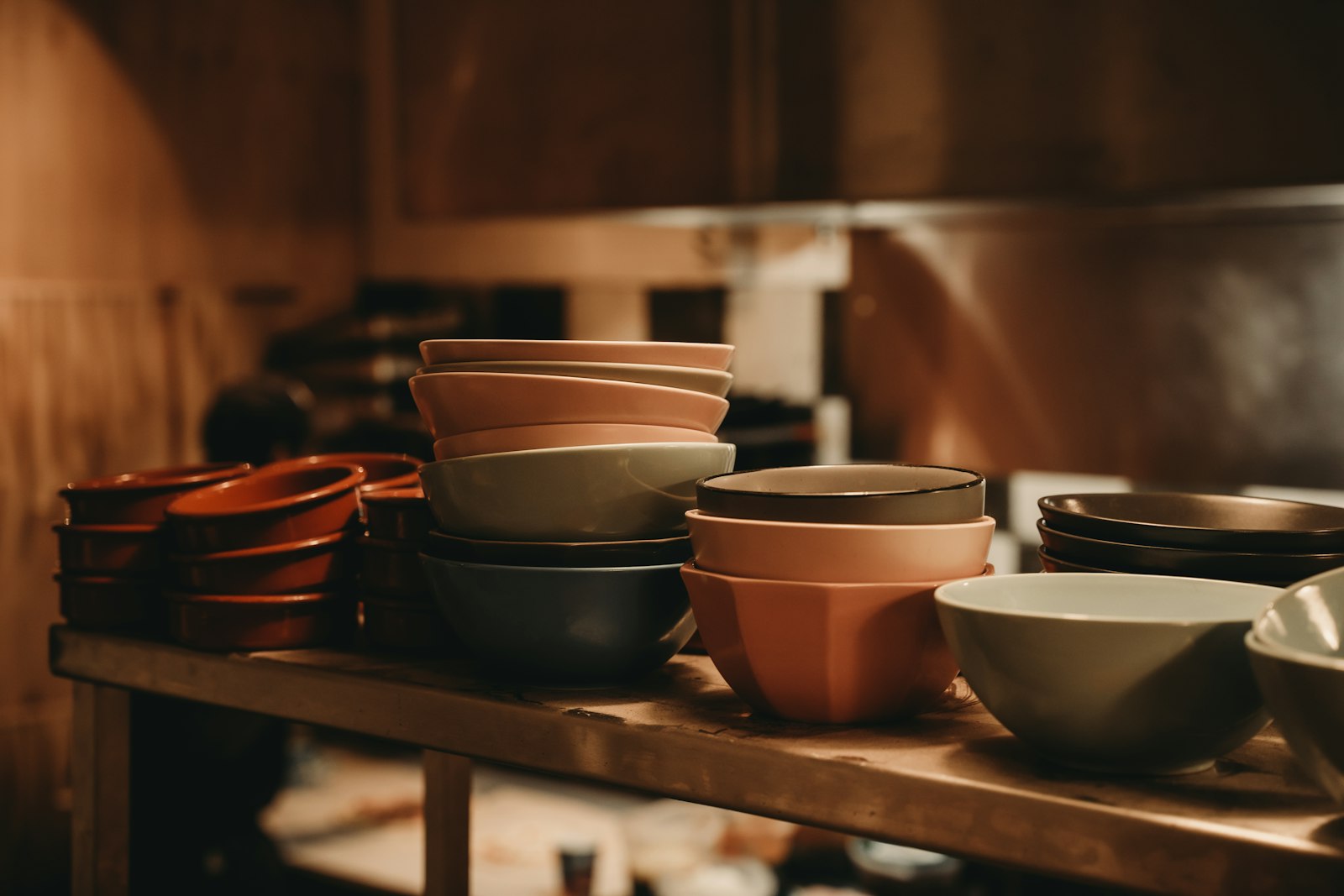
Pick up a hand-thrown bowl and your fingers find the truth of it at once. There is a faint spiral where the potter’s fingers rose up the clay, a slight unevenness in the rim, a weight that sits differently in the hand than the machine-made equivalent. This is the record of a person and a moment, the clay stopped at the instant the maker judged it right. In a home full of objects that could be anything and come from anywhere, hand-thrown pottery is emphatically something, made by someone, and that is precisely why it belongs on the table, the shelf and in daily use.
The mark of the hand
What separates hand-thrown pottery from its factory cousin is not quality in the narrow sense. Mass-produced ceramics can be perfectly serviceable, even elegant. What they cannot carry is the trace of the hand. Every hand-thrown piece is a slight variation, a one-off pulled from the wheel by a person making a hundred small decisions in the space of a minute: how fast to spin, how hard to press, when to stop. The result is an object with a subtle asymmetry that the eye reads, correctly, as life.
This is the quiet argument at the heart of the craft revival, and it runs far beyond pottery. It is the same value we celebrate in a guide to collecting studio ceramics: the preference for the singular over the identical, for the object that bears witness to its own making. A hand-thrown mug is not better because it is more perfect. It is better because it is less perfect, and honestly so.
Living with imperfection
The great gift of hand-thrown pottery is that it invites use rather than reverence. A flawless factory dinner service can feel like something to be protected, brought out for occasions and washed with anxiety. Handmade pieces, with their gentle irregularities already built in, carry no such burden. A chip, a stain, a hairline of wear only adds to the story. They are made to be lived with, and they reward the living.
This suits a certain philosophy of the home, one that prizes warmth and use over showroom perfection. A shelf of mismatched hand-thrown plates, gathered slowly from different makers, has a richness that no matched set can touch. Displayed openly, these pieces become part of the texture of the room; there is a reason they look so at home in the open-shelf kitchen, where the daily crockery is on show rather than shut away. The imperfection is the point, and putting it on display is a quiet act of confidence.
There is a tactile pleasure in the daily use of these things that runs deeper than looks. The slight weight of a well-made mug, the way a thrown bowl sits balanced in two cupped hands, the faint ridges under the thumb where the potter drew the clay upward: these are small sensory rewards repeated every morning, and they accumulate. A machine-made cup gives you nothing to feel. A hand-thrown one gives you a little conversation with its maker every time you lift it, and that, more than any argument about beauty, is why it earns its place in the routines of a life.
A hand-thrown bowl is not trying to be perfect. It is trying to be honest, and honesty wears far better over a lifetime of breakfasts.
Choosing pieces that will last a life
Buying hand-thrown pottery well is less about spending than about attention. A few principles help.
- Buy for the hand, not just the eye. Pick a piece up. A well-thrown bowl feels balanced and right; a well-made mug has a handle that meets your fingers as though it were measured to them.
- Favour the everyday. The pieces that earn their keep are the ones you use daily: the breakfast bowl, the coffee cup, the serving dish. Buy those first.
- Let a collection grow slowly. Gather from different potters over years and the mismatch becomes a signature. A room-full bought at once looks like a shop.
- Mind the glaze and the foot. Run a thumb over the base; a well-finished piece will not scratch the table, and a good glaze will wear gracefully rather than crazing badly.
There is a growing world of makers to buy from, and a deepening appreciation of their work; we have written about the ceramicists shaping the modern table precisely because the field has never been richer. Buy a piece directly from a maker where you can. The knowledge that a particular pair of hands shaped the bowl you eat from each morning is a quiet daily pleasure that nothing anonymous can replace.
The maker behind the object
Part of what you buy, with hand-thrown pottery, is a relationship, however distant, with the person who made it. There is a slower, deeper satisfaction in owning an object whose origin you can trace, whose maker you could name, whose studio you might even have visited. It reconnects the domestic object to human labour in a way that mass production has spent a century trying to obscure. The same argument extends to other crafts made by hand for daily use, as our piece on why hand-stitched leather belongs in the home explains. The same reconnection with the maker’s hand runs through metalwork too, as our piece on hand-beaten copper in the home explains.
This is why the pottery studio itself has become an object of fascination, a place where the craft can be watched and understood. We have explored the considered home pottery studio for readers drawn to make as well as to buy, because the act of throwing clay teaches you to value the results in a way no shop ever could. Even a single afternoon at the wheel changes how you hold every bowl thereafter.
Why it belongs
Hand-thrown pottery belongs in the home for the same reason natural light and honest timber do: because it brings the human and the real into daily life. It resists the flattening sameness of the mass-produced object. It ages well, it invites use, and it carries in its slight imperfections the whole warm argument for craft over convenience. Start with a single bowl you love and eat from it every day. It is exactly the kind of considered, humane choice this magazine champions across our homes and culture coverage, and it costs less to begin than you might think. The hand that shaped it is waiting at the breakfast table.
Priya tours the homes most people only glimpse from the road, and asks how they are really lived in.