Understanding the Art of the Pot-au-Feu
France's humblest grand dish is boiled beef done with reverence. A guide to the cuts, the clear broth and the two-course pleasure of a pot-au-feu.
 By Renée Tan
2 September 2026 · 6 min read
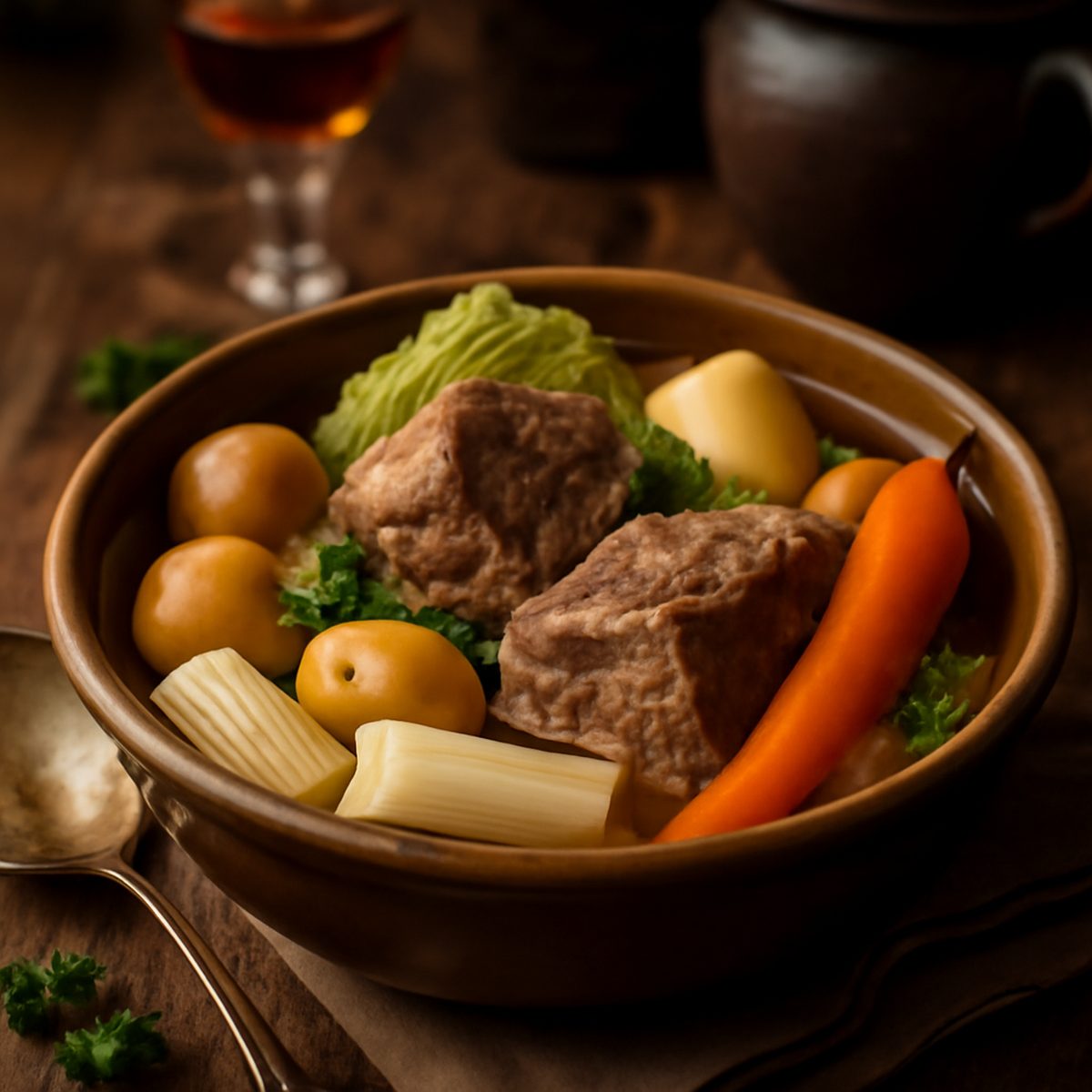
There is a particular kind of grandeur that hides inside humble dishes, and the pot-au-feu is its clearest example. Translated flatly it means nothing more than pot on the fire, and its method is as plain as the name, beef and vegetables simmered slowly in water until both the broth and the meat are transformed. Yet the French have long regarded it as one of the truest expressions of their table, a dish that asks for good ingredients and patience and gives back, from a single pot, a whole ordered meal.
The philosophy of the pot
What makes the pot-au-feu quietly sophisticated is that it is designed to yield two courses from one cooking. First comes the broth, strained clear and served alone, often with nothing more than a little pasta or a slice of toasted bread. Then comes the meat and the vegetables, lifted from the pot and served together with coarse salt, mustard and perhaps a few cornichons. Nothing is wasted, everything has its place, and the cook who understands this rhythm has understood the dish.
It belongs to the same family of thinking as the great slow roasts and braises, where time does the work that technique cannot. If you enjoy the deliberate, unhurried school of cooking, you will find the pot-au-feu shares much with the reverence for a good cut explored in the reverence for a good cut in the dry-aged steak, and with the patience that a proper braise demands.
Choosing the cuts
The secret of a good pot-au-feu is that no single cut can do everything, so you use several. You want a lean, flavourful cut for clean meatiness, a gelatinous cut for body and richness, and ideally a piece on the bone for depth. Shin, cheek, short rib, oxtail and a knuckle of marrow bone are all classic choices. Each contributes something the others cannot, and together they give a broth that is round and full rather than thin.
This is worlds away from the quick sear of a steak, where a single prime cut is celebrated on its own, as in the celebration of a prime cut in the beef Wellington. The pot-au-feu is the opposite argument, the case for humbler, harder-working cuts that only reveal themselves after hours in liquid. It is cooking that rewards the shopper who talks to the butcher and buys with the whole pot in mind.
A pot-au-feu is not boiled beef. It is beef persuaded, over hours, to give up everything it has to the water around it.
The gentle simmer
The single most important instruction in the whole dish is this, never let it boil. A rolling boil emulsifies the fat into the liquid and turns a potentially crystalline broth cloudy and greasy. You want the barest tremble at the surface, a simmer so gentle it is almost a shimmer. Skim the grey foam that rises in the first half hour, and then leave it largely alone for three or four hours, topping up with hot water only if the meat threatens to surface.
Building the broth and the plate
Aromatics go in early, an onion studded with cloves, a carrot, a leek, a bouquet of herbs, a few peppercorns. The vegetables that will be served, however, go in late, because carrots, turnips, leeks and potatoes cooked for four hours turn to pulp. Add them for the final forty-five minutes so they arrive at the table tender but whole. A marrow bone, wrapped so the marrow does not escape, needs only the last hour.
When it is done, the ritual of serving is half the pleasure. Ladle the strained broth into warmed bowls first and let it be a course in itself; there is a quiet luxury in clear soup that a busy modern table too often forgets, the same restraint that makes a well-poached fish so satisfying, which is why the case for the right equipment in the case for a proper fish kettle rings true for anyone who values gentle cooking. Then bring the meat and vegetables to the table on a warmed platter and let everyone help themselves.
The dish in a wider table
The pot-au-feu is winter food, cold-weather food, the sort of dish that fills a kitchen with steam and a house with anticipation. In Singapore it becomes a project for a rainy weekend or an air-conditioned Sunday, a way of importing a little northern-European comfort into the tropics. It sits comfortably in the same tradition as other great one-pot suppers, the steamed and simmered puddings of the British table among them; the affection for those dishes, and the argument for their revival, runs through the revival of the steak and kidney pudding.
To cook a pot-au-feu is to be reminded that luxury at the table is not the same as expense. A handful of tough cuts, a few honest vegetables and several patient hours produce something a far dearer piece of meat could never match, a clear golden broth and a platter of tender beef that taste of care rather than money. For more in this unhurried spirit, the wider collection at our Dining & Drinks section is full of dishes that reward exactly this kind of attention.
The leftovers are half the point
A well-made pot-au-feu is generous by design, and the cook who plans for its afterlife eats well for days. The clear broth keeps beautifully and can be pressed into service as the base for a risotto, a soup or a sauce, carrying the flavour of the original dish into new ones. The cold meat is a treasure in its own right, sliced thin for sandwiches, shredded into a salad dressed with mustard and shallots, or turned into the classic French dish of boiled beef reheated with onions and vinegar. Nothing about the pot is meant to be finished in a single sitting.
This thrift is not a modern concession but the very logic of the dish, born in kitchens where a single cut of meat had to stretch across a week. To cook a pot-au-feu, then, is to inherit a whole way of thinking about food, one in which a long afternoon at the stove pays dividends for days afterwards and nothing good is ever thrown away. It is honest, unhurried, deeply satisfying cooking, and it rewards the cook who understands that the first bowl of clear broth is only the beginning of what the pot has to give.
Renée has covered Singapore's restaurants for over a decade, with a soft spot for the kitchens most people walk past.