Understanding the Craft of Real Vacherin
Seasonal, spoonable and wrapped in spruce, real vacherin is winter's most generous cheese. A guide to buying it ripe and serving it at its best.
 By Renée Tan
2 September 2026 · 6 min read
By Renée Tan
2 September 2026 · 6 min read
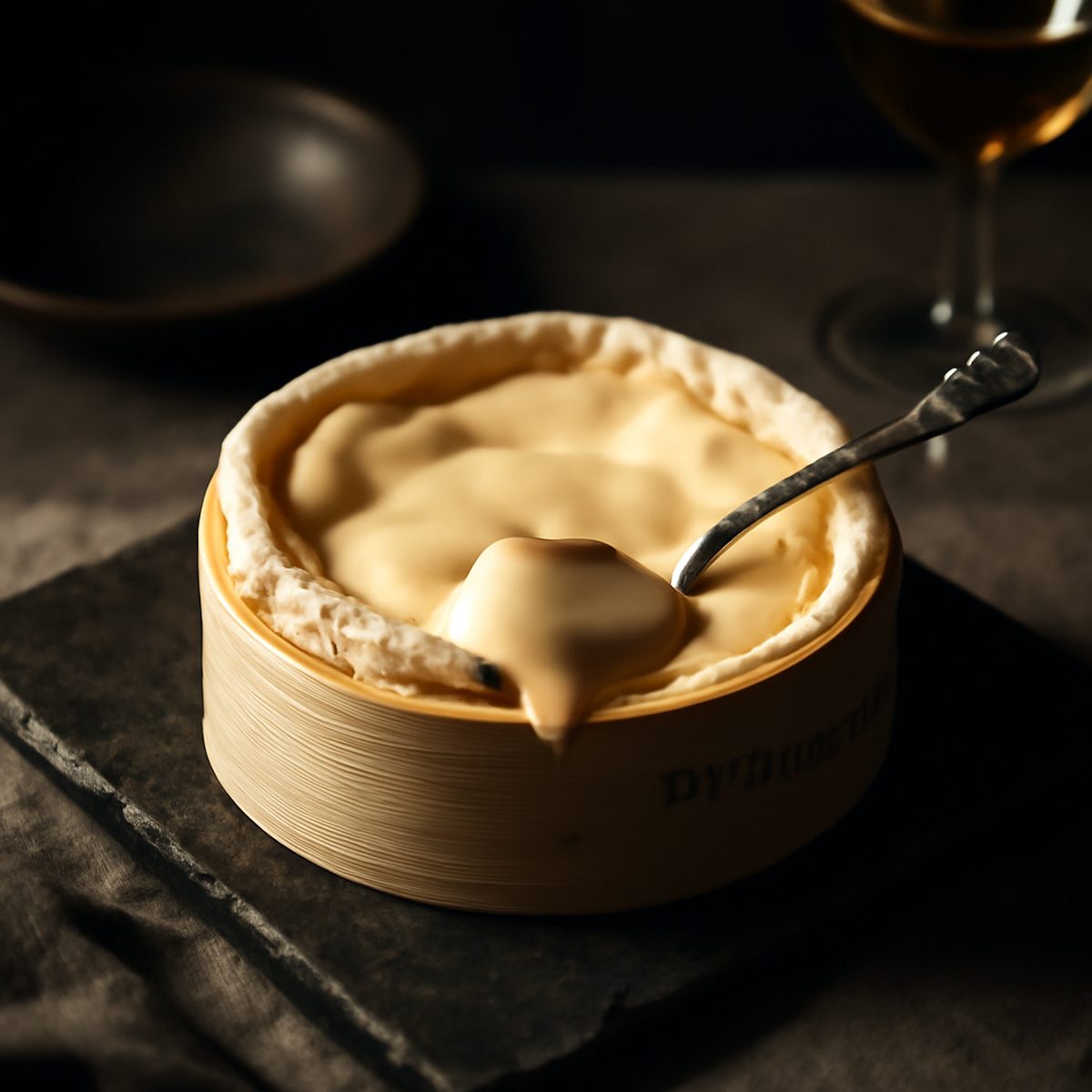
There are cheeses you keep in the house all year, and then there are cheeses that arrive like a season. Vacherin belongs firmly to the second kind. For a few months each winter it appears in its little spruce box, and cheesemongers who love it speak of it in the hushed, slightly urgent tone people reserve for things that will soon be gone. To eat a ripe vacherin at the peak of its short life is one of the great small luxuries of the cold months, a cheese so soft and generous it is eaten with a spoon.
What real vacherin is
The cheese in question is a soft, washed-rind cow’s milk cheese made in the mountainous border country between France and Switzerland, produced only in the colder half of the year when the herds have come down from the high pastures. It is bound in a band of spruce bark and boxed in spruce wood, and this is not decoration; the wood holds the ripening cheese together as it softens and lends it a distinct resinous, woodland note that is central to its character.
At its best it is barely solid, the paste beneath the wrinkled rind turned to something between a thick cream and a soft custard, fragrant with the smell of the forest and the farmyard. It is a cheese to be understood on its own terms, and it repays the same close attention that Black Cow brings to other great washed-rind cheeses, the sort of study you will find in the craft of real Taleggio.
Judging ripeness
Buying vacherin well is a matter of reading its ripeness. A young one will feel relatively firm and taste mild, still finding itself. A perfectly ripe one bulges gently against its spruce band, gives easily to a light press, and smells powerfully of wood and cream. Overripe, it can turn ammoniated and sharp, though many devotees enjoy it right up to that edge. A good cheesemonger will tell you where a given box sits on that curve, and the best advice is to buy it as ripe as you dare and eat it soon.
You do not slice a ripe vacherin. You lift the lid, peel back the rind and reach in with a spoon.
Serving it cold
At its simplest, a ripe vacherin is served at room temperature, the top rind peeled or scored back, and eaten with a spoon straight from the box, with good bread and perhaps a few boiled potatoes. It is the centrepiece of a cheese course rather than one voice among many, and it deserves to be treated as such; where a mixed board offers variety, as celebrated in a well-composed cheese board, the vacherin offers depth, a single glorious thing.
The baked ritual
The most famous way with vacherin is to bake it whole in its box. Studded with a little garlic and a splash of white wine, wrapped in foil and baked until it turns to a bubbling fondue, the whole box is brought to the table and eaten by dipping bread and vegetables into the molten centre. It is a communal, extravagant, deeply comforting dish, the sort of thing that turns a cold evening into an occasion. The spruce box makes this possible, another reason the wood is essential rather than ornamental.
Whether baked or spooned cold, vacherin rewards good accompaniments. A crisp white wine or a glass of something fortified cuts its richness; a plate of charcuterie and cornichons balances it; even a fruit brandy suits it well, the sharpness playing against the cream. The thinking that governs a well-composed cheese course, the care in the return of the proper cheese trolley, is exactly what a vacherin deserves at the centre of the table.
Why the season matters
The seasonality of vacherin is not a marketing device but a genuine limit of how and when it can be made, and it is part of what makes the cheese special. In a world of year-round everything, a food that arrives only in winter and vanishes by spring carries a particular kind of value, the value of anticipation and of the calendar. To wait for it, buy it ripe and eat it at its brief peak is to reconnect with an older, more seasonal way of eating. Further along the Alps, a firmer mountain cheese tells a related story of place and tradition, explored in our piece on the craft of real Fontina. Not every Alpine cheese is so fleeting, and our piece on the craft of real Emmental looks at a very different, longer-aged tradition from the same mountains.
For the cheese lover, understanding real vacherin means understanding that some of the greatest things on the table are also the most fleeting. Buy it from someone who knows their stock, eat it at the moment it bulges against its spruce band, and share it warm or cold with people who will appreciate it. For more on the craft and the calendar of great cheese, the wider writing gathered under our Dining & Drinks section is a fine place to keep reading.
Choosing the right accompaniments
A ripe vacherin is generous enough to stand almost alone, but the right accompaniments show it to its best. Keep them simple and let the cheese lead. Good crusty bread and a few plain boiled potatoes are the classic partners, chosen precisely because they do nothing to compete with the cheese and everything to carry it. A handful of cornichons or a little charcuterie adds welcome sharpness and salt, cutting the richness and refreshing the palate between spoonfuls.
For drink, reach for something with acidity and cut. A crisp, dry white wine from the same mountainous region is the natural choice, its brightness slicing cleanly through the cream, though a glass of fruit brandy or even a lightly chilled sparkling wine works beautifully too. Whatever you pour, serve the vacherin at cool room temperature rather than straight from the cold, giving it time to soften and release its full woodland aroma. Do that, buy it at the peak of its short winter season, and share it with people who understand what they are eating, and you will have served one of the great small pleasures of the cold months, a cheese so generous it seems almost to give itself away.
Renée has covered Singapore's restaurants for over a decade, with a soft spot for the kitchens most people walk past.