The Slow Revival of the Devilled Kidneys
Sharp, buttery and gloriously old-fashioned, devilled kidneys are back on the breakfast table. How to source them, cook them fast and serve them well.
 By Renée Tan
2 September 2026 · 6 min read
By Renée Tan
2 September 2026 · 6 min read
Somewhere between the wars, on the sideboards of country houses and the menus of gentlemen’s clubs, devilled kidneys were as ordinary as toast. They sat in a chafing dish at breakfast, glossy and dark and faintly menacing, and nobody thought them remarkable. Then, for a long stretch of the twentieth century, they all but vanished, chased off the table by squeamishness and a general retreat from offal. Now, quietly, they are coming back, and the cooks rediscovering them are finding out what their grandparents knew, that few dishes deliver so much flavour for so little money or effort.
Why the kidney fell from favour
The kidney’s exile had less to do with taste than with fashion. As kitchens grew squeamish about offal and supermarkets pushed boneless, bloodless convenience, the whole category of variety meats slipped out of everyday cooking. That is a shame, because a lamb’s kidney is a small, tender, richly savoury thing, and when it is treated well it has none of the acrid quality that put people off. The revival is part of a wider return to older, thriftier, nose-to-tail cooking, the same current that has brought back the dishes celebrated in the wider Dining & Drinks collection.
There is a moral pleasure in it too. Using the whole animal is both more honest and more interesting than confining oneself to the prime cuts, and the cook who learns to handle offal opens up a whole neglected shelf of the butcher’s counter. Devilled kidneys are the perfect place to begin, because they are quick, forgiving and gloriously good.
Sourcing and preparing the kidneys
Lamb’s kidneys are the ones to use; they are small, mild and tender in a way that ox or pig kidneys are not. Buy them fresh from a butcher who can tell you when they came in, and use them the same day. Preparation is simple. Halve them, snip out the white core with kitchen scissors, and if you like, give them a brief soak in milk or lightly acidulated water to soften any lingering sharpness. Pat them thoroughly dry, because a wet kidney will steam rather than sear.
A devilled kidney should be pink at the heart and dark at the edge, cooked hard for barely two minutes and never a moment more.
What the devil means
To devil a dish is to make it hot and piquant, and the devil sauce is where a cook’s personality shows. The classic base is butter, mustard, a good shake of Worcestershire sauce, a pinch of cayenne and a grind of black pepper. Some add a splash of sherry or stock to loosen it into a sauce, a spoon of cream to round it, a dab of tomato for colour. The balance you are after is heat, tang and savour, sharp enough to cut the richness of the kidney but not so fierce it obliterates it.
The method, fast and hot
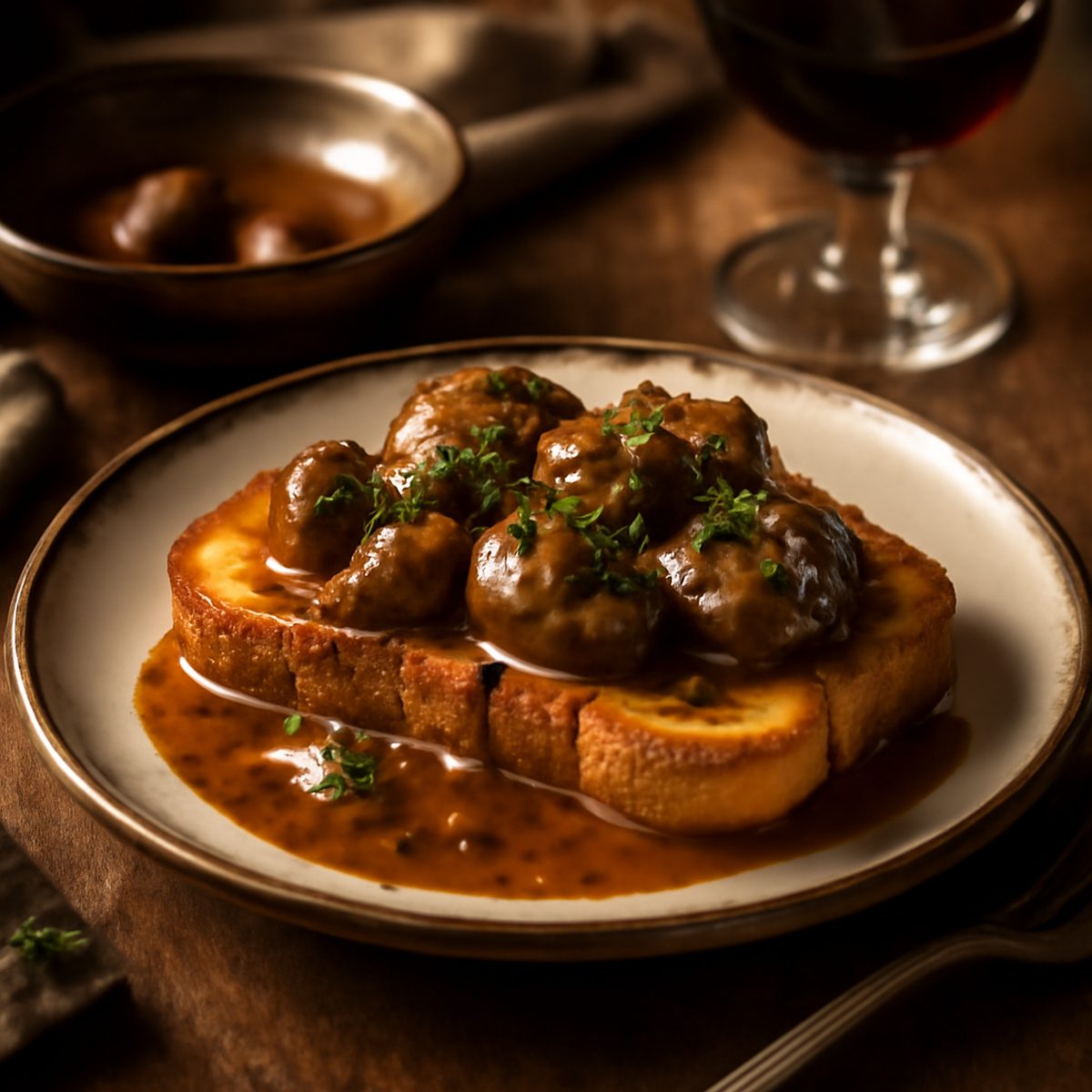
Devilled kidneys are a last-minute dish, cooked fast in a hot pan just before serving. Melt butter until it foams, add the dried, seasoned kidney halves and sear them hard so they colour on the outside while staying blushing within. This takes barely two minutes; overcook them and they turn to rubber, which is the single sin most likely to have soured a diner on kidneys in the first place. Lift them out, build the devil sauce in the same pan with all its lovely browned residue, then return the kidneys to coat and warm through.
Serve them on hot buttered toast so the sauce soaks into the bread, or on a soft heap of mashed potato for a more substantial supper. They belong to the same robust, unfussy tradition as the great savoury classics of the British table, and they sit happily alongside dishes like the one revived in the slow revival of the steak and kidney pudding, hearty food that makes no apology for its richness. A little chopped parsley and a wedge of lemon are all the garnish they need.
When to serve them
Historically a breakfast or a savoury course, devilled kidneys make a superb light supper or a small first course today. They pair well with a robust red or a glass of something fortified, and they reward being served the moment they leave the pan. If you are building a menu of reclaimed classics, they sit naturally beside other small, intensely savoury plates such as the one in the potted shrimp brought back to the table, dishes designed to be relished in a few rich mouthfuls rather than eaten in quantity.
The wider lesson of the devilled kidney is the one that runs through so much good cooking, that flavour and thrift are often the same thing, and that the ingredients our grandparents took for granted still have a great deal to offer. If the idea appeals, the neglected corners of the butcher’s counter reward exploration, and the same nose-to-tail spirit animates much of the writing gathered under the reverence for beef in the dry-aged steak. Buy a few kidneys, keep the pan hot and the timing tight, and you will understand why they were once a fixture, and why they deserve to be again.
A dish that suits the modern table
Part of the reason devilled kidneys are returning is that they suit the way many of us want to eat now, in small, intensely flavoured plates rather than great slabs of protein. A single kidney or two, richly sauced on a piece of good toast, is a perfect light supper or a striking first course, generous in flavour without being heavy in quantity. It is also astonishingly quick, a dish that comes together in the time it takes to make the toast, which makes it ideal for the cook who wants something special without an evening’s work.
There is a quiet pleasure, too, in serving something a little unexpected. Devilled kidneys carry a whiff of the old country house and the club dining room, and to set them down before guests is to offer a small history lesson along with the meal. Cooked well, seared hard and dressed in a sauce with real heat and tang, they convert even the sceptical, and they remind everyone at the table that some of the best eating has been hiding in plain sight all along, waiting only for a cook brave enough to reach for the less fashionable part of the counter.
Renée has covered Singapore's restaurants for over a decade, with a soft spot for the kitchens most people walk past.