Understanding the Appeal of the Steam Railway
A heritage steam railway offers what no modern train can: the journey as the whole point, taken at the unhurried pace of an older, gentler age.
 By Marcus Lim
2 September 2026 · 6 min read
By Marcus Lim
2 September 2026 · 6 min read
There is no practical case for the steam railway, and that is exactly the point of it. It is slower than the road, less convenient than the modern train and entirely unnecessary as transport, and yet the heritage steam line endures and even thrives, drawing people who could get anywhere faster by almost any other means. The appeal is not efficiency but its opposite: the steam railway offers the increasingly rare experience of a journey undertaken for its own sake, at the pace of a gentler age, engaging the senses in a way that no sealed, silent modern carriage ever will. To understand it, you have to let go of the idea that travel is about arriving.
A machine you can feel
The steam locomotive is a machine on a human scale, and one you experience with every sense. You hear it long before you see it, the chuff of the exhaust, the shriek of the whistle, the clank and hiss of a living mechanism. You smell the coal smoke and the hot oil. You feel the surge as the great wheels find their grip and the rhythmic sway of the carriage over the rails. It is the antithesis of modern travel’s smooth anonymity, a mode of transport that insists on being noticed, that refuses to fade into the background.
This sensory richness is what sets the steam railway apart from its modern successors and even its heritage cousins. It shares the romance of the rails with the mountain drama of the cog railway and the overnight magic of the sleeper train, but the steam line adds something the others lack, the presence of the machine itself, hot and loud and alive, at the head of the train.
The journey as the destination
The steam railway inverts the usual logic of travel. On a modern train the journey is dead time to be endured or worked through; on a steam railway the journey is the entire experience, and the destination, if there is one, is merely an excuse. This changes everything about how you travel. You are not trying to get anywhere; you are already there, in the carriage, watching the landscape unspool at a pace slow enough to actually see it. The same unhurried logic applies to road travel in the mountains, as the appeal of the postbus route explains for those who prefer winding passes to rails.
The steam railway is the only train you board hoping it will take longer than it needs to.
That inversion, the journey as the point, is the deep appeal, and it connects the steam railway to a whole philosophy of slow travel. It is the same impulse that animates the rail pass adventure, the preference for the train over the plane, for the process of getting there over the mere fact of arrival, for travel that is savoured rather than survived.
Why the nostalgia runs deep
Part of the steam railway’s power is unabashedly nostalgic, and there is no shame in that. These lines preserve not just locomotives but a whole vanished world, the polished brass and varnished wood of the carriages, the signal boxes worked by hand, the country stations with their gardens and their name-boards, the uniforms and the rituals of a slower, more ceremonious age of travel. To ride one is to step briefly into that world, and the pleasure is genuine even, or especially, for those too young to remember it.
The people who keep these railways running are volunteers and enthusiasts, and their care shows in every detail, from the immaculate locomotives to the restored station tea rooms. That devotion is part of what you are experiencing, a landscape and a machine loved and maintained by people who do it for no reward but the thing itself. It is craft and preservation as much as transport, closer in spirit to the romance of a grand old railway hotel than to any modern journey.
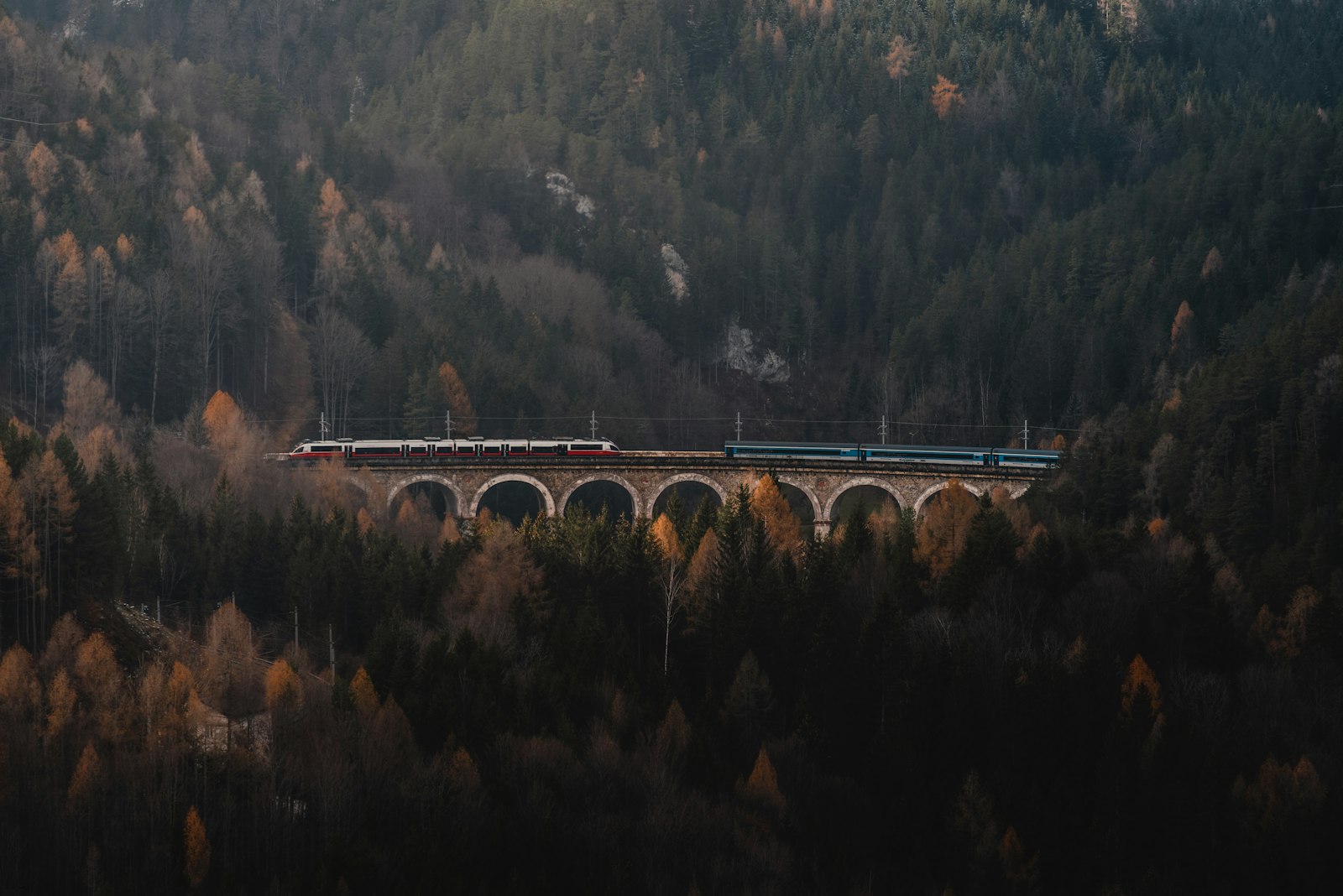
The setting is half the pleasure, and heritage railways have a gift for running through the finest country. Because these lines were often saved precisely for their scenery, the modern traveller inherits routes that thread through wooded valleys, climb over stone viaducts high above rivers, and skirt coastlines that no road quite reaches. The slow pace of the steam engine is perfectly matched to such landscapes, giving you time to watch a valley open, a viaduct approach, a stretch of sea slide by, in a way that faster travel simply erases. There is something, too, in the way the railway frames the country, the view composed by the cutting and the embankment, revealed and hidden and revealed again as the line curves, that a road can never replicate. To sit at the window of a steam carriage as it works its way through a landscape it was built to serve is to see that country at its most flattering, and at exactly the pace it deserves to be seen.
How to enjoy one well
The steam railway rewards the right frame of mind more than any particular technique. Board it expecting slowness and you will not be disappointed; board it in a hurry and you will miss the entire point. Sit by the window and watch the landscape, listen to the engine at work, walk the platform at the intermediate stops and, if the line allows, go forward to watch the locomotive being tended, coaled and watered like the living thing it is.
Above all, surrender to the pace. The steam railway is a rebuke to the way most of us travel, an argument that the journey can be the pleasure rather than the price of the destination, and it belongs to the same considered, unhurried spirit that runs through the whole of our travel and stays coverage. Ride one not to get somewhere but to be somewhere, aboard a hot and living machine moving through a beautiful landscape at exactly the speed a journey should be taken, and you will understand why, in an age of ever-faster travel, so many people go out of their way to travel slowly. The steam railway is not transport at all, really; it is the rare chance to remember that getting there was once a pleasure in its own right, and can be again.
Marcus writes on travel and hospitality across Asia, and is happiest a long way from a lobby.