The Story of the Singapore Sling
Behind the postcard cocktail lies a stranger, more contested history. A considered retelling of the Singapore Sling, and where to drink one done properly.
 By Renée Tan
30 August 2026 · 6 min read
By Renée Tan
30 August 2026 · 6 min read
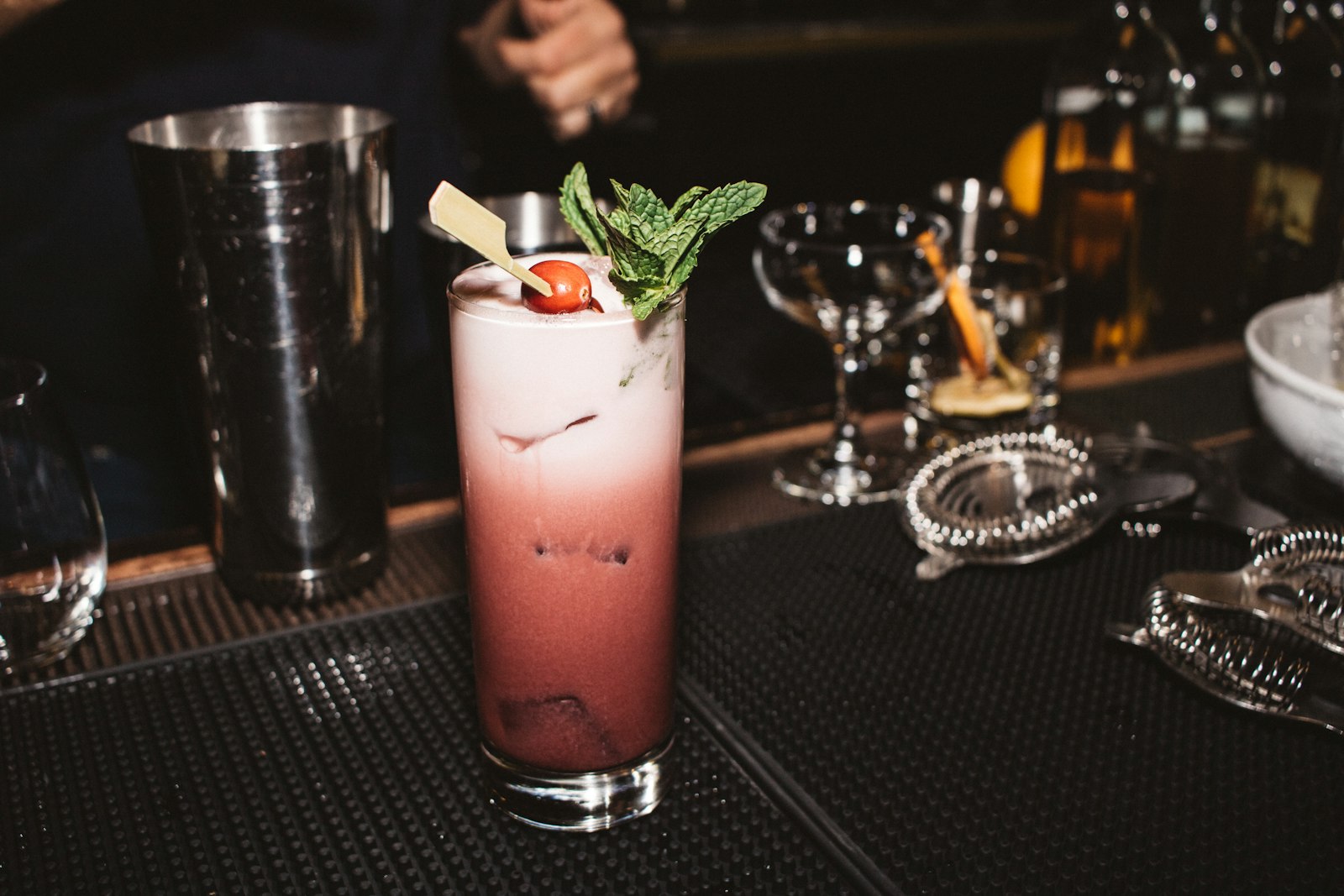
Few cocktails carry the reputational baggage of the Singapore Sling — a drink so thoroughly absorbed into tourist iconography that it is easy to forget it was, once, a genuinely inventive piece of bartending. The pink hue and the paper umbrella have done the drink few favours in recent decades, flattening a complex, well-balanced cocktail into a symbol of package-holiday excess. The real story, and the real drink, deserve better.
An origin story with more holes than certainty
The most widely told version credits a bartender working in early twentieth-century Singapore with inventing the drink for female guests at a time when it was considered improper for women to drink spirits in public — the gin disguised within a fruit-forward, rosy-coloured cocktail that could pass, at a glance, for fruit punch. Whether the full story holds up to close historical scrutiny is genuinely contested; records from the era are patchy, the original recipe was reportedly lost for a period and later reconstructed from memory, and several competing versions of the “authentic” formula have circulated since. What is clear is that the drink emerged from a specific colonial-era Singapore social context, and that its enduring popularity says as much about branding and hospitality history as it does about the cocktail itself.
What tends to get lost in the retelling is how genuinely well-constructed the original recipe is, on its own technical merits, separate from any origin myth. It is not a simple gin-and-juice as modern, mass-produced versions often suggest, but a layered build involving gin, cherry liqueur, Bénédictine, and a careful balance of citrus and grenadine — closer in construction to a serious sour than to the syrupy, artificially coloured versions poured from a pre-mixed bottle at many bars today. Other drinks have shown how far a sour can be pushed while remaining balanced, as the Trinidad Sour, with its unlikely bitters base, demonstrates.
The broader context of colonial-era Singapore hospitality is worth understanding here too, since it explains a great deal about why the drink took the specific shape it did. Grand hotel bars of the period functioned as genuine social institutions, and a house cocktail invented within one carried real weight, both as a point of pride for the establishment and as a piece of the city’s emerging cosmopolitan identity. That the drink survived, in some form, for over a century, while countless other hotel-bar creations from the same era have been entirely forgotten, says something about the strength of the original recipe even beneath decades of dilution and reinvention. A similar story of survival through decades of reinvention belongs to another tropical classic, as the enduring appeal of the Mai Tai explains.
Why most versions served today taste wrong
The drink’s misfortune is that it became famous enough to be reproduced badly at enormous scale, long before quality control or bartender training could keep pace with demand. A pre-batched, artificially sweetened version, heavy on grenadine and light on the more expensive ingredients like Bénédictine and cherry liqueur, became the default across much of the tourist-facing hospitality industry, and an entire generation of visitors formed their impression of the drink from that shortcut version rather than anything close to the original build.
Cost is the simplest explanation for why this happened, and it remains a useful lens for judging any bar’s version today. Bénédictine and a proper cherry liqueur are meaningfully more expensive than the sugar syrups and artificial colourings that can approximate their sweetness and hue at a fraction of the cost, and a bar serving thousands of Slings a week to tourists with little basis for comparison has limited financial incentive to use the pricier ingredients. A bar charging a premium price while still cutting these corners is, frankly, the worst version of this equation, and worth avoiding once you know what to look for on the ingredient list, if one is offered.
What a properly made Sling should taste like
- Balanced, not cloying — the citrus should be assertive enough to cut through the sweetness.
- Complex on the palate, with the Bénédictine’s herbal note noticeable rather than buried.
- Pink from natural grenadine and cherry liqueur, not artificial colouring.
- Served properly chilled, in a tall glass, without excessive garnish theatre distracting from the drink itself.
A drink worth reclaiming
The broader cocktail revival that rescued drinks like the boulevardier from obscurity has, more recently, begun turning its attention to reclaiming the Singapore Sling from its own reputation — bartenders returning to pre-war recipes, sourcing proper Bénédictine rather than a cheaper substitute, and building the drink with the same seriousness once reserved for a martini or a negroni. This mirrors the wider return to classic technique documented in Black Cow’s guide to the return of the classic cocktail bar, and is worth exploring further alongside Singapore’s best cocktail bars, by craft, several of which now serve a version of the Sling closer to the original than the tourist-menu standard.
“People are always surprised when they taste a properly made one,” a bar director told us. “They come in expecting fruit punch and leave asking what Bénédictine is.”
A note on drinking one today
The Singapore Sling also sits comfortably within the island’s broader tradition of considered aperitif drinking, worth reading alongside the art of the aperitivo, Singapore-style for a fuller sense of how the city’s bars are reworking classic pre-dinner formats. For the wider picture of where to drink well across the island, Black Cow’s Dining & Drinks section covers everything from hawker classics to serious cocktail programmes.
The Sling deserves, at minimum, one properly made attempt before being dismissed as tourist kitsch. Ordered at a bar that takes it seriously, built with real ingredients rather than a bottled shortcut, it reveals itself as exactly what it always was: a genuinely clever, well-balanced cocktail that happened to get famous for the wrong reasons, and is only now getting the chance to be appreciated for the right ones.
There is something quietly fitting about a Singapore-born cocktail undergoing this kind of rehabilitation in its own city, decades after being exported and diluted around the world. Local bartenders reclaiming the drink are not simply restoring an old recipe out of nostalgia; they are making an argument about craft and provenance, insisting that a drink invented here deserves to be understood here first, on its own considerable technical merits, rather than through the lens of a mass-market souvenir. That argument is, on the evidence of a well-made version, entirely convincing.
Renée has covered Singapore's restaurants for over a decade, with a soft spot for the kitchens most people walk past.