The Slow Revival of the Game Pie
Once the centrepiece of the cold table, the raised game pie is quietly returning. A guide to hot-water crust, the filling, the jelly and the patience it asks.
 By Renée Tan
1 September 2026 · 6 min read
By Renée Tan
1 September 2026 · 6 min read
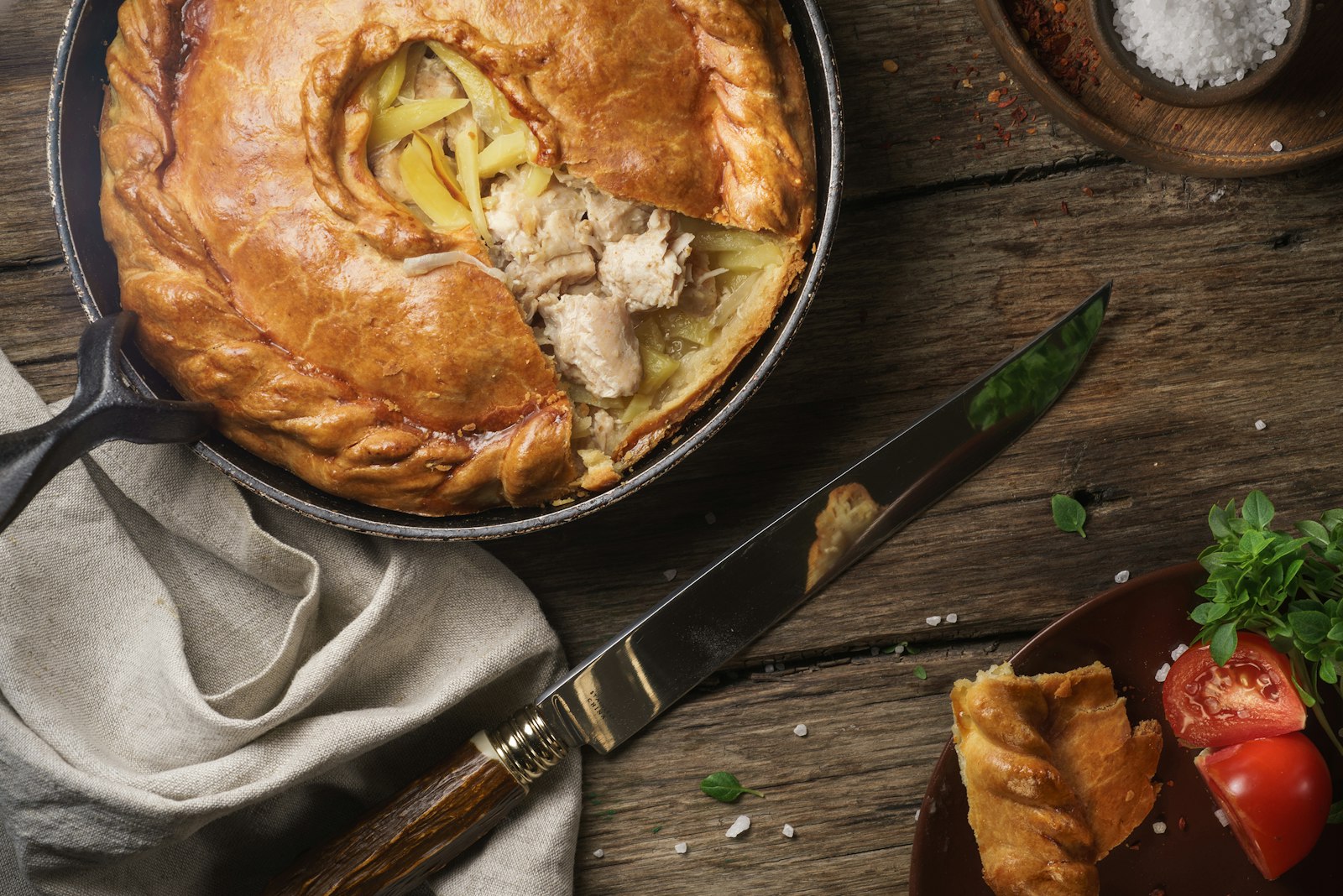
There was a time when a raised game pie sat at the centre of every cold table worth the name — a burnished dome of pastry, cut to reveal dense, savoury meat set in amber jelly. Then convenience took over, and the pie retreated to the memory of country kitchens and old cookery books. Lately it has begun to return, carried by a generation of cooks rediscovering the pleasures of slow, deliberate work. The game pie is back, and it deserves the attention.
Why the pie faded, and why it returned
The raised pie is unashamedly a project. It demands jointing and boning, a filling built over hours, a hot-water crust that must be worked while warm, and a bake followed by the careful pouring of jelly. None of this suits a weeknight, and for decades that was enough to condemn it. But the same slowness that once seemed a burden now reads as a virtue. In an age of quick everything, a pie that asks for a whole afternoon has become quietly desirable, part of the broader revival of larder crafts we explored in the return of the game larder and pantry.
Game is the natural filling because it rewards this treatment. Pheasant, venison, rabbit, pigeon and a little pork for fat and moisture combine into something far richer and more interesting than any single meat. The strong, faintly wild flavours stand up to the dense pastry and the savoury jelly in a way that mild chicken never could. The same appetite for old charcuterie is bringing back other forgotten cuts, as our piece on the slow revival of the Bath chap explains. Offal rewards a similarly confident hand, and the slow revival of devilled kidneys considers another classic of the old British table making a quiet return.
The hot-water crust
The defining element of a raised pie is its hot-water crust — a sturdy pastry made by melting fat into boiling water and stirring it into flour. Unlike a delicate shortcrust, this dough is robust and pliable while warm, strong enough to hold its shape as a free-standing case. You mould it by hand around a tin or a wooden dolly, or line a springform, building walls thick enough to contain the filling and survive the bake.
Working the pastry at the right temperature is everything. Too hot and it slumps; too cold and it cracks. You want it warm and supple, worked quickly and confidently. The crust is not merely a container — it is meant to be eaten, its dense, savoury crumb a deliberate contrast to the meat within. This is a different discipline entirely from the airy work of laminated pastry, and no less satisfying for it.
A raised pie is architecture you can eat. The crust is not packaging; it is a load-bearing wall, and it should taste like one worth building.
Building the filling
The filling is where craft and judgement meet. Bone the game and cut some of it into rough dice for texture, mincing the rest with pork belly or shoulder for a moist, cohesive base. Season boldly — game can take robust flavours — with juniper, mace, allspice, thyme, black pepper and a good measure of salt. A splash of brandy or port lifts the whole. Some cooks layer whole pieces of meat through a forcemeat; others fold everything together. Both work, and the choice shapes the finished slice.
- For richness: pork belly, back fat or a little pancetta folded through the game.
- For seasoning: juniper, mace, allspice, thyme, plenty of black pepper.
- For depth: a splash of brandy, port or Madeira and a whisper of orange zest.
- For texture: a mix of minced and roughly diced meat so each slice has structure.
Chill the filling before it goes into the case, and pack it firmly to avoid air pockets that would collapse in the bake. The reward for this care is the same one found across the revived cold-store crafts — witness the parallel patience of the terrine, which shares the pie’s love of seasoning, fat and time.
The bake, and the all-important jelly
Bake the sealed pie steadily until the crust is deep gold and the interior cooked through — a temperature probe takes the guesswork out. Cut a hole in the lid to let steam escape, and expect the meat to shrink slightly from the walls as it cooks. That shrinkage is exactly why the jelly matters.
A game or pork stock, well seasoned and enriched with gelatine, is poured warm through the hole once the pie has cooled, filling the gap between meat and crust. As it sets, it binds the whole into a sliceable, glistening interior and adds another layer of savour. A well-made jelly is the difference between a good pie and a great one; its clarity and flavour reward the effort of a properly made cold larder stock.
Serving the pie
A raised game pie is best served cold or barely cool, cut into thick wedges that show off the layers of meat and jelly. It wants sharp, bright accompaniments to cut its richness: a fierce mustard, some pickled walnuts, a spoonful of chutney, a handful of dressed leaves. This is picnic food elevated, or the anchor of a cold spread, and it keeps well, its flavours deepening over a day or two in the fridge.
A pie for a table, and a season
Part of the game pie’s renewed appeal is how well it suits the way we increasingly want to eat: seasonally, sociably and without waste. Game is a genuinely seasonal ingredient, tied to the shooting calendar and the turning of the year, and a pie is the ideal way to honour a glut of it. Made in a large raised case, it feeds a crowd generously and keeps for days, which makes it perfect for the long, grazing meals of autumn and winter — a shooting lunch, a cold Boxing Day spread, a table of small dishes where the pie holds the centre. There is a deep satisfaction, too, in a dish that uses the whole animal and rewards the cook’s labour with something that improves rather than spoils over time. The pie belongs to a way of cooking that treats meat as precious and time as an ingredient, and it repays that respect with flavour no shortcut can match. To slice into one you made yourself, days after the work was done, is to taste patience directly.
The pleasure of the game pie is not efficiency; it is craft made visible. Every slice records the hours that went into it — the jointing, the seasoning, the moulding, the pouring of the jelly. To make one is to step into a long tradition of unhurried cooking, and to serve one is to offer something increasingly rare. For more dishes worth the afternoon, the dining and drinks section is where the slow cooks gather.
Renée has covered Singapore's restaurants for over a decade, with a soft spot for the kitchens most people walk past.