The Quiet Craft of the Perfect Congee
Congee asks little and rewards patience. A guide to rice ratios, slow heat and the toppings that turn a humble bowl into something worth the wait.
 By Renée Tan
1 September 2026 · 6 min read
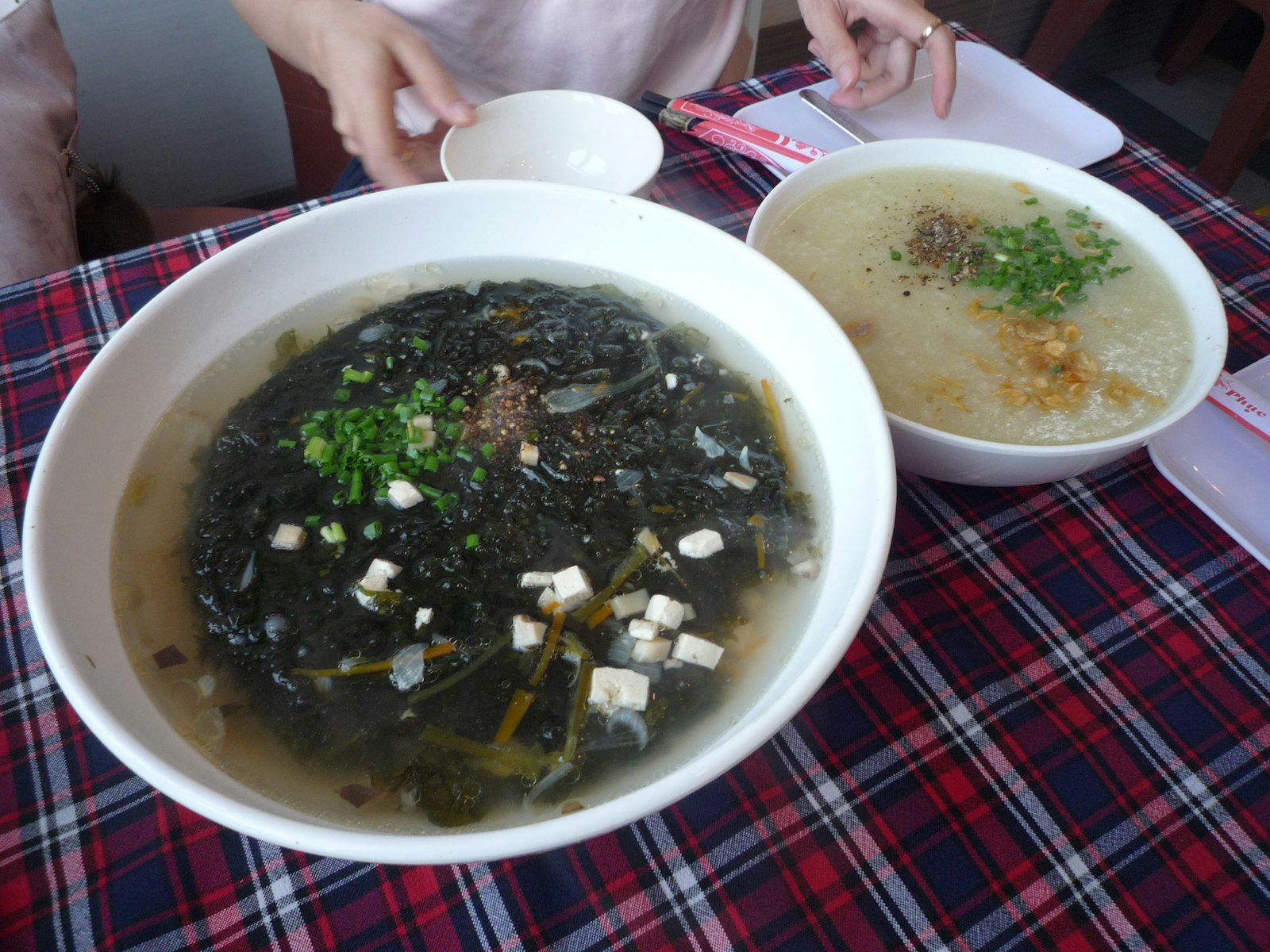
There is a particular hour, somewhere before the city has fully woken, when a pot of congee is the most reassuring thing in any kitchen. It does not announce itself. It sits on a low flame, turning hard grains of rice into something soft and silken, and it asks only for time. In Singapore we know this bowl in a dozen dialects and moods, from the loose Teochew style eaten with a table of small dishes to the thick, restorative version pressed on anyone who is unwell. For all its humility, congee rewards attention more generously than almost anything else you can cook.
What congee actually is
At its simplest, congee is rice cooked in far more liquid than usual until the grains break down and thicken the whole into a porridge. That is the entire premise, and it is also where every decision starts to matter. The variety of rice, the ratio of water to grain, the heat, the stirring, the finishing — each of these small choices decides whether you end up with a thin, watery gruel or a bowl with body and gloss. The best congee has a texture that coats a spoon without being stodgy, carrying the faint sweetness of the rice itself.
Regional habits diverge here. A Teochew porridge keeps some grain structure, the rice suspended in a clear, savoury broth rather than dissolved. A Cantonese-style congee is cooked longer and harder until the grains collapse entirely into a creamy base. Neither is more correct; they simply suit different tables. If you are unsure which you prefer, it is worth reading our note on the story of Teochew porridge culture before you decide how far to cook your rice.
Rice, ratio and the long simmer
Start with the grain. A medium-grain white rice gives a rounder, creamier result; long-grain stays looser. Some cooks add a spoonful of glutinous rice for extra body, others swear by a splash of oil rubbed into the raw grains to help them break down. There is no single truth, only tendencies, and it helps to understand the raw material before you commit — our primer on rice varieties and their uses is a good place to calibrate expectations.
The ratio is where most home cooks go wrong. For a proper congee you want somewhere between eight and twelve parts liquid to one part rice, by volume, and you should err generous because you can always cook it down. Bring everything to a boil, then drop the heat to the gentlest simmer your hob will hold. This is not a dish to rush. Over the next forty-five minutes to an hour, the grains soften, swell and finally surrender, and the liquid thickens as the starch is released. Rice cooked to the opposite end of the spectrum, each grain separate and dry, is the subject of our piece on the craft of the perfect pilaf. Rice asks for a very different kind of patience in Spain, where the grains are left undisturbed in a wide pan, as our piece on the perfect paella explains.
Stirring matters more than people expect. Left alone, congee catches and scorches at the base, and a burnt note will taint the entire pot. Every ten minutes or so, draw a spoon across the bottom and fold the rice back through the liquid. The motion also helps break the grains, encouraging that creamy, homogenous finish. Keep the lid ajar so the steam escapes and the porridge reduces rather than simmering in its own trapped water.
Congee is a lesson in patience disguised as breakfast. You cannot hurry it, and the moment you try, it lets you know.
The question of the broth
You can make congee with nothing but water and salt, and a good one is quietly wonderful. But the finest versions are built on stock, which lends a savoury depth that plain water cannot. A light chicken or pork broth, or the frames left from a roast, will transform the bowl. If you keep a pot going through the week, our guide to stock and broth will help you keep one on hand. Add the stock at the start so its flavour has time to marry with the rice, and season cautiously — you can always correct at the end.
Aromatics go in early too. A knob of bruised ginger, a stalk of spring onion, a few slices of garlic; these perfume the pot without dominating. Fish out the spent aromatics before serving so nobody bites into a fibrous stalk. Some cooks add dried scallop or a piece of dried sole for umami, a trick borrowed from the old porridge houses that still keep the technique alive.
Toppings and the art of the table
A bowl of congee is a canvas, and the toppings are where personality arrives. The classics earn their place: slivered ginger, white pepper, a slick of sesame oil, crisp shallots, chopped spring onion and a handful of fried dough sticks torn over the top for contrast. Century egg and lean pork is the definitive pairing for many, while a raw egg cracked into the hot porridge cooks to a silky richness as you stir.
- For texture: fried shallots, crushed peanuts, torn youtiao, toasted sesame.
- For lift: white pepper, julienned ginger, spring onion, a squeeze of lime.
- For richness: a raw or soft egg, a spoon of chilli oil, a drizzle of good sesame oil.
- For substance: poached fish slices, minced pork, preserved vegetable, salted egg.
The point of the toppings is contrast — crunch against silk, heat against calm, salt against the rice’s gentle sweetness. This is the same logic that governs the wider world of easy, restorative eating; our roundup of congee and comfort bowls shows how many directions a single technique can travel.
Getting it right
If your congee is too thin, uncover it and let it reduce; if too thick, loosen it with a splash of hot stock. Taste for salt at the very end, when the flavours have settled. Serve it hot, in a warmed bowl, and eat it slowly. Leftovers thicken overnight into something almost solid, which is not a fault — a spoon of water and a minute over the heat brings it back.
What makes congee quietly luxurious is not any expensive ingredient but the care taken over something so plain. It is the rice, the time, the attention, the small ritual of the toppings laid out on the table. Master this one bowl and you have a dish for every mood and hour, from a hungover Sunday to a sickbed to a slow, generous breakfast for a full table. For more in this spirit, the wider dining and drinks section is full of the same unhurried thinking.
Renée has covered Singapore's restaurants for over a decade, with a soft spot for the kitchens most people walk past.