The Return of the Boudoir
Once a lady's private retreat, the boudoir is returning as something for everyone: a small, personal room for dressing, thinking and being quietly alone.
 By Priya Nair
1 September 2026 · 6 min read
The word has a slightly scandalous ring to it now, which is a shame, because the boudoir was always something more interesting than its reputation. It comes from the French bouder, to sulk — the boudoir was, literally, the room to sulk in: a woman’s private sitting and dressing room, off the bedroom, where she could dress, write, read and simply be alone. That last function is exactly why the boudoir is quietly returning, reimagined for everyone, in homes that have run short of a room to think in.
We have optimised the modern house for togetherness — open plans, shared spaces, the great sociable kitchen. What we have lost, in the process, is privacy. The boudoir, stripped of its powdered-and-corseted associations, answers that loss: a small, personal room dedicated not to the family but to the self. It is a genuinely useful idea dressed in an old-fashioned name.
What the boudoir actually was
In the grand houses of the eighteenth and nineteenth centuries, the boudoir sat between the public rooms and the private bedroom — a threshold space, intimate but not quite the bedroom itself. Here a woman dressed and arranged her hair, received her closest friends, kept her correspondence and her small treasures, and withdrew from the performance the rest of the house demanded. It was, in the truest sense, her own room.
That combination — dressing, withdrawing, and a little quiet industry — is worth holding onto, because it is precisely what the modern version restores. The boudoir was never only about vanity. It was about having somewhere that belonged wholly to one person, arranged entirely to their taste, answerable to no one else’s clutter or schedule. In a shared household, that is a rarer luxury than square footage.
Why it makes sense again
The case for a modern boudoir is really the case for a room of one’s own. As homes grow more open and more shared, the appetite for a single private, personal space grows with it. This need not be gendered and need not be grand; it is simply a small room, or a portion of one, given over to one person’s dressing, grooming, reading and retreat.
‘Everyone wants a walk-in wardrobe,’ a designer told me. ‘What they actually want, when you talk to them, is somewhere to be alone for twenty minutes and come out feeling like themselves. That is a boudoir, whatever they call it.’
There is a practical dividend too. A dedicated dressing space keeps the bedroom itself calm and uncluttered — the wardrobes, the mirror, the small daily mess of getting ready all moved next door. This lets the bedroom become the pared-back, restful room it should be, which is a considerable prize in a busy house. The two rooms work as a pair: the boudoir absorbs the activity so the bedroom can hold the quiet.
Designing one that feels like yours
A boudoir succeeds or fails on how personal it feels; a generic one is just a small spare room. The elements that make it work:
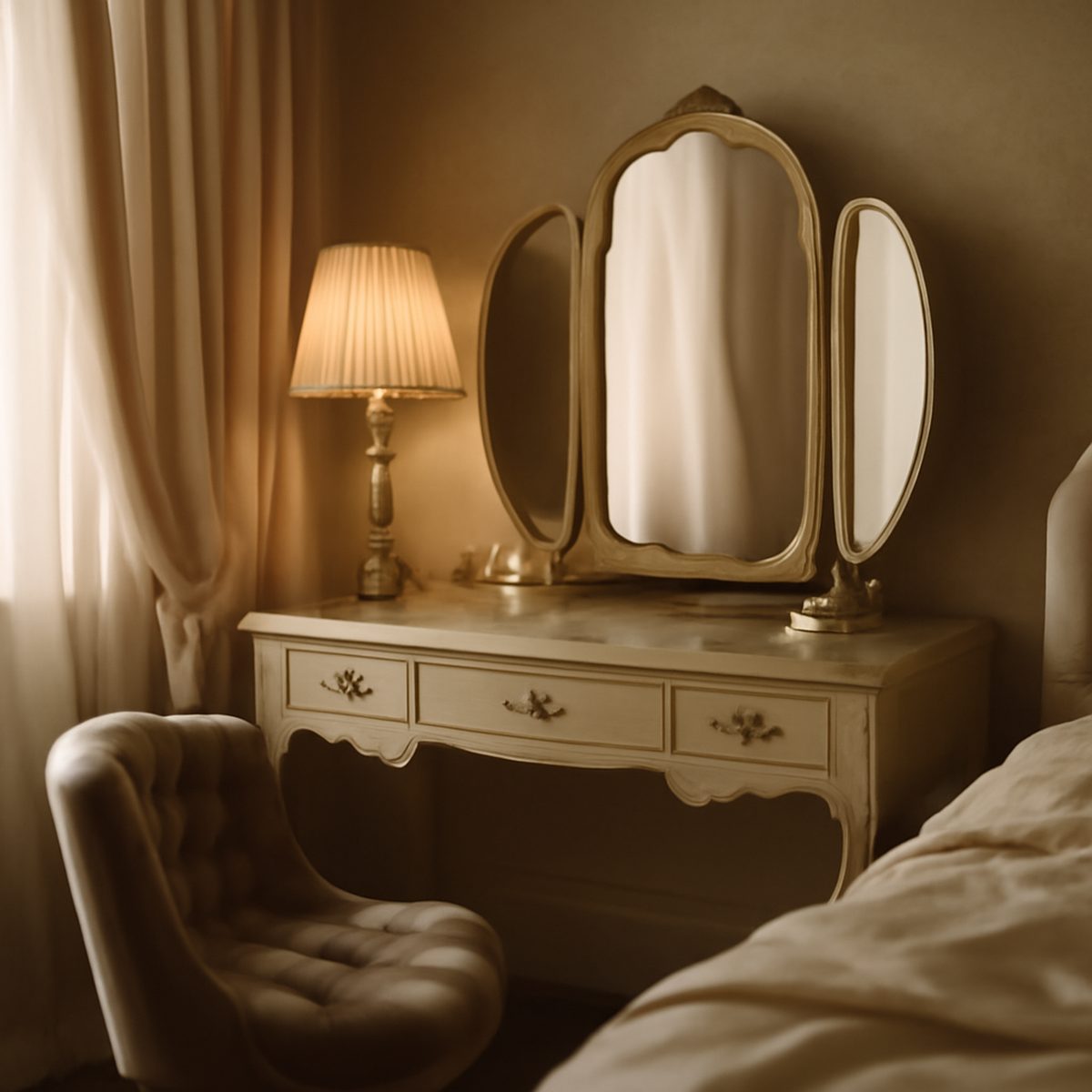
- A proper dressing table with good, flattering light — ideally natural, supplemented by warm lamps either side of the mirror rather than overhead.
- Considered storage: a wardrobe system that keeps clothes visible and accessible, so dressing is a pleasure rather than a rummage.
- A comfortable seat — an upholstered stool or a small chair — that invites you to linger, not just perch.
- Soft, tactile materials: this is the room to indulge texture, warmth and colour you might not risk elsewhere.
- Something to do besides dress: a small desk, a shelf of books, a place for correspondence, in the spirit of the original.
The dressing table is the heart of it, and worth getting right; the art of the considered dressing table is a subject in itself. So is the storage: a well-planned wardrobe system is what separates a boudoir that soothes from one that frustrates, and it repays careful thought before anything is built.
A room for the self
The materials matter more here than almost anywhere, because this is a room built for pleasure rather than traffic. It is the place to use the softer, warmer, more personal finishes — the ones that make a space feel like a retreat rather than a corridor. The same instinct that guides a timeless bedroom applies, only more indulgently: this is the one room in the house that answers to no one’s taste but yours.
Reclaiming the idea
Perhaps the most useful thing about the boudoir’s return is that it gives a name, and therefore a permission, to something many people already quietly want and feel faintly guilty for wanting: a room, or a corner, that is theirs alone. We have grown so used to justifying every square foot by its usefulness to the household that the idea of space dedicated purely to one person’s pleasure and privacy can feel almost indulgent. The boudoir, with its long and respectable history, quietly makes the case that it is not indulgent at all but sensible — that a person who has somewhere to withdraw, dress and gather themselves returns to the shared life of the house calmer and more whole. Reclaiming the idea is really about reclaiming the right to that small privacy, whatever you choose to call it and however modest the space you give it. It might be a whole room off the bedroom or simply a well-lit corner with a good mirror and a comfortable seat. The scale matters far less than the intent: to make somewhere that answers to no one’s taste, schedule or clutter but your own. That, more than any decorative flourish, is the boudoir worth bringing back.
What the returning boudoir really offers, then, is permission — to make a space entirely personal, to reclaim a little privacy from the sociable modern home, to have somewhere to withdraw and emerge feeling composed. Call it a dressing room, a study, a snug; the name matters far less than the intent. In a house designed around everyone, the boudoir is the small, quiet argument for a room designed around you. That is why it is coming back, and why, once you have one, you will wonder how you ever managed without it.
Priya tours the homes most people only glimpse from the road, and asks how they are really lived in.