
The Bedroom, Pared Back
The most restful bedrooms are rarely the most decorated ones. Here is how to pare a bedroom back to the handful of things that actually matter.
 By Priya Nair
29 August 2026 · 6 min read
By Priya Nair
29 August 2026 · 6 min read
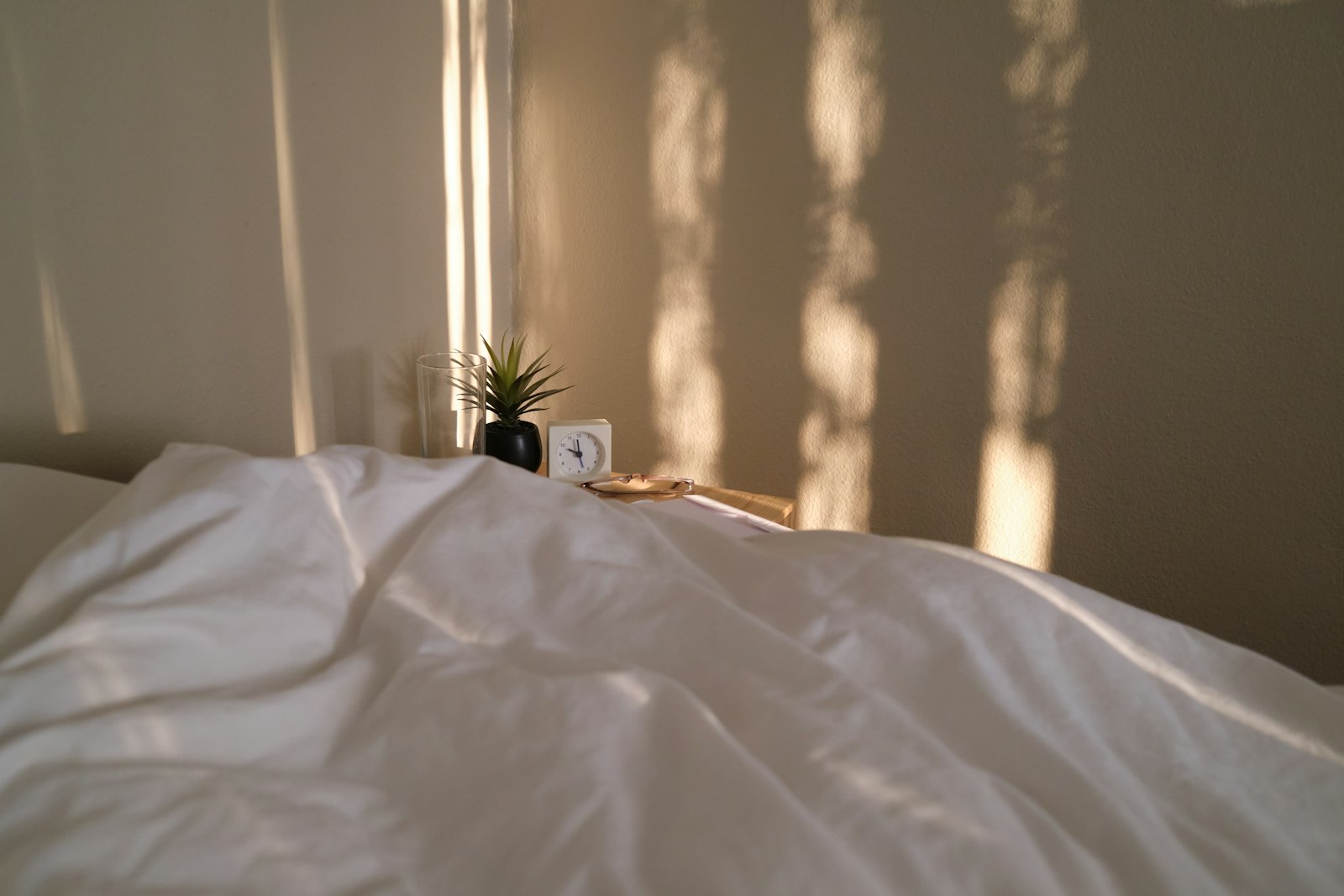
Of all the rooms in a home, the bedroom is the one most consistently over-furnished relative to what it is actually for. A television mounted opposite the bed, a desk squeezed in for occasional use, decorative cushions that get removed and piled on the floor every single night — each addition individually seems reasonable, and collectively they undermine the one function a bedroom genuinely needs to perform well, which is enabling proper rest. The bedrooms that succeed most completely at this tend to be the ones with noticeably less in them, not because minimalism is fashionable, but because every object removed from a bedroom is one less demand on attention at the exact moment the mind is meant to be winding down.
Start by asking what the room is actually for
A genuinely restful bedroom serves two functions and, ideally, very little else: sleep, and the quiet transition into and out of it. Once other functions are introduced — working, exercising, watching television — the room’s psychological association with rest becomes diluted, and sleep researchers have long noted that a bedroom used for wakeful activities tends to produce worse sleep than one reserved more strictly for rest, simply because the brain learns to associate the space with alertness rather than winding down. This is worth taking seriously enough to relocate a desk to a proper study, discussed in our piece on the home office, considered, rather than allowing work to quietly colonise the one room meant to be free of it.
Material over quantity
A pared-back bedroom is not an empty one; it is a room where each remaining object has been chosen for material quality rather than simply included because a “bedroom set” formula demanded it. Linen bedding in place of a synthetic blend, a single well-made chair rather than a decorative accent piece that never gets sat in, a rug chosen for how it feels underfoot first thing in the morning rather than purely for pattern — this shift towards fewer, better things is the same instinct that runs through our broader guide to the enduring case for natural materials, applied here to the room where the body spends roughly a third of its time.
People think a minimal bedroom means a cold one. Done properly it’s the opposite — every remaining object is there because it earns its place, which makes the whole room feel warmer, not sparser — an interior designer who has stripped back several Singapore bedrooms told me this, and it reframed how I think about the whole approach.
Light that respects the body’s actual rhythm
Overhead lighting has no real place in a well-designed bedroom, since a single bright source directly above the bed is precisely the wrong quality of light for winding down in the evening or waking gently in the morning. Bedside lamps at a warm colour temperature, ideally on a dimmer, and blackout treatments that can still admit a controlled amount of soft morning light, do more for actual sleep quality than any amount of decorative styling. Our guide to how to light a room properly covers this in more general terms, but the bedroom is arguably the single room in a home where getting the lighting plan wrong has the most measurable effect on how someone actually feels the next day.
What earns a place in a pared-back bedroom
- Bedding and linens chosen for natural fibre and feel, not pattern or matching a wider decorative scheme.
- Warm, dimmable, non-overhead lighting positioned at bedside height.
- Closed storage for everything not in daily use, keeping visible surfaces genuinely clear.
- A single considered piece — a chair, a piece of art, a textile — rather than several competing accents.
Storage as the quiet enabler of restraint
A bedroom only stays pared back if there is somewhere for everything else to actually go, which makes storage the unglamorous foundation the whole approach depends on. Built-in wardrobes with genuinely sufficient capacity, rather than a freestanding piece that inevitably overflows, are what allow surfaces to stay clear day to day rather than only on the morning of a photograph. This is worth investing in properly during a renovation, even at the expense of a slightly smaller room footprint, since the alternative — a beautifully pared-back bedroom that reverts to clutter within a fortnight — defeats the entire purpose.
The bed itself deserves the largest share of the budget
In a room stripped of most other furniture, the bed inevitably becomes the visual and functional centre of attention, and it is where restraint elsewhere in the room should free up budget to spend properly. A well-made mattress suited to the sleeper’s actual preferences, a headboard upholstered in a fabric that will age gracefully rather than show every mark within a year, and linens genuinely worth touching each night matter more here than almost any decorative decision made elsewhere in the home. This is the same principle discussed in our piece on the art of the well-made bed — that the bed is not simply furniture but the single object a pared-back bedroom is ultimately built around.
Temperature and air, often forgotten in the styling conversation
A visually pared-back bedroom can still fail at its core purpose if the air quality and temperature are wrong, and Singapore’s climate makes this a genuine design consideration rather than an afterthought. A well-positioned, quiet air-conditioning unit, good cross-ventilation where the building allows it, and bedding weighted appropriately for a consistently warm climate rather than imported wholesale from a colder-climate catalogue all contribute more to actual sleep quality than any single decorative decision. These practical considerations deserve to be resolved before the styling conversation begins, not layered on afterwards as a compromise.
A pared-back bedroom, done well, does not feel like deprivation. It feels like the one room in the house that has been designed around a single, genuine need rather than a checklist of furniture categories, and it is usually the room guests remember as the most calming, precisely because there is so little competing for their attention. For more rooms designed around genuine purpose, visit Homes & Culture.
Priya tours the homes most people only glimpse from the road, and asks how they are really lived in.


