The Quiet Luxury of the Pashmina Shawl
A true pashmina shawl is one of the softest things you can own, and one of the most faked. How to know the real thing, and why it is worth the search.
 By Daniel Koh
2 September 2026 · 6 min read
By Daniel Koh
2 September 2026 · 6 min read
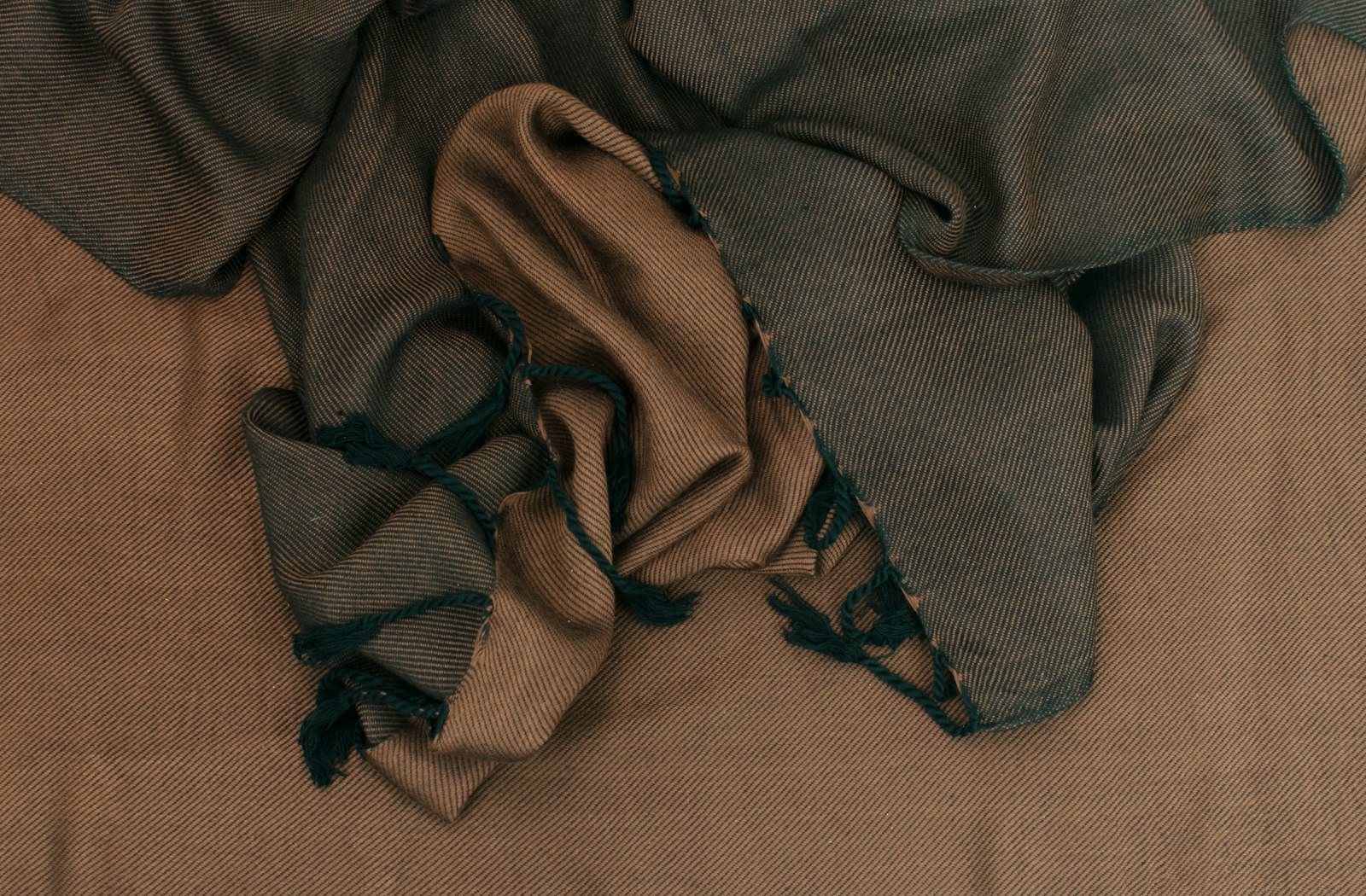
Draw a genuine pashmina shawl through a wedding ring and it passes without catching, a parlour trick that has been used to sell the real thing for centuries. It is also, unfortunately, a trick that sellers of the fake thing have long since learned to imitate. The word pashmina has been so thoroughly diluted, stamped on everything from acrylic scarves to polyester blends, that many people have never held the actual material. Which is a shame, because a true pashmina is among the quietest and most complete luxuries a wardrobe can hold.
The word comes from the Persian for wool, but it refers specifically to the downy undercoat of a particular Himalayan goat, grown to survive winters at high altitude. This down is extraordinarily fine, far finer than ordinary cashmere, which is itself a fine fibre. Combing it out by hand yields only a few precious grams per animal per year, which is the first clue as to why the real thing is neither cheap nor common. Everything that makes pashmina remarkable, the softness, the warmth without weight, the way it seems to hold heat like a living thing, comes from the fineness of that fibre.
Pashmina and cashmere
The relationship confuses people, so it is worth stating plainly. All pashmina is cashmere, but not all cashmere is pashmina. Cashmere is the general term for the soft undercoat of cashmere goats; pashmina refers to the very finest grade of that down, from specific animals in specific high regions. In practice, a genuine pashmina will feel even softer and lighter than a good cashmere scarf, though the difference is subtle enough that only handling both side by side reveals it. Anyone who already loves the quiet luxury of a cashmere scarf will recognise the family resemblance immediately, and then notice how much further pashmina takes the same qualities.
Because the fibre is so fine, a real pashmina is often woven rather than knitted, producing a light, airy cloth with a faint sheen and a beautiful drape. It folds down to almost nothing and yet keeps out a surprising amount of cold, which is exactly what you want from something you will carry in a bag as often as wear on your shoulders.
How to tell the real thing
Given how much imitation is on the market, learning to judge a pashmina is a practical necessity. A few tests help, though none is infallible on its own.
- The hand. Real pashmina feels warm and slightly grippy against the skin, not slippery. Synthetics feel cool and smooth, and often carry a faint plasticky sheen.
- The weight. A genuine shawl is astonishingly light for its warmth. If it feels heavy or dense for its size, be suspicious.
- The weave. Held to the light, a handwoven pashmina shows small, charming irregularities. A perfectly uniform machine weave suggests a blended or synthetic cloth.
- The price. A true pashmina cannot be produced cheaply. A suspiciously low price is the clearest warning of all.
The same principles of judging fibre quality apply across fine knitwear, and our guide to how to buy and keep cashmere is a useful companion here, since the buyer’s instincts transfer directly from one to the other.
Why it endures
What makes a pashmina quietly luxurious rather than merely expensive is its restraint. It does not announce itself. In its plainest form, a single natural colour with a simple hand-knotted fringe, it is close to anonymous, and that anonymity is the point. It reads as warmth and care rather than status, which is precisely the register that considered dressing aims for.
The finest pashmina is invisible as a status symbol and unmistakable as a pleasure. That is the whole of its appeal.
It is also endlessly practical, which luxury often is not. On a long flight it doubles as a blanket. In a fiercely air-conditioned Singapore restaurant it saves a bare-shouldered evening. On a cool morning abroad it slips over a jacket without bulk. Few things earn their place in a bag so consistently, and fewer still improve with the years, softening rather than wearing out. It belongs in the same category as the pieces gathered in our look at the best everyday cashmere sweaters, quiet things that repay their cost slowly and completely.
Living with a pashmina
A fine pashmina is more robust than it looks, but it rewards a little care. Fold rather than hang it, so the weave does not stretch under its own weight. Keep it away from rough surfaces and jewellery, which can pull the delicate fibres. When it needs cleaning, hand-washing in cool water with a gentle cashmere shampoo is far kinder than dry-cleaning solvents, and it dries flat in an afternoon. Store it with cedar or lavender against moths, the perennial enemy of fine animal fibres, and it will last for decades.
The care it asks is the same care any fine knit deserves, and the habits are worth learning once and applying everywhere, as we set out in our guide to caring for fine knitwear. Treated well, a good pashmina becomes one of those rare possessions that grows more personal with time, taking on the faint softness of long handling.
The quiet purchase
It is worth saying, too, that a fine pashmina flatters almost everyone, which is more than can be said for most luxuries. Because it is worn loose and drapes softly, it forgives the figure entirely, and because it comes most beautifully in natural, undyed tones, it suits every complexion. A soft camel, a pale grey, a warm ivory: these read as quiet good taste on anyone, at any age, and they partner effortlessly with everything from tailoring to a simple linen dress. This universality is part of why the shawl endures across generations, passed down and re-worn, never dating because it was never fashionable in the first place, only ever quietly, reliably lovely.
To buy a real pashmina is to opt out of a noisy market in favour of something honest. It will cost more than the imitations that share its name, and it will not shout about it. But wrap one around your shoulders on a cold evening and the argument settles itself. This is the kind of considered, unshowy indulgence our style and watches pages keep returning to, the sort of thing you buy once, keep for years, and quietly cannot imagine having done without.
Daniel has spent fifteen years arguing that the best watch is the one you never take off.