
The Pilot’s Watch and Its History
Before it was a wardrobe staple, the pilot's watch was survival equipment. Its history explains almost everything about how the style looks today.
 By Daniel Koh
29 August 2026 · 6 min read
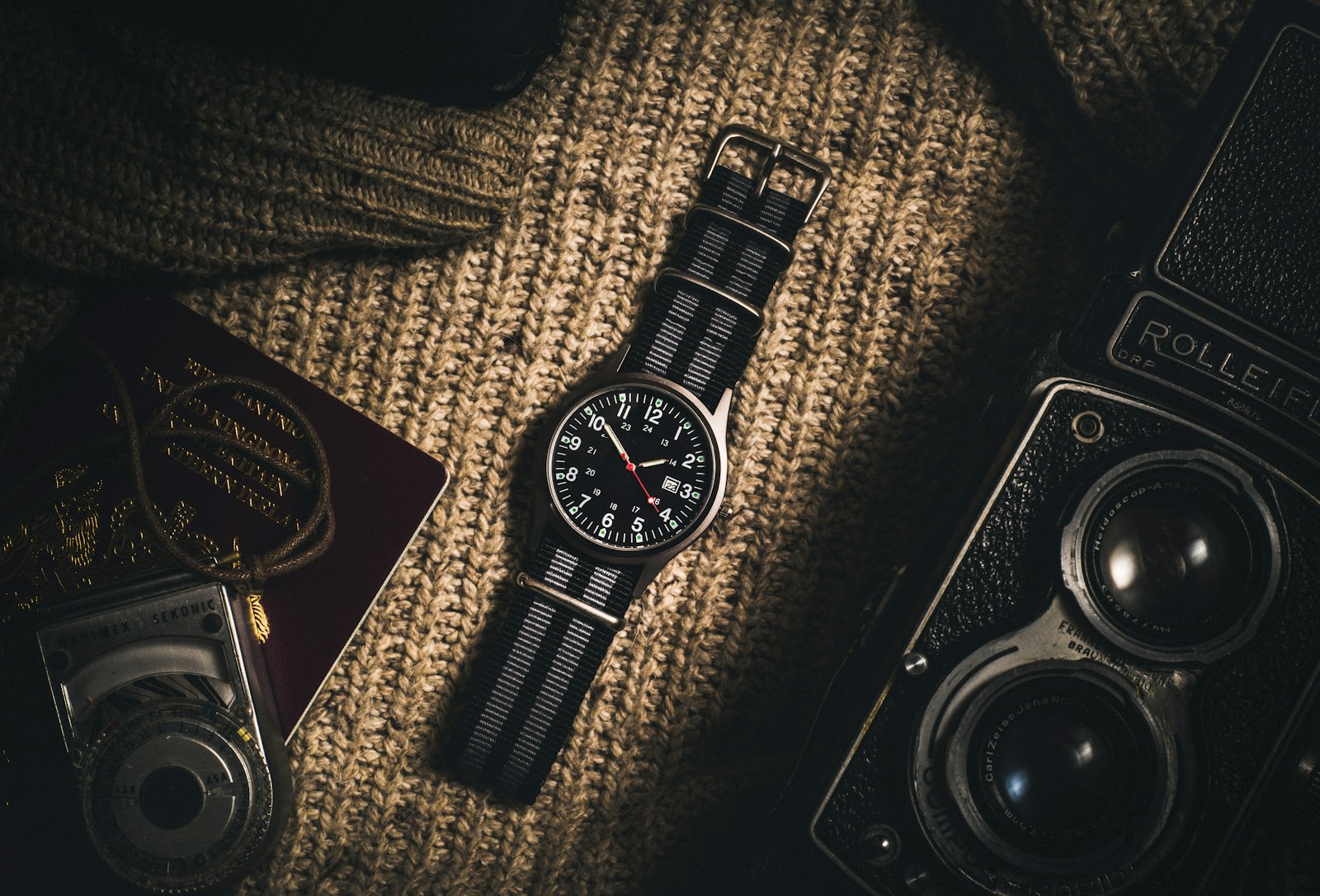
Few categories of watch wear their function quite so openly as the pilot’s watch. The oversized case, the high-contrast dial, the crown built large enough to operate with a gloved hand — none of it is decorative. Every element traces back to a genuine cockpit requirement from an era when a wristwatch was navigational equipment, not an accessory, and a pilot’s ability to read the time at a glance, in poor light, at altitude, could matter rather more than it does at a dinner table today.
Where the style actually began
The earliest true pilot’s watches emerged in the years just before the First World War, as aviation moved from novelty to military necessity and pilots needed a reliable way to time flights, coordinate manoeuvres and navigate by dead reckoning before radio positioning existed. Early cockpit instrument panels were unreliable and often unlit, so the wristwatch became a backup system in its own right — legible, robust, and independent of the aircraft’s own failing electronics. This is the origin of nearly every visual trait the category still carries: the large, unfussy numerals, the minimal dial clutter, the crown sized for use without removing a glove.
By the Second World War, the category had split into two recognisable lineages. One, developed for bomber navigators, prioritised absolute legibility and a rotating bezel for timing manoeuvres. The other, associated with fighter pilots, added complications like a flyback chronograph for timing rapid successive events. Both lineages still shape how contemporary pilot’s watches are designed, even though almost none of today’s wearers actually need to navigate by dead reckoning.
The details that define the category
A genuine pilot’s watch, whatever era it draws from, tends to share a handful of design principles that separate it from other tool-watch categories. Understanding these makes it far easier to judge whether a given piece is a considered homage or simply a large watch wearing the aesthetic without the substance behind it.
- An oversized, high-contrast dial — typically black with white or luminous markers — designed for a single glance rather than close study.
- A crown noticeably larger than on a standard dress or dive watch, sometimes with a conical guard, built for operation with gloves.
- Minimal or absent date windows and sub-dials on the purest examples, since additional information competes with the primary function of telling the time instantly.
- A case proportion that favours diameter over thickness, keeping the watch legible without becoming unwieldy under a cuff.
Choosing one today
The pilot’s watch has aged into one of the more versatile categories in modern collecting, sitting comfortably under a shirt cuff at a desk and equally well against a weekend jacket. The decision worth making early is scale — the historically accurate proportions, often 40mm and above, suit a larger wrist and a more deliberately utilitarian wardrobe, while newer, more restrained interpretations bring the silhouette down without abandoning the category’s core legibility. A buyer moving between this and other tool-watch categories may find our comparison in the field watch and its quiet appeal useful, since the two categories share a similar philosophy of function over ornament, applied to different environments.
“A good pilot’s watch should work in the dark on the first try,” one independent watchmaker specialising in the category told us. “If you have to think about where the crown is, the design has already failed its brief.”
Complications worth considering, and those to skip
A flyback chronograph, inherited directly from the wartime fighter-pilot lineage, remains one of the more genuinely useful complications a collector can add to this category — practical for timing anything in daily life, not simply flight manoeuvres. A rotating bezel serves a similar purpose, tracking elapsed time at a glance, and integrates naturally with the category’s existing design language rather than feeling bolted on. Where the category tends to overreach is in adding decorative complications entirely at odds with its founding purpose — a moonphase display, for instance, sits far more naturally within our guide to the moonphase and other poetic complications than it does on a watch whose entire design language is built around unambiguous, instant legibility.
Understanding the movement inside matters here as much as anywhere else in watch collecting, and our broader primer on understanding watch movements is a useful companion for buyers weighing mechanical versus quartz options within this category — quartz movements, historically associated with reliability at altitude, still have a legitimate place in a genuinely function-first pilot’s watch.
Straps, and the small detail that changes everything
Few categories are as sensitive to strap choice as the pilot’s watch. A thick, distressed leather strap leans hard into the vintage-military reading of the style, while a woven NATO strap nods more towards the field-watch cousin and lightens the whole piece considerably. A well-chosen bracelet, meanwhile, pulls the watch decisively towards modern tool-watch territory, at some cost to the historical character the dial is working hard to convey. None of these choices is wrong, but they change the watch’s entire personality far more than most buyers expect from what is, after all, a relatively minor component. Worth trying a piece on several strap options before settling, since the difference between a watch that reads as costume and one that reads as considered often comes down to exactly this.
Sizing the strap correctly also matters more here than in most categories, given how large the crown and case already sit on the wrist. A strap slightly narrower than the lug width, tapering gently towards the buckle, tends to balance an oversized case far better than one cut to the full lug width, which can make an already substantial watch look heavier still.
A style that has outlasted its own necessity
Almost nobody buying a pilot’s watch today needs it to navigate an aircraft, and that gap between original purpose and current use is, if anything, part of the appeal. The watch carries a genuine history rather than a manufactured one, and wearing it well means understanding that history rather than simply appreciating the oversized dial. For readers building out a broader collection with this kind of purposeful design in mind, the wider Style & Watches section covers several adjacent categories worth exploring alongside it.
Daniel has spent fifteen years arguing that the best watch is the one you never take off.


