The Islands of the Molucca Passage
The narrow passage between Halmahera and its neighbours was once the centre of the global spice trade. Today it is one of Indonesia's most overlooked corners.
 By Marcus Lim
1 September 2026 · 5 min read
By Marcus Lim
1 September 2026 · 5 min read
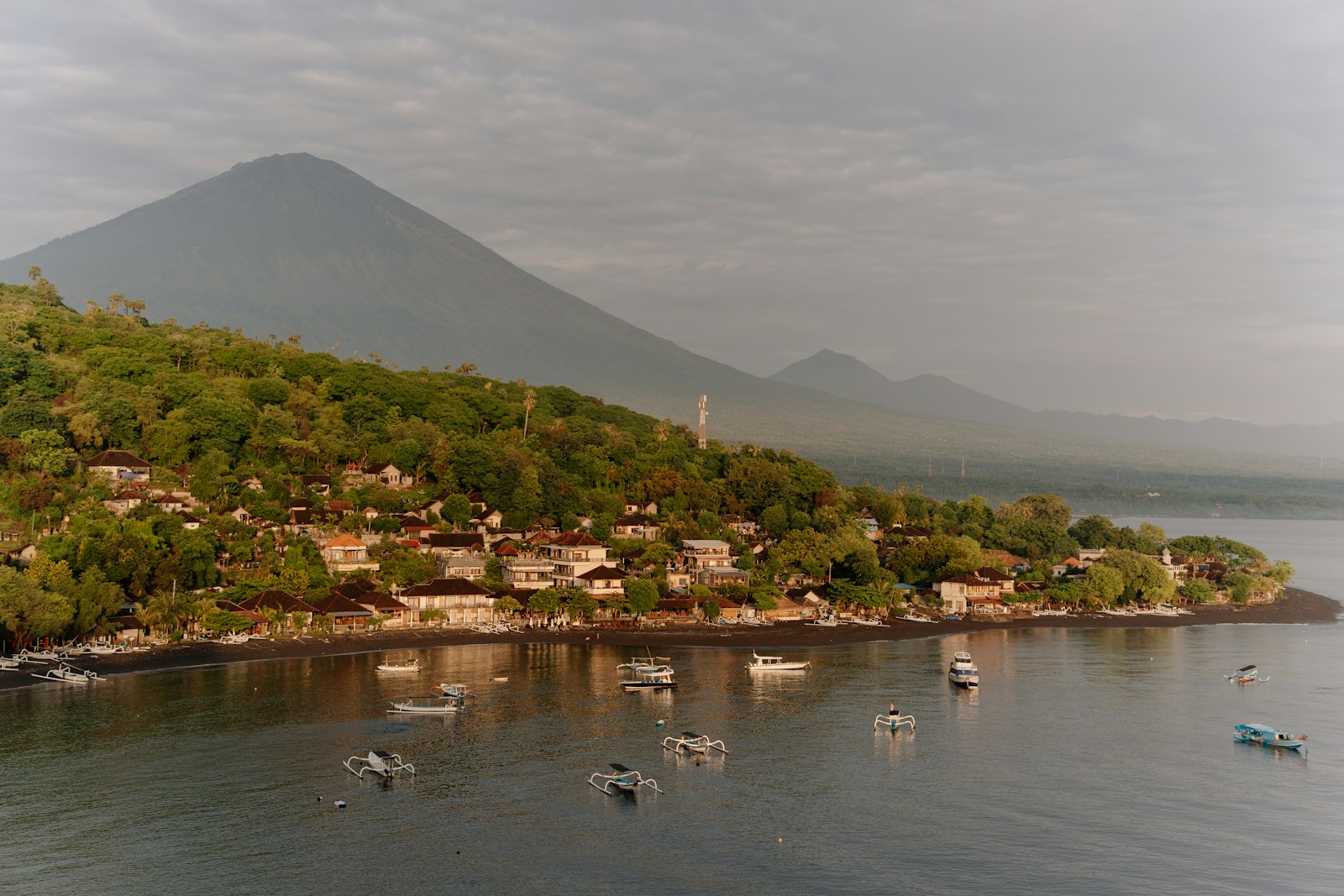
Long before Bali or Lombok appeared on any traveller’s radar, the narrow stretch of water separating Halmahera from its scattering of smaller neighbours was among the most contested pieces of geography on earth. This was the original spice country — clove and nutmeg grown nowhere else on the planet, fought over for centuries by competing colonial powers who understood, correctly, that whoever controlled these narrow straits controlled a fortune. The Molucca Passage today carries almost none of that historical weight in its atmosphere; it is quiet, sparsely visited, and studded with volcanic islands that reward a traveller willing to move slowly between them by small boat.
A landscape defined by volcanoes and water
The islands strung along the passage are almost entirely volcanic in origin, which gives the region a distinctive silhouette — steep, conical peaks rising directly from the water, often still active or dormant rather than fully extinct. This geology also explains the soil’s extraordinary fertility, which is precisely why the spice trade concentrated here in the first place; volcanic ash, over centuries, produces some of the richest growing conditions on the planet, and clove trees planted generations ago still bear fruit on smallholdings across several of the larger islands.
Travel between islands is done almost entirely by small wooden boat, since air links are minimal and irregular. This is not an inconvenience so much as the correct way to experience the passage — the same routes that spice traders once sailed, at a pace that allows the geography to actually register rather than being glimpsed from a plane window.
What the region offers today
- Clove and nutmeg plantations, many still family-run and happy to host a visitor with advance notice
- Colonial-era fortifications, largely unrestored, scattered across several of the strategically positioned smaller islands
- Genuinely excellent diving on reefs that see a fraction of the traffic found further south, owing simply to how few travellers make the journey this far north
- Village life largely untouched by mass tourism infrastructure, which asks for real cultural sensitivity and patience from visitors in return for an unusually authentic welcome
How it compares to Indonesia’s better-known islands
Travellers who have already explored Indonesia’s islands beyond Bali will find the Molucca Passage a natural next step — considerably more remote, with far less tourism infrastructure, but correspondingly richer in the sense of genuine discovery that drew many travellers away from Bali in the first place. It demands more patience and more planning, but rewards it with a version of Indonesian island travel that has almost entirely disappeared from the country’s more developed regions.
The passage sits close enough to make a natural pairing with the islands of the Halmahera Sea, and travellers building a longer Maluku itinerary often combine the two, moving between the narrow spice-trade waters of the passage itself and the broader, more open sea beyond it.
“An old man on one of the smaller islands walked us through his grandfather’s clove trees, still producing after all these decades, and talked about the spice trade the way someone elsewhere might talk about a family business passed down through generations — because that is exactly what it was,” one traveller recalled from a visit to a smallholding plantation.
Practical notes on visiting
Infrastructure across the region remains genuinely basic by the standards of Indonesia’s more developed tourist islands — expect simple guesthouses rather than resorts, limited English outside the main towns, and boat schedules that shift with weather and demand rather than a fixed timetable. Travellers should build in slack of at least a day or two on either end of any inter-island journey, since a delayed boat is more the norm than the exception.
For travellers assembling a longer trip through the region’s more remote island chains, it is worth reading alongside the islands of the Ceram Sea and the islands of the Banda Sea, both of which share the passage’s volcanic geology, spice-trade history, and blessedly light tourism footprint — together forming one of the most coherent, historically rich island-hopping regions left in Southeast Asia.
When to go
Sea conditions across the passage are calmest during the drier months, when inter-island boat transfers are considerably more comfortable and reliable — worth prioritising over the wetter season, when swells can delay or cancel crossings for days at a time. Diving visibility follows a similar pattern, generally at its best when the water is calmest, which makes planning around the regional dry season doubly worthwhile for travellers hoping to combine reef time with the plantation and heritage side of the trip.
Accommodation options remain limited enough that early planning matters considerably more here than in Indonesia’s better-known island regions — a handful of simple guesthouses on the larger islands, and considerably less on the smaller ones, meaning a spontaneous, unplanned itinerary is far riskier here than it would be further south.
A local fixer or specialist operator familiar with the passage’s specific logistics is worth the additional cost for most travellers, particularly for arranging plantation visits, translation with village elders, and the kind of last-minute boat rebooking that irregular schedules make almost inevitable at some point during a longer itinerary. Basic Bahasa Indonesia, even a handful of phrases, goes a considerably longer way here than it would in more heavily touristed parts of the archipelago, and is generally repaid many times over in warmth.
Why the passage rewards the effort
The Molucca Passage will never be an easy trip, and that is largely the point. What survives here — the clove trees, the crumbling forts, the unhurried village welcome — exists precisely because so few travellers have made the journey to disturb it. For those willing to put in the extra flights, the extra boat transfers, and the extra patience, the reward is a genuine sense of arriving somewhere history actually happened, rather than somewhere history has been repackaged for a passing visitor. The full Travel & Stays archive has more on the region’s quieter island chains for those planning a longer Indonesian itinerary.
Marcus writes on travel and hospitality across Asia, and is happiest a long way from a lobby.