
The Islands of the Halmahera Sea
The Halmahera Sea's volcanic islands and spice-trade history make a genuinely remote, richly rewarding case for travellers willing to go further off the map.
 By Marcus Lim
31 August 2026 · 6 min read
By Marcus Lim
31 August 2026 · 6 min read
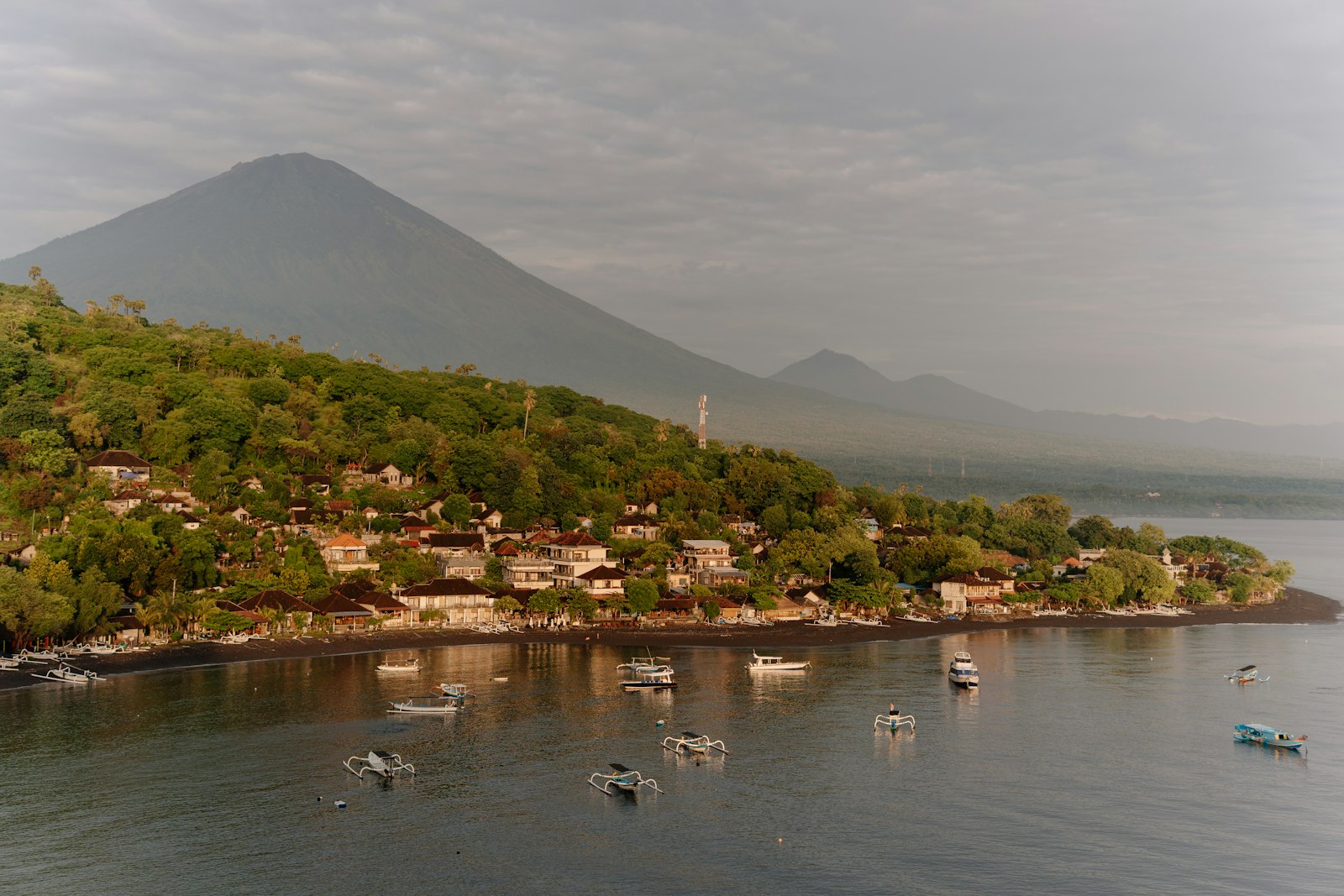
Long before Bali or Lombok entered the wider travel conversation, the islands scattered through the Halmahera Sea were the reason European ships risked months at sea in the first place. This is spice country — the original source of clove and nutmeg that drew Portuguese, Dutch and British fleets to fight over a handful of small volcanic islands for centuries. Today, that history sits almost entirely undisturbed by mass tourism, which makes North Maluku one of the more genuinely remote and rewarding corners of Indonesia for travellers willing to go the extra distance.
A sea shaped by volcanoes and spice
For a period in the sixteenth and seventeenth centuries, control over this handful of small islands was worth more to European powers than territory many times their size, since clove and nutmeg then commanded prices in Europe comparable to gold by weight. That history left behind more than forts — local cuisine, architecture and even certain family names in the region still carry traces of centuries of contact and conflict with Portuguese, Spanish and Dutch traders, a layered heritage that is only slowly being documented and shared with visitors.
The Halmahera Sea takes its name from Halmahera itself, the largest and most dramatically shaped island in the group, its coastline a tangle of peninsulas wrapped around a mountainous, still-volcanic interior. Smaller islands scattered through the surrounding water each carry their own fragment of the spice trade’s history — old forts, clove plantations still in active use, ports that once anchored fleets from the other side of the world and now see a handful of visitors a year. The neighbouring waters carry their own share of that history, as our guide to the islands of the Molucca Passage describes. The spice trade’s story continues across neighbouring waters, as the islands of the Molucca Sea describes.
What the islands offer
Beyond the spice trade’s physical remains, the region’s living culture remains one of its most underappreciated draws — distinct local languages, traditional boat-building techniques still practised in a handful of coastal villages, and ceremonies tied to the harvest cycle that few outside visitors ever witness. Travellers who spend even a few extra days building relationships with a local guide or homestay family tend to gain access to a far richer version of the region than a rushed island-hopping itinerary would ever reveal.
Volcanic scenery and clove groves
Several of the smaller islands are essentially single volcanic cones rising directly from the sea, their slopes still planted with clove and nutmeg trees descended from centuries of continuous cultivation. Walking through a working clove grove, with the scent of drying spice on the air, connects the region’s history to its present in a way few destinations manage so directly.
Reefs with real diversity
The waters here sit within the broader marine richness of the Coral Triangle, and the reefs around several of the smaller islands rival better-known dive destinations further west, with none of the boat traffic. Diving and snorkelling operations remain small and locally run, which means trips require more advance planning but reward it with genuinely undisturbed reef.
Colonial-era forts and ports
A handful of crumbling forts, built and rebuilt by successive European powers competing for control of the spice trade, still stand on several islands, offering a tangible, slightly melancholy sense of just how much was once staked on this small stretch of sea. These sites see few visitors and even fewer facilities, so a knowledgeable local guide is essential to make sense of what remains.
Getting there and getting around
It is also worth acknowledging what the region does not offer, since expectation-setting matters enormously here: no polished resort infrastructure, limited English outside the main towns, and internet access that can vanish entirely on the smaller islands for days at a stretch. Travellers who arrive prepared for that reality, rather than expecting a smoother version of Bali, tend to leave describing North Maluku as among the most rewarding trips they have taken anywhere in the archipelago.
Reaching North Maluku requires real commitment — connecting flights, and for the smaller islands, chartered boats arranged locally rather than booked in advance online. This is not a region that rewards spontaneity; a local fixer or a considered tour operator familiar with the area is close to essential for a smooth trip, particularly for island-hopping between the more remote clove-growing outposts.
- Build in flexible days — boat schedules here shift with weather more than in better-connected regions
- Work with a local operator for both diving logistics and access to the historic forts
- Visit during the dry season for the calmest inter-island boat crossings
- Pair the trip with the broader islands of Indonesia, beyond Bali, for context on the wider archipelago
“My grandfather sold cloves to traders from three different countries in his lifetime, and they still buy from the same trees today,” a grower on one of the smaller islands told us.
Life on the smaller islands
Away from the district capitals, life on the smaller islands still runs largely on subsistence fishing and spice cultivation, with a handful of family-run guesthouses forming the entirety of the accommodation available. Electricity can be intermittent, mobile signal patchy at best, and the daily rhythm dictated far more by tide and weather than by any traveller’s itinerary. This is precisely the trade-off worth weighing before booking — genuine cultural immersion and untouched scenery, in exchange for a level of comfort and predictability that busier Indonesian destinations take for granted. Travellers who make that trade tend to describe it as one of the more transformative journeys they have taken in the region.
Why go now
The Halmahera Sea offers something increasingly rare in Indonesian travel: genuine remoteness paired with real historical weight, rather than remoteness for its own sake. It asks more of the traveller in terms of planning and patience than the archipelago’s better-known islands, but the reward is a region still defined by its own long history rather than by tourism infrastructure built around it. Readers drawn to this kind of far-flung island travel should also look at our coverage of the islands of the Banda Sea, which shares much of the same spice-trade history a little further south, and our broader Travel & Stays section for further remote-island guides.
Go with time to spare and a willingness to let boat schedules dictate the itinerary, and the Halmahera Sea rewards patience with a version of Indonesia that still feels, in the best possible sense, unfinished by tourism.
Marcus writes on travel and hospitality across Asia, and is happiest a long way from a lobby.


