The Best Places for Terraced Tea Gardens
From cloud-wrapped highland estates to working plantations that open their guesthouses to travellers, these are the tea terraces worth a proper journey.
 By Marcus Lim
31 August 2026 · 6 min read
By Marcus Lim
31 August 2026 · 6 min read
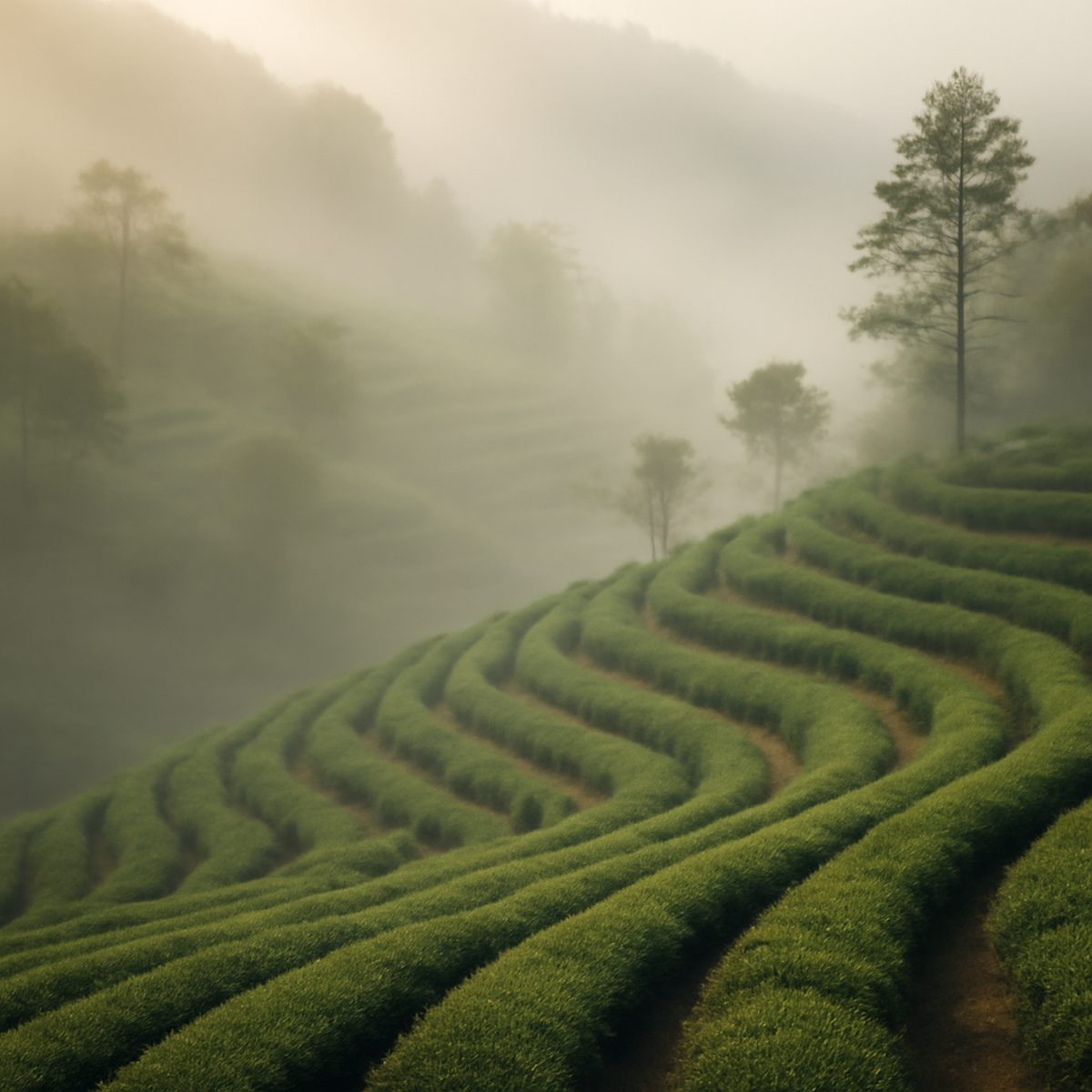
There is a particular kind of quiet that settles over a tea terrace at first light, before the pickers arrive and while the mist is still deciding whether to lift. The rows run in contours that follow the hill rather than fight it, a kind of agriculture that has always doubled as landscape architecture. For the traveller who has tired of infinity pools and wants instead a view that changes with the season and the hour, the terraced tea garden is one of Asia’s great underused destinations — closer to a vineyard trip than a beach holiday, and considerably less crowded than either.
Why the terrace, and not just the cup
Tea tourism has tended to focus on the drink rather than the land it comes from, which is a shame, because the land is the more interesting story. A well-kept terraced estate is centuries of trial and error made visible: the angle of the slope calculated for drainage and sun, the shade trees planted with real intention, the paths worn by generations of pickers who know exactly where the leaf turns bitter past a certain elevation. Staying near one of these estates, rather than simply visiting for an afternoon, lets you watch the operation shift through a full day — cool mornings for picking, warm middays for withering, and a golden late light that turns the whole hillside the colour of the drink itself.
We have covered the wider category of highland tea country before, and this guide narrows the focus specifically to terraces — the sculpted, contoured plantations that reward a slow walk far more than a driven tour.
The gardens worth the detour
High-altitude classics
The best-known terraced estates sit at altitude, where cooler air slows the growth of the leaf and concentrates its character. These are the gardens photographed most often, and for good reason: the light does something at 1,200 metres that it simply doesn’t at sea level. Arrive early, before the tour coaches, and the rows are yours — save for the pickers, who tend to move through the bushes with an economy of motion that no amount of instruction can teach a visitor in an afternoon.
Working plantations with rooms
A smaller number of estates have converted a manager’s bungalow or a former drying shed into a handful of guest rooms, and these are worth seeking out specifically. Waking up inside the working estate — rather than driving in for a photograph and leaving — changes the relationship entirely. You hear the factory start up before dawn. You can walk the terraces with a picker rather than a guide. Several of the tea-estate retreats we rate most highly are modest by design, built around the rhythm of the plantation rather than around a spa menu.
Lesser-known terraces
Beyond the postcard estates, a handful of smaller family-run gardens are opening their terraces to travellers on a more informal basis — a picking basket for the morning, a simple lunch, an honest conversation about yields and weather that no marketing brochure would think to include. These visits require a little more planning, usually through a local fixer or a considered tour operator, but they offer something the larger estates cannot: a sense of tea as a family’s inheritance rather than a brand.
How to visit well
The etiquette of visiting a working terrace is worth knowing before you go. Pickers are paid by weight, not by the hour, so lingering to chat mid-shift is not always welcome — better to time conversations around the factory tour, when the day’s leaf has already been weighed in. Footwear matters more than most travellers expect; the terraces are often steeper and muddier than photographs suggest, and a good pair of boots does more for the experience than any camera lens.
- Visit in the early morning shift, both for the light and for the chance to see picking in progress
- Ask before photographing individual pickers — a nod and a smile go a long way
- Buy directly from the estate shop where possible; margins for smallholders are thin
- Pair the visit with a proper tasting, ideally led by the estate’s own tea master rather than a general guide
“You can taste the slope in a good tea, if you know what you’re looking for — the cooler side of the hill gives you something entirely different from the warmer side, even from bushes planted the same year,” a plantation manager told us during a visit to a highland estate.
Reading a terrace like a local would
Not every hillside contour is planted for the same reason, and learning to read the shape of a terrace tells you almost as much as tasting the leaf itself. A gentle, wide-spaced terrace usually signals a mechanised estate, picked increasingly by machine and priced accordingly. A steep, narrow terrace, barely wide enough for a single picker to stand, almost always means hand-picking and a smaller, more particular harvest. Neither is inherently superior, but knowing the difference changes what you should expect to pay in the estate shop, and what questions are worth asking the manager over a pot of the first flush.
Seasonality matters more here than in most travel categories. The finest leaf is typically picked in a narrow window after the winter dormancy breaks, and estates that are half-asleep in the low season come alive completely for a few frantic weeks — worth timing a visit around if the calendar allows it. Off-season visitors trade the spectacle of a full harvest for something quieter: empty terraces, unhurried managers with time to talk, and prices in the estate guesthouse that reflect the lack of a queue.
Building it into a longer trip
Terraced tea country rarely sits in isolation; the same cool, elevated geography that suits tea also tends to suit coffee, orchards and the kind of considered rice-terrace landscapes that reward the same unhurried pace. A week built around highland agriculture — tea one day, a walk through a valley the next — makes for a considerably richer trip than a single-estate day tour bolted onto a beach holiday. For those planning a wider itinerary, our Travel & Stays coverage has a growing library of highland and countryside guides worth cross-referencing before you book.
If you can only manage one night at altitude, choose it here. There is something about watching a terrace change colour through a single day — silver-green at dawn, deep jade by noon, bronze at dusk — that no cup of tea, however well made, can quite replicate back home. The gardens reward exactly the kind of travel Black Cow tends to recommend: fewer stops, longer stays, and a willingness to let the landscape set the pace rather than the itinerary.
Marcus writes on travel and hospitality across Asia, and is happiest a long way from a lobby.