The Enduring Style of the Tassel Loafer
Neither quite formal nor quite casual, the tassel loafer occupies a stylish middle ground all its own. The story of the shoe, and how to wear it well.
 By Daniel Koh
1 September 2026 · 6 min read
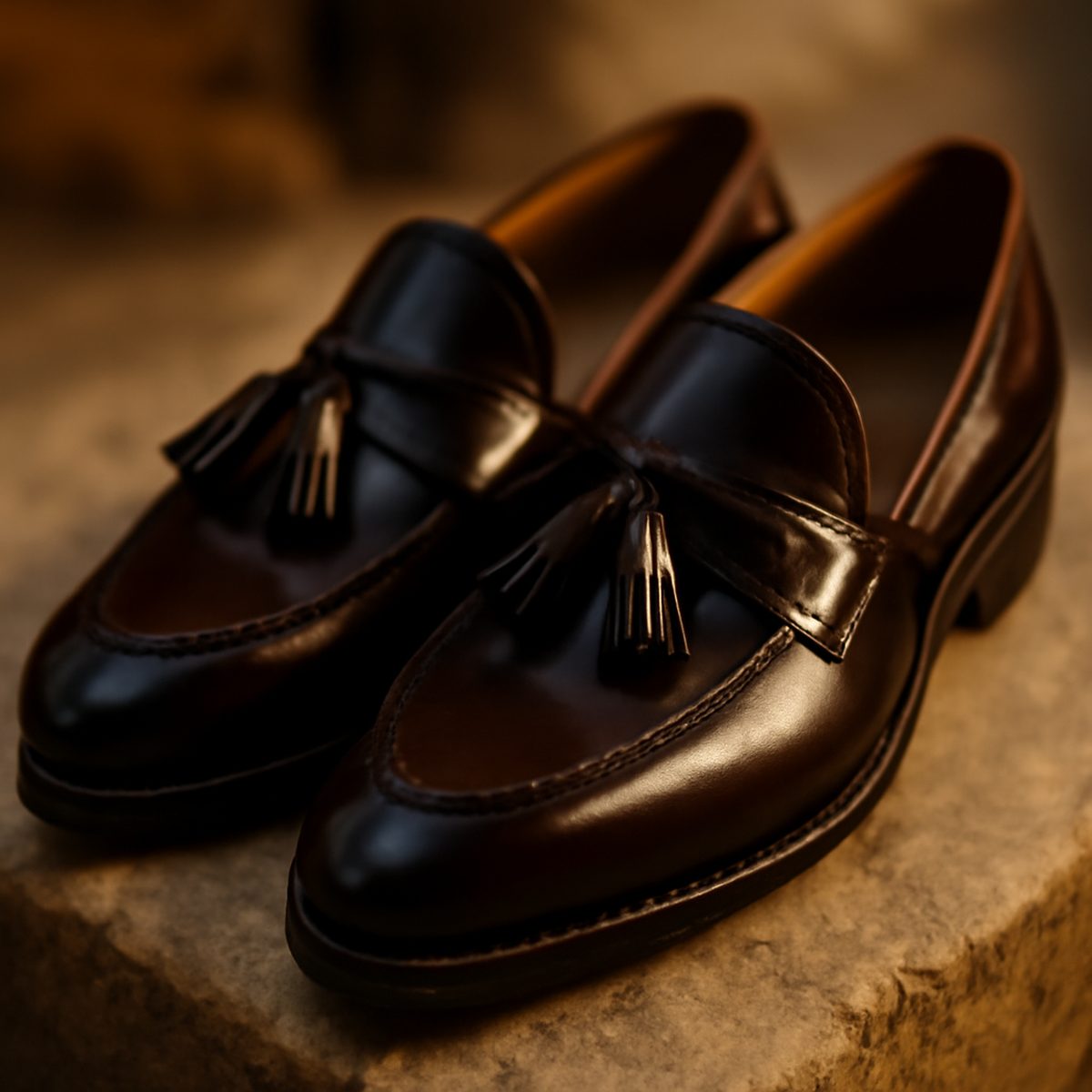
Some shoes are workwear that turned genteel, and some are dress shoes that learned to relax. The tassel loafer is one of the rare designs that was refined from the start yet never quite committed to formality, and that ambiguity is exactly its charm. Tassel loafers occupy a stylish middle ground all their own: too polished and decorative to be truly casual, too easy and unlaced to be strictly formal. That in-between quality, once you understand it, makes them one of the most useful and characterful shoes a wardrobe can hold.
They have long been the quiet signature of a certain kind of well-dressed man, worn by lawyers and professors and anyone who wanted to look considered without looking stiff. To wear them well is to understand precisely where they belong.
A shoe of refined ambiguity
The tassel loafer emerged in the mid-twentieth century as a slip-on with a decorative flourish, a pair of leather tassels adorning the vamp where a lace-up would have its fastening. That detail is the whole character of the shoe. It is dressier than a plain penny loafer, thanks to the ornament and the typically sleeker last, yet it remains a loafer, laceless and easy, and so can never be quite as formal as an Oxford. It sits, deliberately, in between.
This makes it a close cousin of the other great slip-ons, and it belongs firmly to the family we survey in the enduring style of the loafer. Where the penny loafer, discussed in the best everyday penny loafers, leans casual and collegiate, the tassel leans just a touch more polished and grown-up.
Tassel loafer style: where it fits
The key to wearing them is understanding the register they occupy. The tassel loafer style is smart-casual at its heart, and it shines in exactly those situations that fall between jeans and black tie.
- With tailored trousers and a sports coat, they are perfectly dressed for the office, a lunch or an unstructured evening.
- With chinos and an open-collared shirt, they lift a casual outfit into something considered.
- With a suit, they add a note of relaxed confidence, softening the formality without undermining it.
Where they are less at home is at the two extremes: they are a touch too decorative for a truly formal, black-tie occasion, and often too refined for genuinely rugged, casual wear. Know that, and you will always reach for them at the right moment.
The tassel loafer is the shoe for the vast, stylish middle of life, neither the boardroom’s most formal nor the weekend’s most relaxed, but perfectly at ease everywhere in between.
Colour, leather and last
Much of a tassel loafer’s character comes down to its material and shape. A dark burgundy or oxblood is the classic and the most versatile, warm and rich and flattering with navy, grey and denim alike; black reads more formal and business-like, while a mid-brown or tan leans more relaxed and summery. A sleeker, more elongated last dresses the shoe up; a rounder, chunkier last casualises it. Suede, in particular, softens the whole proposition and suits warmer weather and lighter dress. Choose the combination to match the role you want the shoe to play.
Caring for a good pair
A well-made tassel loafer, in good leather over a proper welted sole, is an investment that rewards care and can last for many years, even decades. Keep them on shoe trees to hold their shape and draw out moisture, polish them regularly to feed the leather and build a deep shine, and rotate them so no single pair is worn two days running. Above all, resole them rather than replacing them when the time comes; a quality welted shoe is built to be rebuilt, as our notes on a guide to resoling good shoes explain. Treated properly, a good pair becomes better with age, the leather deepening and the character growing.
Socks, no socks, and the question of hem
How you finish the leg matters as much as the shoe itself. In warm weather, and in the tropics especially, the tassel loafer is happily worn sockless, or with invisible loafer socks, showing a little bare ankle for an easy, relaxed elegance. It is one of the shoe’s great pleasures. In cooler or more formal settings, a fine, dark, ribbed sock, matched to the trouser rather than the shoe, keeps things polished. What to avoid is the awkward middle ground of a thick, pale, bunched sock, which spoils the clean line the loafer depends on.
The trouser hem is the other half of the equation. A slight break or none at all, with the trouser cut to graze the top of the shoe, shows the loafer off best and lets the tassels do their quiet work. Too long a hem pools over the vamp and hides the very detail that gives the shoe its name; too short can look mannered. Aim for the hem to just touch the shoe, and the whole outfit resolves.
A shoe that repays quality
Because the tassel loafer is so simple in silhouette, the quality of its making shows plainly, and this is a shoe worth buying well. A hand-welted construction, a shapely last, good full-grain leather and neatly made, supple tassels separate the fine pair from the forgettable one, and the difference is visible across a room. A cheap tassel loafer in stiff, corrected leather looks exactly what it is; a good one develops a deep patina and moulds to the foot over years. This is not a shoe to economise on, precisely because it hides nothing. Buy the best pair you can, and it will reward the outlay many times over the years of wear.
The tassel loafer endures because it answers a real need: a shoe that is smart without being stiff, easy without being scruffy, and elegant in that vast territory between the fully formal and the fully casual. Understand the register it occupies, choose the colour and leather to suit, and care for it well, and it will serve you handsomely for years. For more on the footwear and accessories that quietly define good dressing, our Style & Watches pages keep returning to the pieces that never go out of style.
Daniel has spent fifteen years arguing that the best watch is the one you never take off.