The Best Everyday Penny Loafers
The penny loafer is the rare formal-adjacent shoe that genuinely improves with daily wear. Here is how to choose one built for exactly that.
 By Daniel Koh
31 August 2026 · 6 min read
By Daniel Koh
31 August 2026 · 6 min read
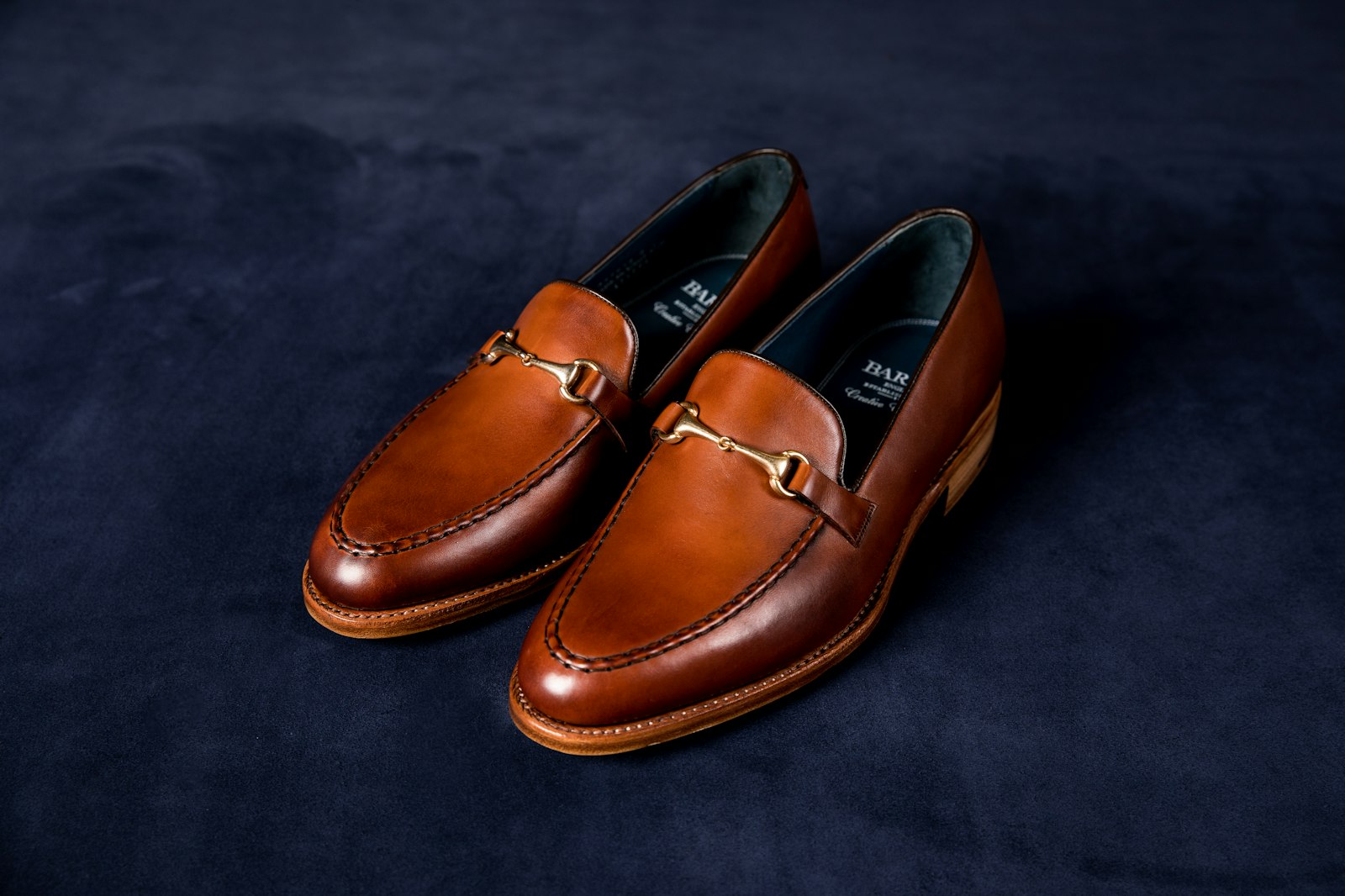
The penny loafer occupies an unusually forgiving position in a man’s wardrobe. Smart enough to pass in a reasonably relaxed office, casual enough to wear with denim on a weekend, and structurally simple enough to genuinely improve with the kind of daily wear that would slowly ruin a more delicate shoe, it has earned its place as one of the few footwear categories that rewards being worn often rather than saved for occasions. Choosing one built to withstand that daily use, however, requires looking past the silhouette and paying close attention to construction details that rarely make it into a product photograph.
Leather that ages rather than deteriorates
The single biggest determinant of how well a penny loafer holds up to daily wear is the quality and finishing of its leather. Full-grain leather, left with its natural surface intact rather than sanded and corrected, develops a genuine patina over years of wear — small creases and colour variation that tell an honest story of use. Corrected-grain leather, by contrast, is sanded smooth and refinished with a uniform coating, which looks tidy from the outset but tends to crack rather than soften as it ages, since the coating cannot flex the way natural grain can.
What to check before buying
- Run a thumbnail lightly across the leather surface — genuine full-grain will show a faint, natural texture rather than a uniformly smooth, plastic-like finish.
- Check the stitching around the apron seam, the horseshoe-shaped construction at the front of the shoe; loose or uneven stitching here is often the first place a poorly made loafer fails.
- Flex the sole gently. A construction built for daily wear should offer some give at the ball of the foot rather than feeling entirely rigid.
Construction and resoling
For genuine everyday use, construction method matters more than almost any other factor. A Goodyear-welted or hand-stitched welted loafer can be resoled repeatedly over its life, often for decades, since the upper and sole are joined via a welt rather than glued directly together. Cemented construction, where the sole is bonded with adhesive, is typically cheaper and lighter but cannot be resoled in the same way, meaning the shoe’s practical life is limited to however long that original sole lasts. For a shoe intended to be worn several days a week, the welted construction’s higher upfront cost is, over years of use, almost always the better value.
“A penny loafer built properly should outlive several pairs of cheaper shoes,” one cobbler who specialises in resoling told us. “People are often surprised how much life is left in the upper once we’ve replaced the sole for the second or third time.”
Fit for daily comfort
Loafers, lacking laces to adjust for fit, demand more precision at the point of purchase than a lace-up shoe. A well-fitted loafer should hold the heel snugly without slipping, while allowing enough room across the toe box for the foot to sit naturally rather than being compressed. Many first-time loafer buyers size down instinctively, assuming a slipper-like fit is correct, but a loafer intended for genuine daily wear needs enough structural room to accommodate a sock and a full day of walking without the leather stretching unevenly under pressure.
Colour and leather choice for versatility
For a single everyday pair, a mid-brown leather remains the most versatile choice, pairing comfortably with denim, chino and tailored trouser alike, and ageing into a rich, varied patina that darker or more formal black leather rarely achieves in quite the same way. Suede, while handsome, generally suits a slightly more considered rotation rather than daily use in humid or wet climates, given its greater vulnerability to moisture and staining.
The origins worth knowing
The penny loafer’s now-familiar name traces back to a mid-twentieth-century American habit of tucking a coin into the small diamond-shaped slot on the shoe’s saddle strap, ostensibly for an emergency payphone call, though the practice quickly became more decorative than practical. The shoe itself descends from a Norwegian moccasin-style slipper adapted by an American manufacturer in the 1930s, itself drawing on centuries of European moccasin-construction tradition. That layered lineage — Scandinavian craft, American commercial adaptation, and a distinctly collegiate mid-century styling moment — is part of why the penny loafer reads as effortlessly transatlantic today, equally at home in a New England university town or a considered Singapore wardrobe.
Understanding this history is not merely trivia; it helps explain why certain construction choices persist across even contemporary versions of the shoe. The moccasin-style apron seam at the front, the low, unstructured heel, and the overall lack of a separate toe cap all trace directly back to the shoe’s slipper origins, distinguishing it structurally from more formal derby or oxford lace-ups built on entirely different last shapes and construction principles.
Breaking in a new pair properly
Even a well-constructed penny loafer benefits from a deliberate break-in period rather than immediate full-day wear. Leather, however good, needs time to mould to the specific contours of an individual foot, and rushing this process by wearing a stiff new pair for a long day risks blistering at the heel or across the top of the foot where the leather has not yet softened. A sensible approach involves wearing a new pair for short stretches initially — an hour or two around the house, then progressively longer outings — allowing the leather to flex and soften gradually rather than forcing it.
Readers building out a considered everyday shoe rotation might also look at our guide to the best everyday suede loafers for a softer seasonal alternative, or the loafers genuinely worth resoling for life, which goes deeper into the specific models and makers whose welted construction rewards long-term investment. For those still weighing loafer against lace-up entirely, our broader look at the details of a well-made shoe offers a useful framework applicable well beyond loafers alone.
Ultimately, the penny loafer’s enduring appeal lies in this rare combination of ease and durability — a shoe that asks little of the wearer each morning while, if chosen well, rewarding years of genuine daily use. For more on building a considered everyday wardrobe around pieces exactly like this, see the wider range of guides across Style & Watches.
Daniel has spent fifteen years arguing that the best watch is the one you never take off.