The Enduring Style of the Chukka Boot
Simple, unfussy and endlessly wearable, the chukka boot bridges smart and casual like little else. A guide to its origins, its materials and how to wear it.
 By Daniel Koh
1 September 2026 · 6 min read
By Daniel Koh
1 September 2026 · 6 min read

The chukka boot is a masterclass in doing less. Two or three pairs of eyelets, an ankle-high cut, a simple sole, and nothing else — no buckles, no brogueing, no fuss. And yet this modest little boot is one of the most versatile things a man can put on his feet, at home with jeans and equally comfortable with tailoring. Its endurance rests entirely on that simplicity, and understanding it is understanding why some designs never date.
What makes a chukka
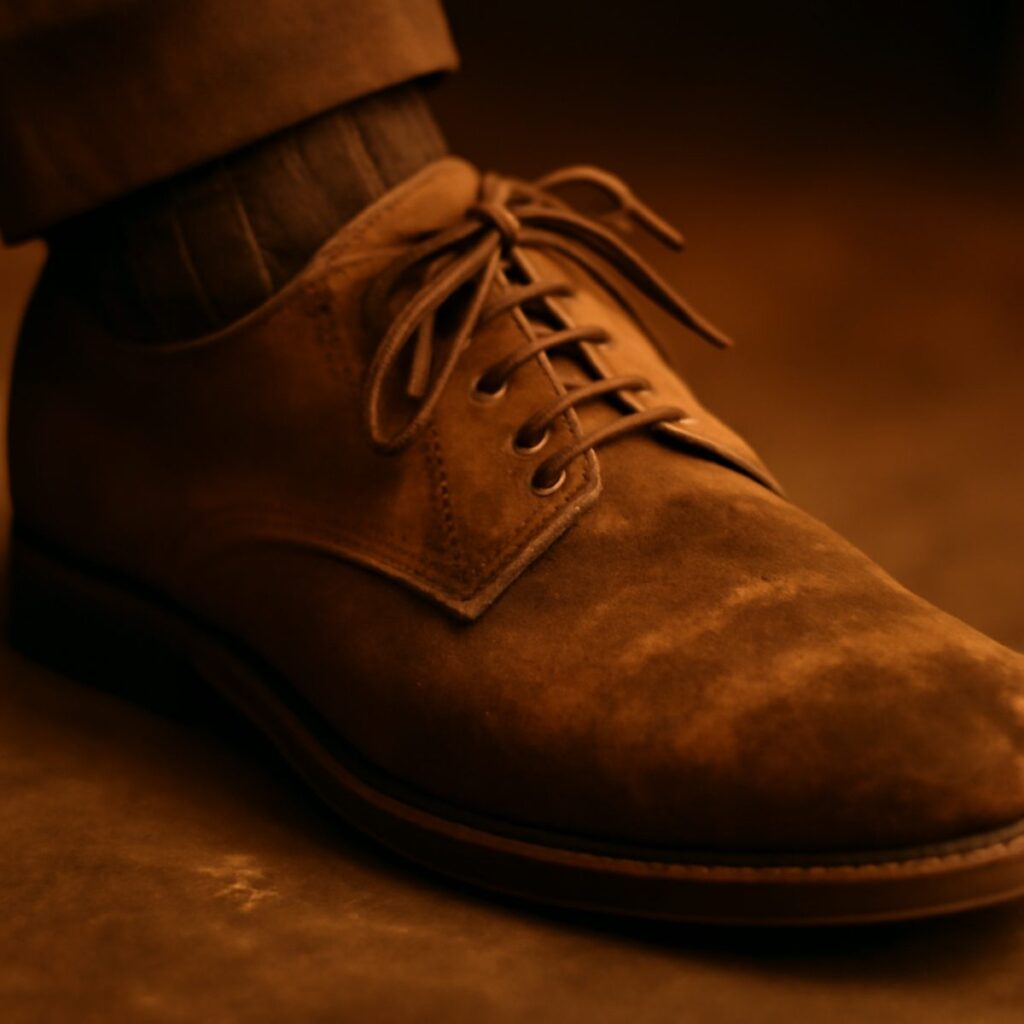
A chukka is defined by its restraint. It is an ankle-high boot with an open lacing system of just two or three pairs of eyelets, a rounded toe and, classically, an unlined or lightly lined construction that keeps it soft and unstructured. There is no ornamentation, no cap toe, no decorative detail — just clean, honest lines. That is the whole of it, and that is the point.
This pared-back design is what gives the chukka its remarkable range. With so little going on, it slips between registers effortlessly, reading as casual with denim and smart with wool trousers. It belongs to the family of versatile, unfussy footwear that rewards good materials over decoration, alongside the pieces we admire in our note on the derby shoe, another study in open-laced simplicity.
A word on origins
The chukka’s name comes from the game of polo, where a “chukka” is a period of play, and the boot is often linked to the informal footwear worn by players off the field. Its unstructured, comfortable build suited a life of activity, and from those sporting roots it made its way into general wear during the twentieth century, becoming a staple of relaxed, well-dressed men everywhere.
Its history is one of quiet practicality rather than fashion drama, which is fitting for a boot so unconcerned with showing off. Like much of the best menswear, it earned its place through usefulness first and was adopted for its looks second. That honest, functional lineage is part of its appeal, and it shares this heritage of quietly capable footwear with the boots we cover in why brown suede Chelsea boots work anywhere.
The chukka does not try to be anything. It is a boot, plainly made, and that plainness is exactly what lets it go everywhere.
The case for suede
While a chukka can be made in smooth leather, it is in suede that the boot truly comes into its own. The soft, matte texture of suede suits the boot’s relaxed, unstructured character perfectly, adding warmth and depth without any hard shine. A tan or sand suede chukka is the archetype for good reason — it is warm, versatile and improves with age.
Suede rewards the wearer who understands it. It develops a rich patina over time, softening and deepening in colour as it is worn, and a well-kept pair only grows more characterful with the years. It does demand a little care — a brush to lift the nap, a protective spray against water and stains — but this modest maintenance is a small price for how good it looks. The way suede ages is one of its quiet pleasures, a subject we explore in our appreciation of why suede ages with real character.
How to wear it
The chukka’s versatility is best understood through the sheer breadth of what it pairs with. It bridges the gap between casual and smart more gracefully than almost any other boot, which makes it one of the most useful things in a wardrobe:
- With jeans: a tan suede chukka with dark denim is a relaxed, timeless combination.
- With chinos: the natural partner for smart-casual dressing, easy and considered.
- With wool trousers: a suede chukka softens tailoring for a modern, unstuffy look.
- With cords: a warm, textural autumn pairing that plays to the boot’s rustic side.
The trick is to let the boot do its quiet work without over-thinking it. Because it is so plain, it rarely fights with anything, and it lends an easy, grounded finish to almost any outfit short of black tie. It is the footwear equivalent of a good pair of trousers or a plain knit — a reliable foundation rather than a statement.
Buying and keeping a pair
A good chukka is worth choosing carefully, because a well-made one will serve you for years. Look for quality suede with a fine, even nap, a comfortable last, and a sole appropriate to how you will wear it — a leather sole for smarter occasions, a rubber or crepe one for everyday durability and grip. The construction matters too, with a properly welted boot offering the chance of resoling down the line, a subject worth understanding through our guide to resoling good shoes.
One boot, many climates
The chukka’s adaptability extends beyond the wardrobe to the world it is worn in, which is a large part of why it has travelled so far from its origins. Its low, open, unstructured build makes it one of the more climate-flexible boots a man can own: substantial enough to see out a cool, wet season in a robust leather and a sturdy sole, yet light and breathable enough in soft suede to work in warmth where a heavier boot would feel oppressive. In a hot, humid city, an unlined suede chukka in a sandy tone reads as easy and appropriate rather than heavy, pairing with lightweight trousers and bare ankles as naturally as it does with wool and socks in the cold. This range means a single well-chosen pair can serve across seasons and settings, from a relaxed weekend to a smart-casual evening, in a way that more specialised footwear cannot. It is the boot’s essential modesty — its refusal to be any one thing too emphatically — that lets it slip so easily between climates and occasions, and that quiet versatility is exactly what keeps it in constant, unforced rotation.
Cared for with a brush and the occasional protective spray, a suede chukka only gets better with age, moulding to the foot and deepening in character. It is one of those rare purchases that rewards you more the longer you own it. Simple, versatile and quietly handsome, the chukka boot endures because it never tried to be fashionable in the first place — it just tried to be good. For more footwear and style that lasts, the style and watches section is full of the same enduring thinking.
Daniel has spent fifteen years arguing that the best watch is the one you never take off.