The Enduring Style of the Cowichan Sweater
The Cowichan sweater's bold shawl collar and graphic knitting trace directly back to Coast Salish craft, a history worth knowing before buying or wearing one.
 By Daniel Koh
31 August 2026 · 6 min read
By Daniel Koh
31 August 2026 · 6 min read
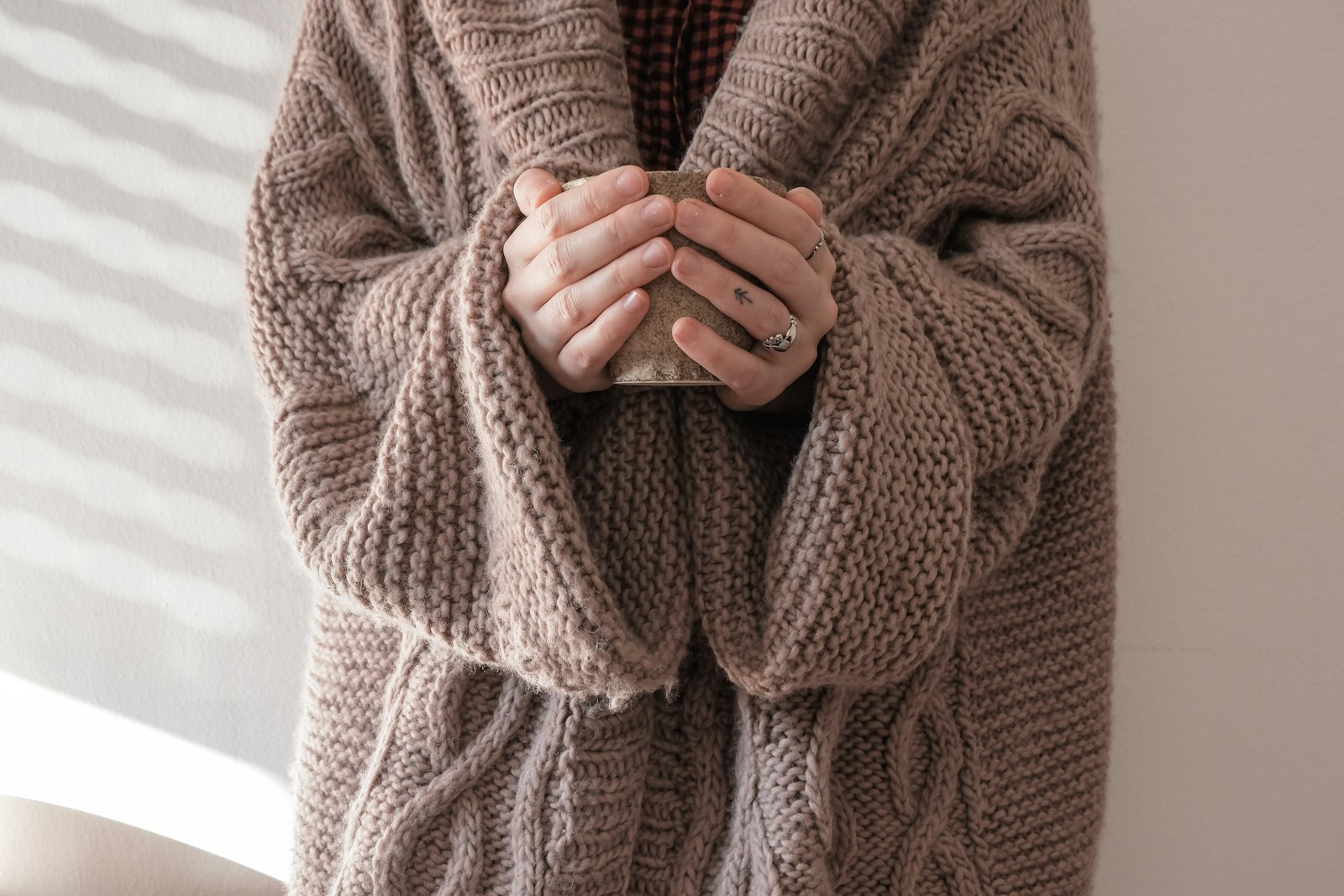
Few sweaters carry a history as specific, or as frequently overlooked, as the Cowichan. Its bold geometric patterning and distinctive shawl collar have been widely copied across decades of mainstream fashion, but the garment’s actual origin lies with the Coast Salish peoples of Vancouver Island, whose knitting tradition combined Indigenous weaving techniques with knitting methods introduced by European settlers to produce something genuinely original — not a fashion trend, but a craft with a documented, living lineage.
Where the technique actually comes from
The craft’s development is a genuinely interesting example of cultural exchange producing something neither tradition would have arrived at independently. European settlers introduced knitting needles and the basic technique, but the visual language of the finished garments — the specific motifs, the undyed natural palette, the proportions of the shawl collar — remained rooted firmly in existing Coast Salish design sensibility rather than simply copying European knitwear patterns of the period, which typically looked entirely different in both colour and motif.
Coast Salish weavers had long produced blankets and garments using spun wool and distinctive geometric patterning rooted in their own visual traditions, well before knitting needles arrived with settlers in the nineteenth century. Cowichan knitters adapted these existing design sensibilities to the new technique, producing sweaters with bold, often symbolic motifs — animals, mountains, geometric borders — knitted using undyed, naturally coloured wool that gives the garment its characteristic muted, earthy palette.
What makes a genuine Cowichan sweater
It is worth acknowledging directly how much the wider fashion industry has borrowed from this specific tradition without proper credit or compensation over the decades, a pattern common to many Indigenous craft traditions but particularly well documented in the Cowichan sweater’s case. Understanding that history is not simply a matter of trivia; it directly informs where and how a considered buyer should spend their money, favouring makers and cooperatives with genuine ties to the originating communities over mass manufacturers who continue to profit from the style’s visual signature while offering nothing back to its source. Respect for a garment’s origins applies equally to tailoring borrowed from other traditions, as the Nehru and mandarin collar explores.
The wool itself
Traditional Cowichan sweaters use thick, minimally processed wool, often left in its natural undyed state or dyed using traditional methods, producing a heavier, more textured yarn than the finer commercial wools used in most mainstream knitwear. This heavier wool retains more natural lanolin, giving genuine Cowichan sweaters a degree of water resistance that finer, more processed wools cannot match — a practical quality suited to the Pacific Northwest’s damp climate. For a softer, more tailored take on the knitted layer, our guide to the shawl-collar cardigan covers a close cousin worth knowing.
The shawl collar
The wide, folded shawl collar remains one of the sweater’s most recognisable features, distinct from the ribbed or button-front collars found on similar heavy knits like the fisherman sweater or the more structured Shetland sweater. The collar’s construction, along with the sweater’s typically seamless, one-piece knitting method, reflects specific techniques passed down through generations of Cowichan knitters rather than a decorative choice made for visual effect alone.
Authenticity and provenance
Because the Cowichan style has been so widely and often crudely copied by mass manufacturers over the decades, buying a genuine, Indigenous-made sweater matters considerably, both for authenticity and for supporting the communities who originated and continue to practise the craft. Genuine pieces are typically sold directly through Coast Salish cooperatives or documented artisan sellers, and carry a noticeably different weight and hand-feel than the mass-produced imitations that flooded the market through much of the twentieth century.
Wearing it today
There is also a growing awareness among considered buyers of the broader conversation around cultural appropriation in fashion, and the Cowichan sweater serves as a genuinely useful case study in how a garment can be both widely admired and, historically, poorly credited. Choosing to buy authentically, and to understand the difference between an imitation and the genuine article, is a small but meaningful way to engage with that broader conversation rather than simply enjoying the aesthetic while ignoring its origin.
The sweater’s bold patterning and substantial weight make it a genuine statement piece rather than a background layer, working best over a simple shirt or plain base layer that lets the knitting take centre stage. It suits cold-weather, outdoor-leaning dressing particularly well, standing up convincingly against more refined options like fine Geelong lambswool knits when the occasion calls for something heavier and more textural rather than sleek and refined.
- Buy directly from Coast Salish makers or cooperatives where possible, to ensure authenticity and fair value for the craft
- Let the sweater’s pattern be the outfit’s focal point; keep everything else simple
- Hand wash gently and dry flat, respecting the natural, minimally processed wool
- Expect a substantial, generous fit; the sweater was never designed for a slim, tailored silhouette
“Every pattern means something — a mountain, a season, a family design passed down. It’s not just decoration, and it was never meant to be copied without understanding that,” a Coast Salish knitter told us.
Caring for a piece meant to last
Given the time and skill invested in each hand-knitted piece, a genuine Cowichan sweater deserves the kind of long-term care that treats it as an investment rather than a seasonal purchase. Stored properly, away from moths and folded rather than hung to preserve its shape, a well-made piece can genuinely last decades, developing a softness and character over years of wear that no amount of pre-distressing on a mass-produced imitation could ever convincingly replicate.
A craft worth knowing properly
Understanding the Cowichan sweater’s genuine history changes how the garment should be bought and worn — not as a generic heavy knit borrowed from a catalogue of cosy winter styles, but as a specific craft object with a documented Indigenous origin still actively practised today. For readers interested in the broader category of heritage knitwear, our Style & Watches section covers several related traditions worth exploring alongside this one.
Bought properly, and worn with an understanding of where it comes from, a genuine Cowichan sweater becomes considerably more than a warm layer for the coldest months — it becomes a small, wearable piece of a living craft history.
Daniel has spent fifteen years arguing that the best watch is the one you never take off.