The Best Materials for a Timeless Vestibule
The vestibule sets the tone before anyone reaches the front door proper. Here is how to choose materials that will look as good in twenty years as today.
 By Priya Nair
31 August 2026 · 6 min read
By Priya Nair
31 August 2026 · 6 min read
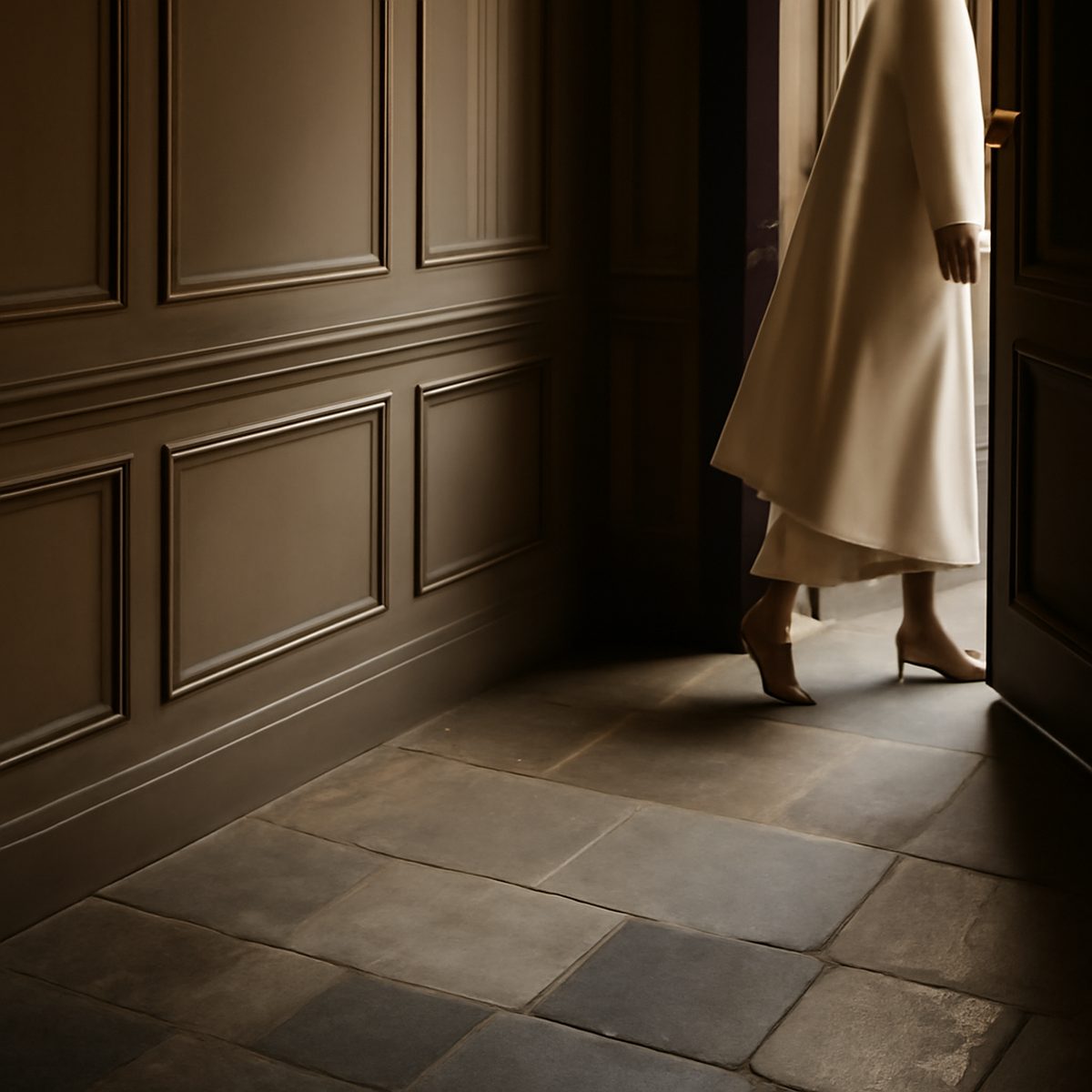
A vestibule occupies a strange, brief moment in a home’s sequence of arrival — the transitional space between an outer and inner door, present in older and more formal houses but increasingly rare in newer builds that skip straight from porch to living space. Where it still exists, or where it is being reintroduced by design, the vestibule carries an outsized responsibility for a small footprint: it is the first genuinely interior impression a visitor receives, and its materials need to say something considered before a single other room has been seen.
Why timelessness matters more here
Unlike a bedroom or living room, which can be refreshed relatively easily as taste evolves, a vestibule’s materials are usually structural or built-in — flooring set into the entry, panelling fixed to the walls — and changing them later is disruptive in a way swapping a sofa never is. This makes the vestibule one of the few rooms in a home where choosing for genuine longevity, rather than current trend, pays off disproportionately. The same discipline applies to the adjoining timeless corridor, since the two spaces are almost always seen and designed together as a single sequence of arrival.
Sizing the vestibule itself
Before any material decision, the vestibule’s proportions deserve real thought, since even the finest finishes cannot compensate for a space that is genuinely too small to function comfortably. A workable vestibule needs enough room for a door to swing without striking a person standing inside, and ideally enough floor area for two people to pass or pause without collision — a minimum that surprises many households used to thinking of the space as purely decorative rather than functional. Getting this right at the planning stage, before flooring and panelling are chosen, avoids the common mistake of designing a beautiful but genuinely impractical entry.
Flooring that earns its permanence
Natural stone
Limestone, marble and slate all remain the benchmark for vestibule flooring, chosen for durability under repeated foot traffic and weather brought in from outside as much as for appearance. A honed rather than polished finish tends to age more gracefully in a high-traffic entry, showing wear as gentle patina rather than as visible scratching on a glossy surface. Where comfort underfoot matters as much as durability, our guide to materials for a warm vestibule looks at softer, more inviting alternatives. The same durable, honed materials serve well in a covered outdoor room, as our guide to materials for a timeless loggia explains.
Encaustic and patterned tile
For a vestibule with genuine period character, an encaustic or geometric patterned tile floor offers texture and interest at a scale that suits a small, contained space without overwhelming it. These tiles have a long track record — many surviving examples in older homes are a century old and still handsome — which is a useful reassurance for anyone hesitant about committing to a bold pattern permanently.
Walls and panelling
Painted or waxed timber panelling, run to dado height or occasionally full height, remains one of the most reliable ways to give a vestibule genuine substance. It also offers practical protection against the scuffs and knocks an entry space inevitably absorbs, functioning much like the wainscoting found in a well-considered considered hallway just beyond it. Plaster, left in a natural lime finish or painted in a deep, saturated tone, works as a lighter alternative where full panelling feels too heavy for the space available.
- Choose a wall finish that can tolerate umbrella drips and the occasional muddy shoulder brush without showing permanent marks
- Match panelling height and profile to the room beyond, so the vestibule reads as a considered introduction rather than a disconnected space
- Reserve delicate wallpaper or fabric wall coverings for rooms further from the weather, where they will not face the same daily wear
Ceiling and the fifth surface
The vestibule ceiling is easy to overlook entirely, treated as simply the underside of whatever floor sits above, but it deserves the same material consideration as the walls and floor beneath it. A painted plaster ceiling in a soft, warm white keeps a small vestibule feeling open rather than boxed in, while a coffered or beamed ceiling — even a modest, shallow version — can lend real architectural gravity to a compact entry space that has little else to establish its presence beyond its footprint. A pendant or lantern fixture, chosen with the same care as any other hardware in the space, often becomes the vestibule’s single most memorable detail precisely because it occupies the one part of the room a visitor naturally looks up toward on entering.
Hardware and small details
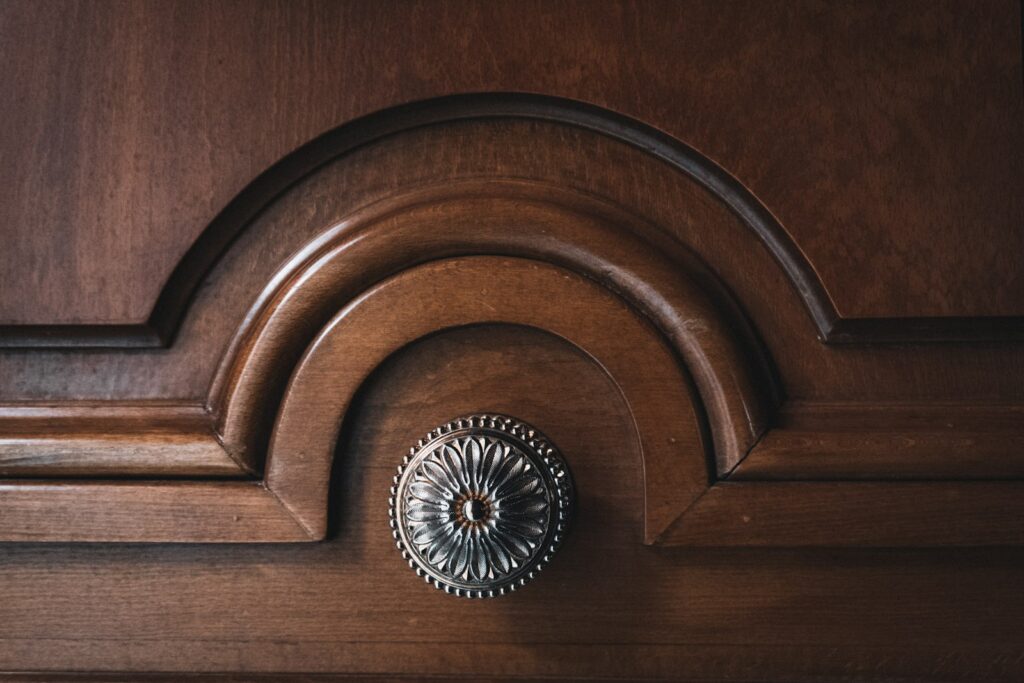
Brass, bronze and aged iron hardware all suit the vestibule’s role as the first material impression of a home, and unlacquered brass in particular develops a genuine patina with handling that only improves its character over years of use. This is worth coordinating with the front door itself and any adjoining ironmongery, so the vestibule reads as a single considered composition rather than a mix of finishes chosen independently and never quite reconciled.
A vestibule should feel, on the first visit and the thousandth, like it has always belonged exactly where it stands.
Designing for the climate
In a humid, tropical setting, a vestibule takes on practical duties a drier climate rarely demands — managing rainwater tracked in during a downpour, and tolerating the swings in humidity that come with an open front door through the day. Stone flooring with adequate slip resistance and a slightly raised threshold both help here, keeping water contained to the vestibule itself rather than spreading into the home beyond. Chosen with this practical reality in mind from the outset, a vestibule’s materials can remain both handsome and genuinely functional for decades, exactly the kind of quiet, considered longevity the space was always meant to provide.
It is worth remembering, too, that a vestibule’s materials are experienced briefly but repeatedly — every arrival and departure passes through it, day after day, for as long as a family lives in the house. This repetition is precisely why timelessness matters more here than almost anywhere else. A material choice that feels merely fashionable will grate after the hundredth passing, while one chosen for genuine, lasting quality only grows more comfortable with familiarity, becoming simply the correct and unremarkable way the entrance has always looked.
Priya tours the homes most people only glimpse from the road, and asks how they are really lived in.