The Best Materials for a Warm Reading Nook
Warmth in a reading nook comes from material choices, not just lighting. Here is how to layer textiles, timber and finish for a corner worth returning to.
 By Priya Nair
31 August 2026 · 6 min read
A reading nook is one of the few spaces in a home explicitly built for staying still, which makes its material choices work harder than almost anywhere else. A sofa in a living room needs to look good and survive general household traffic. A reading nook needs to invite someone to sit down for an hour without moving, and that is a different, more physical kind of comfort — one built from texture, temperature and the specific weight of fabric against skin, not simply appearance.
Starting with what touches the body
Upholstery is the first and most important material decision. Bouclé, wool and heavy cotton velvet all hold warmth against the body in a way that linen or smooth cotton, however handsome, simply do not. This matters more in a reading nook than in a wider reading nook concept generally discussed in broader terms, because the whole premise of the space is prolonged, close contact with its surfaces rather than a passing visit. A seat cushion in a dense, slightly nubbled wool will read as inviting from across the room in a way a slick, cool fabric rarely manages.
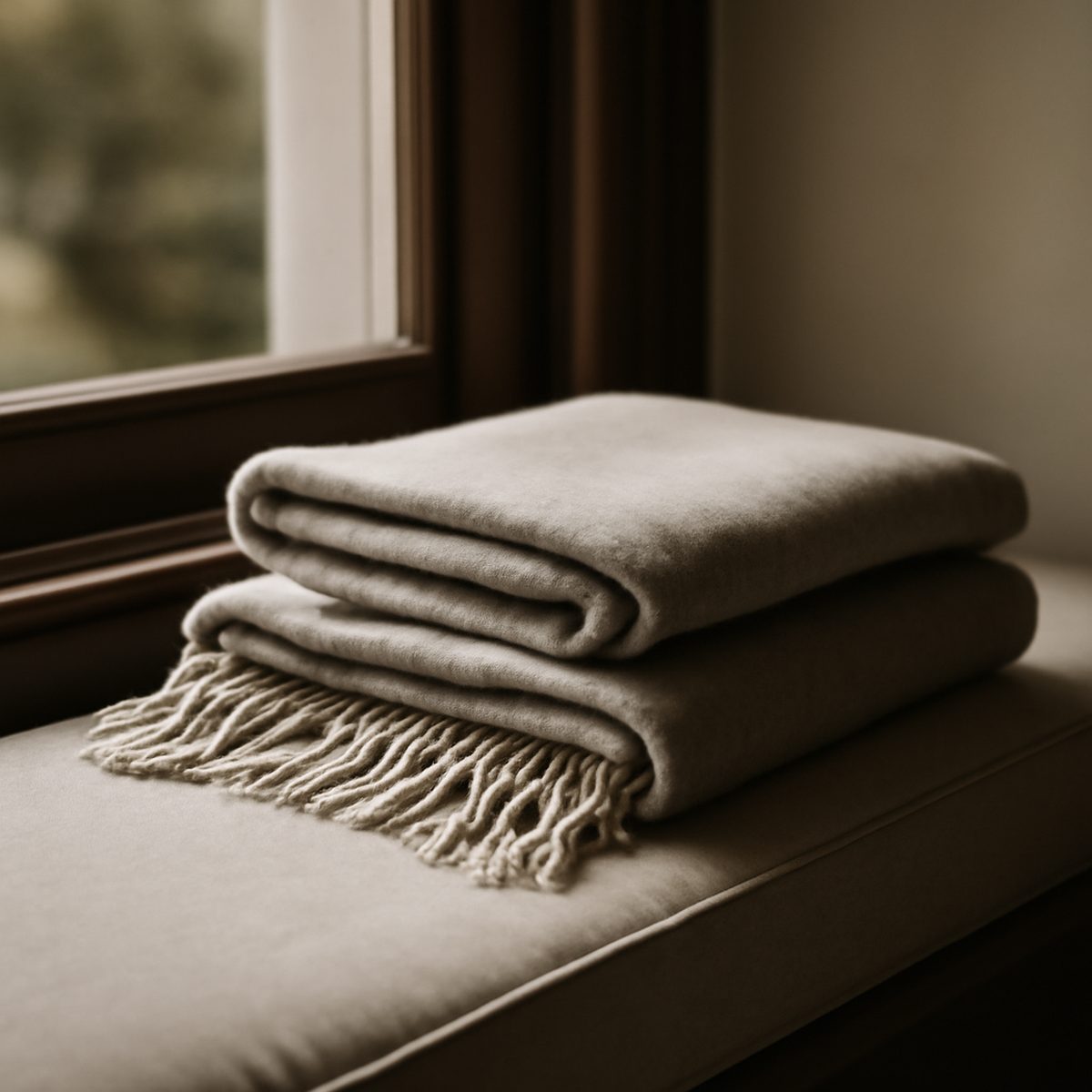
Layering matters as much as the base fabric. A wool or mohair throw, kept permanently in the nook rather than fetched from elsewhere, does more to establish genuine warmth than almost any single piece of furniture. The same logic that governs a well-considered home library nook applies here — the reading spot should be self-sufficient, stocked with everything needed to settle in without a trip elsewhere in the house.
Timber and surrounding surfaces
Panelling and built-in joinery
Where a reading nook is built into an alcove or under a stair, the surrounding timber sets the tone for the whole space. Warm-toned woods — oak, walnut, cherry — read as considerably cosier than pale ash or painted white joinery, and a slightly aged or waxed finish softens the material further than a high-gloss lacquer ever could. This is worth planning alongside any built-in shelving, since books themselves contribute meaningfully to a room’s perceived warmth through colour and texture alone. Where the nook doubles as a place to work, our guide to materials for a warm study nook considers the practical adjustments.
Flooring underfoot
Bare, cool flooring undercuts even the best-chosen seating. A wool rug, sized generously enough to sit under the seat and extend a little beyond it, does more for the felt warmth of a nook than almost any other single addition, and is considerably easier to swap out seasonally than reupholstering a chair.
The role of a chair, if one is used
Not every reading nook is built into a window seat or alcove — many are simply a single well-chosen armchair, angled just so, and here the material stakes are even higher, since the entire warmth of the space rests on one piece of furniture rather than a built-in seat and surrounding joinery. A leather or leather-look chair, however handsome, tends to run cooler to the touch and takes longer to warm with body heat than a fabric-upholstered equivalent, which is worth weighing against leather’s practical durability advantages. Many households solve this by combining a leather frame with a substantial fabric or sheepskin throw kept permanently draped over the seat, capturing leather’s longevity while still offering the immediate tactile warmth a reading session benefits from.
Getting the balance of textures right
- Mix at least two distinct textures — a smooth timber armrest against a nubbled wool cushion, for instance — rather than relying on a single material throughout
- Avoid anything with a cold, reflective surface within arm’s reach, since metal or glass side tables undercut the tactile warmth of the seating itself
- Choose cushion covers in natural fibres that will soften and slightly pill with use, since a nook that looks brand new after a year of daily sitting has not actually been used enough
Adapting materials for a warmer climate
In a Singapore home, the classic reading nook materials borrowed from colder climates need some genuine rethinking. Heavy wool upholstery that reads as cosy in a temperate winter can feel oppressive in year-round humidity, and a thick pile rug underfoot may hold moisture rather than simply providing warmth. The more successful local versions favour a lighter-weight bouclé or a natural linen-cotton blend for upholstery, reserving the heaviest wool throws for the handful of genuinely cool, air-conditioned evenings when they earn their keep rather than sitting unused for most of the year. The visual language of warmth — rich colour, natural texture, timber tones — can still be fully achieved without the thermal bulk that a genuinely cold climate would demand.
Colour as a material decision
Colour interacts directly with how warm a material feels, independent of its actual thermal properties. Deep terracotta, rust, mossy green and warm browns all read as inviting regardless of fabric, while pale greys and cool blues fight against the cosy effect however soft the underlying textile. This is worth considering alongside the room’s reading room lighting, since warm light will always flatter a warm palette far more than it can rescue a cool one.
A reading nook should feel like it was built around a specific hour of the evening, not around how it photographs at noon.
Building for years of use
Because a reading nook gets more concentrated, repeated contact than most furniture in a home, material durability matters as much as initial warmth. A dense, well-made wool upholstery will outlast a cheaper fabric by years, and a solid timber frame under any built-in seating will avoid the sag that ruins a nook’s comfort long before its appearance fades. Choosing well the first time, with materials that age gracefully rather than simply wear out, is what separates a reading nook that gets better with use from one quietly abandoned within a year.
It is worth resisting the temptation to over-furnish. A reading nook crowded with too many cushions, throws and decorative objects loses the sense of a single, considered retreat and starts to feel like general storage for soft furnishings instead. The strongest examples tend to hold to a tight material palette — two or three fabrics, one timber tone, a single rug — chosen with real care rather than a wider, busier mix assembled piece by piece over time without an overall plan in mind.
Priya tours the homes most people only glimpse from the road, and asks how they are really lived in.