The Best Everyday Split-Seconds Watches
The rattrapante has a reputation as an occasion-only complication, but a new generation of split-seconds watches is genuinely built for daily wear.
 By Daniel Koh
31 August 2026 · 6 min read
By Daniel Koh
31 August 2026 · 6 min read
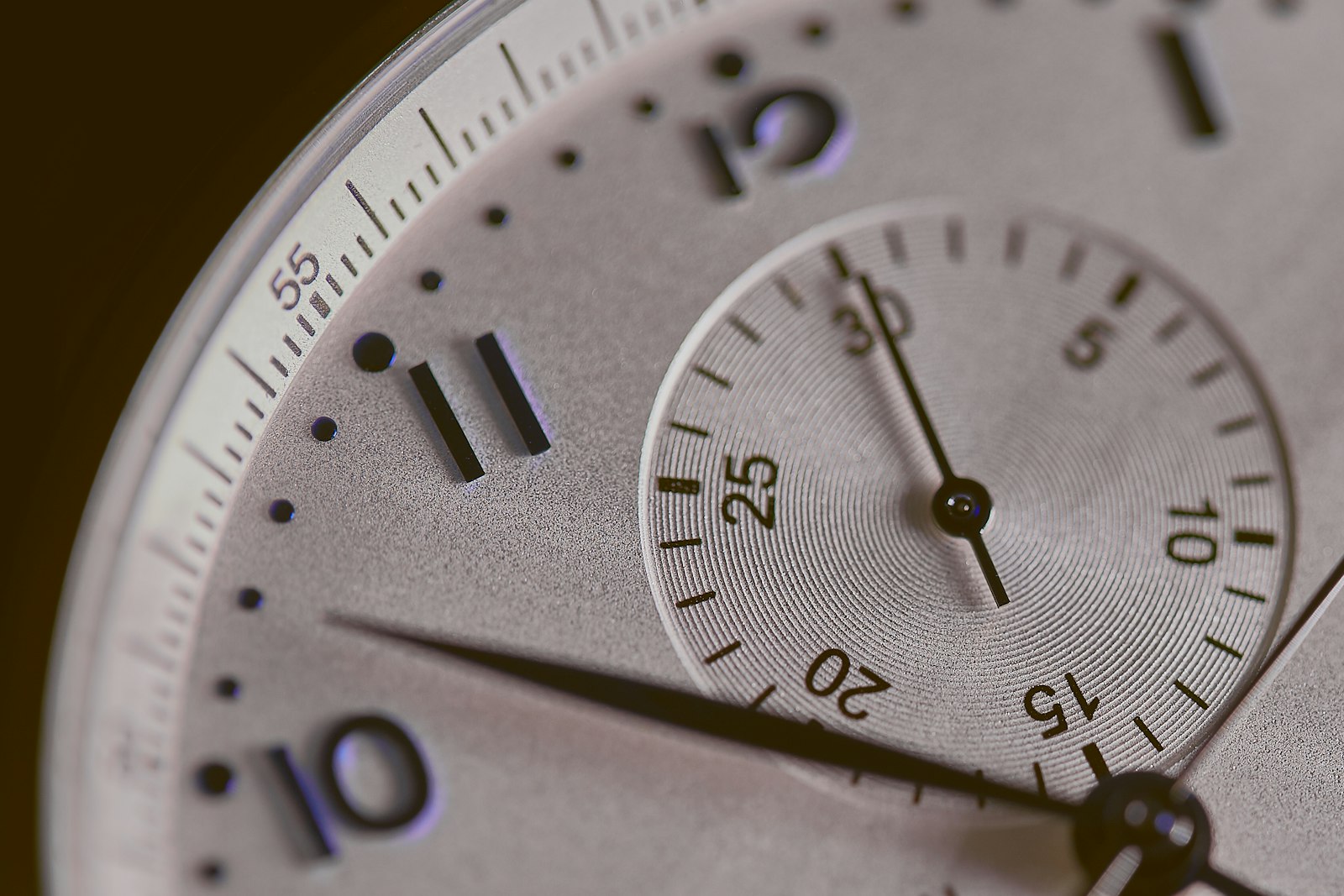
The split-seconds chronograph, or rattrapante, has long been treated as an occasion piece — the kind of watch mentioned in hushed tones at auction previews and worn, if at all, to events where its two overlapping seconds hands might actually be noticed. That reputation is starting to shift. A small but growing number of collectors are choosing to wear their rattrapante daily, treating a genuinely difficult complication not as a museum piece but as a watch with a job to do.
What a split-seconds watch actually does
At its simplest, a rattrapante allows the wearer to time two events that start together but end at different moments — two runners in a race, two flights departing close together, two halves of any process worth comparing. Mechanically, it requires a second chronograph seconds hand stacked beneath the first, controlled by its own column wheel and clamp, which can pause independently while the main chronograph keeps running, then snap back into sync with a press of a third pusher. It is, by common agreement among watchmakers, one of the more demanding complications to execute well, which is part of why it has traditionally commanded a serious premium over an everyday chronograph watch without the split function.
Why wear one daily at all
The argument for daily wear is less about using the complication constantly and more about owning something with real mechanical depth close at hand. A rattrapante worn regularly becomes a quiet, private pleasure — the wearer knows what is happening under the dial even if nobody else does. There is also a simpler, more practical case: modern split-seconds watches, unlike many historical examples, are increasingly built with the robustness for genuine daily use rather than careful, occasional handling.
The case for the two-register layout
Many of the more wearable modern examples pair the rattrapante function with a clean two-register chronograph layout rather than the busier three-register dials of the past. This keeps legibility high for daily use — a real concern, since a cluttered dial defeats much of the purpose of wearing a complicated watch if it cannot be read at a glance across a meeting table.
What to look for when buying
- A case size in the everyday-wearable range, roughly 38mm to 41mm, rather than the larger cases some manufacturers use to accommodate the extra mechanism.
- A clear third pusher, usually at 10 o’clock, that operates with a distinct, firm click separate from the main chronograph pushers.
- Water resistance suitable for genuine daily wear, since a watch worn constantly needs to survive the occasional splash without concern.
- A movement with a documented service history or manufacturer support, given the complexity of servicing a split-seconds mechanism.
- Provenance and condition matter more here than in almost any other watch category — buy from a source who can speak knowledgeably to watch complications and value rather than simply the headline mechanism.
Is it worth it, practically speaking
This is the honest question anyone considering a split-seconds watch for daily wear has to answer for themselves. The complication itself will likely be used only occasionally — most owners are not literally timing simultaneous events on a Tuesday morning. What they are buying, more accurately, is the density of engineering packed into a case no larger than an ordinary watch, and the satisfaction of owning something built to a standard well beyond what daily life strictly requires. Whether that is worth it belongs in the same conversation as the chronograph: worth it, or just complicated debate — a question with no single right answer, only a personal one.
“You don’t buy a rattrapante because you need to split two times every day,” one watchmaker explained. “You buy it because you want to know, every time you look down, exactly how much has gone into what’s on your wrist.”
Living with the complication
Daily wear does place real demands on a split-seconds watch. The mechanism benefits from being exercised occasionally rather than left entirely idle, but should also be serviced by someone genuinely experienced with the complication — a generalist watchmaker unfamiliar with the rattrapante clamp system can do real damage attempting an unfamiliar repair. Owners who wear these watches daily tend to build a relationship with a single trusted service centre for exactly this reason, treating the watch less as a static possession and more as a piece of ongoing engineering that rewards proper care. For a complication with its own mechanical theatre but fewer servicing demands, our pick of everyday retrograde watches is worth considering.
The history worth knowing before buying
The split-seconds mechanism dates back further than most collectors assume, with early pocket-watch examples appearing well over a century ago, long before it found its way onto the wrist in any meaningful production numbers. For most of that history, it remained the preserve of a small circle of specialist collectors and serious watchmaking houses, produced in tiny numbers and priced accordingly. What has changed in recent years is not the mechanism itself, which remains as demanding to execute as ever, but the range of manufacturers now willing to build it into cases sized and finished for genuine daily use rather than display-case ownership. This shift matters enormously for anyone actually intending to wear the watch, since older split-seconds examples were rarely built with modern daily-wear robustness in mind.
Understanding this history also helps calibrate expectations around price and availability. A modern, robustly built rattrapante intended for daily wear will typically sit at a different point in the market than a vintage or highly limited example built primarily for collectors — and buyers should be honest with themselves early about which category actually suits their intended use, rather than being drawn in by a historic name attached to a watch never meant to leave its box. A related but distinct complication is the subject of our guide to the best everyday foudroyante watches, judged by the same everyday standard.
Servicing intervals and what to budget for
Because of its mechanical complexity, a split-seconds chronograph generally benefits from more frequent, more careful servicing than a simpler time-only watch. Owners wearing one daily should expect service intervals on the shorter end of what a manufacturer recommends, and should budget accordingly — both in terms of cost and the weeks a proper service of this complication can take at a specialist workshop. This is not a reason to avoid the category, but it is a genuine ownership cost that deserves honest consideration before purchase, in the same way a classic car buyer weighs maintenance alongside the initial outlay.
For the right owner — someone who values mechanical depth over outward display, and who is prepared to care for a genuinely complicated object with the attention it deserves — the everyday split-seconds watch offers something rare: a complication worn not for occasion, but simply because it is there, working quietly, every single day. It belongs, in that sense, among the more considered pieces we cover across Style & Watches, chosen for what they do rather than what they signal.
Daniel has spent fifteen years arguing that the best watch is the one you never take off.