The Best Everyday Chronograph Watches
Not every chronograph earns a place in daily rotation. Here is what separates the ones that do from the ones that end up worn twice a year, at best.
 By Daniel Koh
31 August 2026 · 6 min read
By Daniel Koh
31 August 2026 · 6 min read
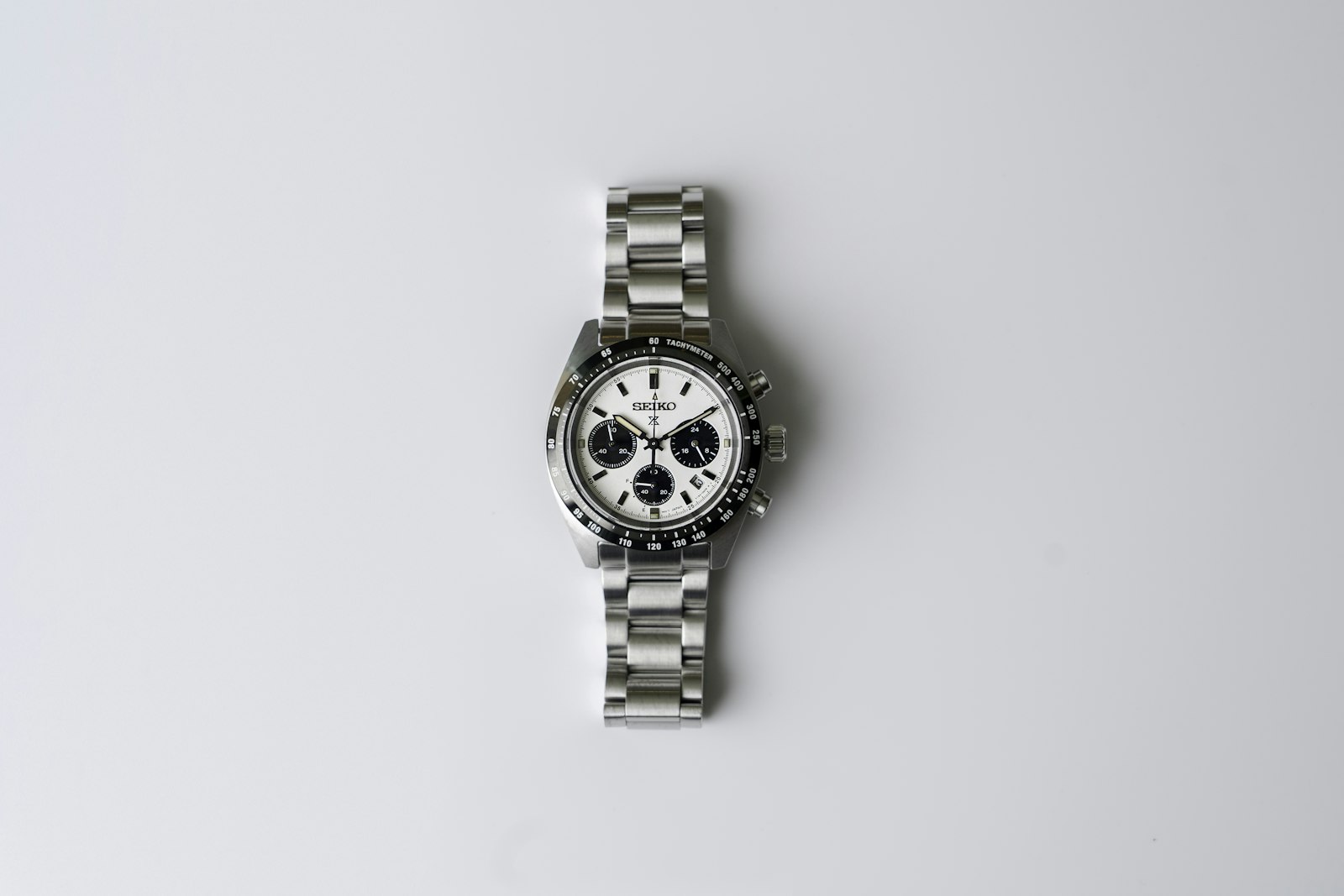
The chronograph occupies a strange position in a serious watch collection. It is often the most complicated-looking piece on the wrist — sub-dials, a tachymeter scale, pushers flanking the crown — and yet, for most owners, it is also the least used in any functional sense. Few people time a lap or calculate speed over distance in the course of an ordinary week. And yet a well-chosen chronograph, worn daily, remains one of the most satisfying watches a man can own, precisely because its complexity is visible without being fussy.
The question this raises is not whether a chronograph deserves a place in daily rotation — it clearly does, judging by how many are sold and worn — but which chronographs are actually built for that role, as opposed to the ones that look superb in a photograph and prove awkward on the wrist by Wednesday.
Case size and proportion matter more than the movement
The single biggest determinant of whether a chronograph earns daily wear is not its movement, its complications, or its brand — it is whether the case sits comfortably and looks proportionate on the specific wrist wearing it. Chronographs, by nature of having to fit sub-dials and pushers, tend to run larger than time-only watches, and it is easy to end up with something that overwhelms a smaller wrist or, conversely, looks undersized on a larger one. A 38 to 40mm case suits most wrists for daily wear; anything meaningfully larger should be tried on before buying, not ordered on the strength of a specification sheet.
Dial legibility under real conditions
A chronograph with three or four sub-dials can become genuinely difficult to read at a glance, particularly in the low light of a restaurant or the harsh midday glare that Singapore specialises in. The best everyday chronographs solve this with restraint — two registers rather than three, contrasting sub-dial colours against the main dial, and hands with enough length and lume to be read without squinting. This is worth testing in person rather than judging from a catalogue image, since dial legibility is one of the details that photographs consistently flatter.
Bracelet or strap, and why it changes everything
A chronograph on a well-fitted steel bracelet reads as considerably more versatile — appropriate for the office, for a casual weekend, for most occasions in between — than the same watch on a leather strap, which tends to push it toward smarter, drier environments and away from anything involving water, sweat, or humidity. Given Singapore’s climate, a bracelet or a rubber strap is the more practical everyday choice for most owners, with leather reserved for a chronograph that is genuinely being worn for occasion rather than daily rotation.
What to prioritise when choosing
- Two-register layouts over three for genuine daily legibility, unless the third register is a small running seconds rather than a full 12-hour counter.
- A tachymeter bezel in a muted tone rather than high-contrast red or orange, which reads as sportier than most daily contexts call for.
- Water resistance of at least 100 metres, which covers most everyday scenarios including an unexpected downpour.
- A pusher action that feels considered, not mushy — this is a detail worth testing in person, as it varies enormously between otherwise similar watches.
Quartz, automatic, and the case for either
The automatic-versus-quartz debate carries more weight in chronographs than in simpler watches, because a chronograph module adds genuine mechanical complexity, and a well-executed automatic chronograph movement is a small feat of engineering worth appreciating on its own terms. That said, a quartz chronograph has real advantages for daily wear — accuracy that never needs adjusting, and a slimmer case in many models, since quartz chronograph movements are typically thinner than their automatic counterparts. Neither is the objectively correct choice; the decision should follow from how much the mechanical story matters to the owner, rather than from received wisdom about which is “more serious.”
A chronograph is not judged by whether the stopwatch function is ever used. It is judged by whether the wearer forgets it is a complicated watch at all.
Where the tachymeter still earns its place
It is worth saying a word in defence of the tachymeter scale, since it is easy to dismiss as pure decoration on a watch that will never time a race. In practice, the scale does two useful things beyond its original purpose: it gives the dial visual structure, framing the sub-dials in a way that a plain bezel does not, and it offers a genuinely useful rough-speed calculation on the rare occasions it is called on — timing a taxi ride against a known distance, for instance, has a certain old-fashioned charm even in the age of a phone in every pocket. A muted, engraved tachymeter on the bezel itself, rather than a glossy printed one on the dial, tends to age far better and avoids the slightly try-hard look of a high-contrast racing scale on a watch that will spend most of its life in an office.
Servicing and longevity
A mechanical chronograph movement has more moving parts than a simple three-hand watch, and this has real consequences for long-term ownership that are worth understanding before buying rather than after the first service bill arrives. Chronograph movements typically need servicing on a similar schedule to any automatic watch — roughly every five to seven years — but the chronograph module itself adds cost and complexity to that service, since the column wheel or cam-actuated mechanism that drives the sub-dials requires careful, specialist attention. This is not a reason to avoid a mechanical chronograph, but it is a reason to buy from a brand with an established, accessible service network, particularly in a market like Singapore where authorised service centres for some smaller independent brands can be limited.
Building a considered collection around it
For most collectors, a single well-chosen everyday chronograph does more work than three mediocre ones, and pairs sensibly with a simpler time-only piece for days that call for something quieter. Readers building a broader rotation should look at our guide to the best everyday GMT watches for a complication that suits frequent travel, and at understanding watch complications and value for a wider framework on which complications genuinely earn their price premium and which are mostly decorative.
Two-register chronographs in particular have become something of a specialism worth exploring on their own — our piece on the best two-register chronographs goes deeper into why this layout tends to outperform its three-register siblings for daily legibility. And for anyone assembling more than one or two pieces, proper storage stops a good chronograph from becoming a scratched, dusty afterthought — see the best everyday watch winders and storage for guidance on keeping a small collection in genuine working order.
Chosen with care, a chronograph is not a novelty complication reserved for special occasions — it is simply a watch with a little more to look at, worn exactly as often as anything simpler. The rest of this magazine’s watch coverage sits within Style & Watches.
Daniel has spent fifteen years arguing that the best watch is the one you never take off.