The Best Everyday Messenger Bags
The messenger bag has quietly outlasted every backpack trend. Here is what to look for before you commit to carrying one for the next twenty years.
 By Daniel Koh
30 August 2026 · 7 min read
By Daniel Koh
30 August 2026 · 7 min read
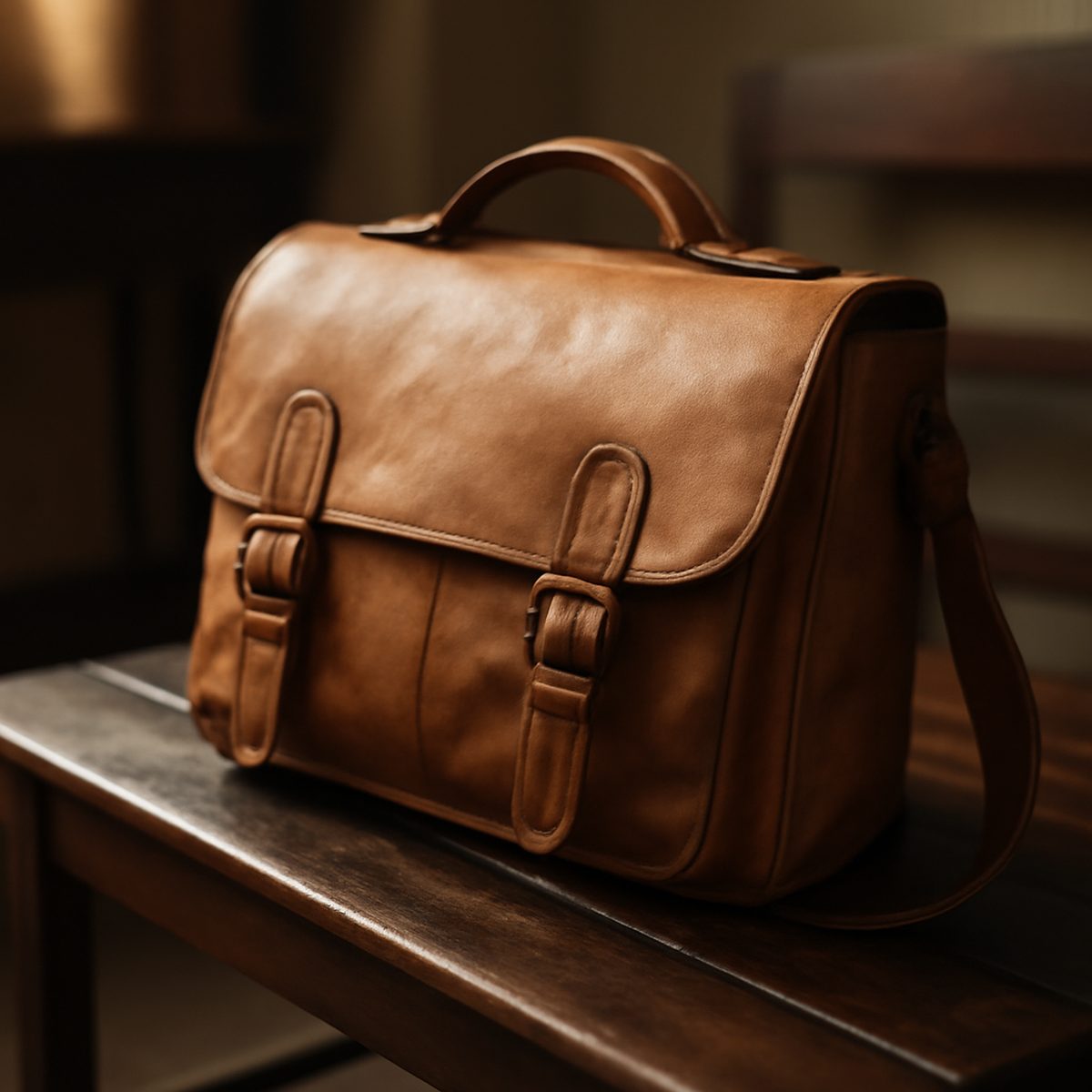
There is a particular kind of man who has owned the same bag for a decade and cannot quite explain why he trusts it more than most people he works with. The strap has darkened to a shade no dye chart offers. The corners have softened into something closer to a paw than a right angle. He did not set out to form this attachment; it simply arrived, the way good leather goods do, somewhere around year three, when the bag stopped looking new and started looking like his.
The messenger bag has had an odd run of fashion. It was a courier’s tool before it was a status object, then a status object before it briefly went out of favour to backpacks and totes, and now it has settled into something more useful: a genuinely good answer to the question of how to carry a laptop, a paperback, and a change of shirt without looking like you are commuting to a hackathon. Buying one well, though, is less about trend and more about materials, proportion, and a frank assessment of what you actually carry.
Full-Grain Over Everything
The single decision that determines whether your bag looks better in five years or worse is the grade of leather. Full-grain leather — the top layer of the hide, uncorrected, with its natural grain intact — develops a patina. It darkens at the corners, softens at the fold, and generally improves with contact. Corrected or bonded leathers, by contrast, are sanded and refinished to hide imperfections, and they tend to crack rather than mellow. A showroom test is simple: press a thumbnail gently into the leather near a seam. Full-grain will show a faint mark that fades; a heavily corrected hide will feel more like coated cardboard and won’t respond at all.
Canvas-and-leather hybrids are a legitimate alternative, particularly in Singapore’s climate, where a full leather bag can feel heavy and warm by 11am. Waxed cotton canvas with leather trim at the stress points — straps, base, closures — carries less, breathes better, and ages with its own kind of character: fading, creasing, the odd honourable stain. For those who prefer to carry by hand or on the shoulder rather than across the body, our guide to everyday totes and carryalls applies the same tests. The same climate-minded thinking applies to what you wear on your feet, as our guide to everyday trainers, reconsidered suggests.
Hardware Tells You More Than the Label Does
Buckles, rings, and zip pulls are where manufacturers cut corners that don’t show up until month eight. Solid brass or nickel hardware has weight and a slightly muted, non-reflective finish; it will oxidise gently over years rather than flake. Plated hardware is lighter, brighter, and eventually reveals the base metal underneath at the edges where fingers meet buckle most often. If you can, unclip and reclip the flap closure a few times in the shop. A well-made buckle has resistance and a definite click. A cheap one feels loose from day one and will feel looser still.
The Strap Is the Bag
Most of a messenger bag’s working life is spent on your shoulder, not on a desk, so the strap deserves more scrutiny than the flap. Look for a strap that is stitched through and riveted, not just glued or bar-tacked at a single point — this is what stops a fully loaded bag from tearing free after a few years of daily wear. Width matters too: anything under an inch and a half concentrates weight into a line across the shoulder that becomes genuinely uncomfortable once you’re carrying a 15-inch laptop, a charger, and lunch. A slightly padded or doubled-leather strap, even if it looks marginally bulkier in the shop, earns its keep on the walk from the MRT.
Size It to Your Actual Day, Not Your Ideal One
The most common mistake is buying the bag that looks best empty. A flat, sculptural messenger bag photographs beautifully and then refuses to close once you’ve added a laptop sleeve, a water bottle, and a folder of documents. Before buying, do the honest inventory: laptop, charger, a book or notebook, wallet, perhaps a light jacket for the office air-conditioning that never seems calibrated to anyone’s comfort. Choose the bag that holds that load at roughly two-thirds capacity, with the flap closing without strain. A bag that is always stuffed to bursting ages badly — seams stretch, buckles strain — while one with a little room to spare tends to outlast its warranty by years.
- Interior organisation matters more than exterior pockets — a slip pocket for a laptop and one zippered pocket for small items is usually enough; more than that just adds weight and things you’ll forget you own.
- A structured base, even a thin insert board, keeps the bag standing upright rather than slumping, which matters both for how it looks and for protecting whatever’s inside.
- Water resistance in the stitching and closure matters more here than almost anywhere in Singapore, given how fast an afternoon can turn.
“I bought the expensive one because I was tired of replacing the cheap ones,” a friend who has worn the same bag through two job changes told me recently. “Turns out that’s the whole trick — buy it once.”
Colour and How It Ages
Tan and mid-brown leathers develop the most visible, and arguably most flattering, patina — they darken unevenly at points of contact, which is precisely what gives an older bag its character. Black leather ages more discreetly, staying close to its original tone but picking up a soft sheen at the edges over years of handling. Either is a safe long-term choice; the ones to be wary of are trend colours — a particular shade of green or burgundy that felt current a season ago — since a messenger bag, unlike a jacket, is meant to be a ten-year decision, and ten years is a long time to live with last season’s colour story.
A tan or chestnut bag sits comfortably against olive, camel, and rust without ever fighting for attention, which is part of why it remains the more versatile choice over black for most everyday wear.
What to Skip
Resist bags with excessive branding, oversized logo hardware, or synthetic linings that trap heat and humidity — all three date badly and none improve the bag’s actual function. Also resist, gently, the urge to buy a second bag for “smart” occasions and a first for “casual” ones. A well-chosen messenger bag in a mid-brown or black full-grain leather, kept simple in its hardware, moves convincingly from a client meeting to a weekend errand without ever looking like it’s trying too hard in either direction — much the way a good pair of everyday leather bags should.
If you’re building out the rest of your carry — a weekend bag for short trips, a slimmer option for travel days — it’s worth thinking of the messenger bag as the anchor piece rather than one of several competing options. The weekender bag handles the two-night trip; the messenger handles every single day in between, which is precisely why it deserves the larger portion of the budget. And however good the leather, a bag is only as good as its upkeep — a light conditioning every few months, kept away from direct sun and radiators, is the difference between leather goods that age beautifully and ones that simply age. For the fuller mechanics of that upkeep, our guide on how to care for leather properly is worth ten minutes before the bag ever leaves the shop. Explore more in Style & Watches.
Buy once, buy well, and let the bag do the ageing that trend cycles can’t touch. A decade from now, the corners will have softened into something that looks entirely deliberate — because, in a sense, it was.
Daniel has spent fifteen years arguing that the best watch is the one you never take off.