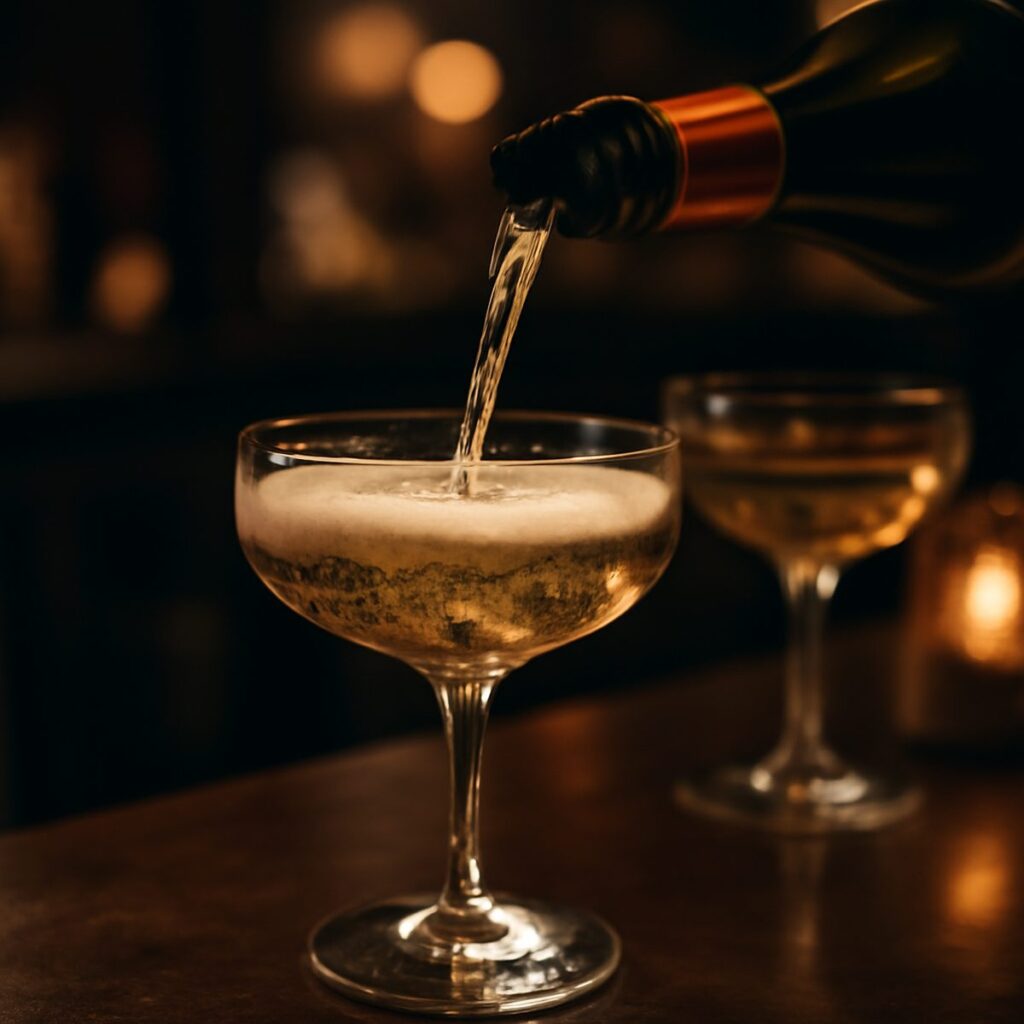
The Art of the Whisky Sour
Sour, sweet, spirit-forward and endlessly arguable: a considered case for the whisky sour, and why it remains the fairest test of any bar's real ability.
 By Renée Tan
30 August 2026 · 6 min read

Ask a bartender to make you a whisky sour and you learn more about their bar in ninety seconds than almost any other order could tell you. It is a drink with nowhere to hide: three ingredients, a shake, and a result that is either balanced or it is not. There is no garnish elaborate enough to disguise a sour that has been made in a hurry, and no story about provenance that rescues a version where the lemon was squeezed the night before. It is, in other words, the fairest test in the business — which is exactly why it belongs at the centre of any serious cocktail education.
The Ratio That Actually Matters
Strip the whisky sour down to its studs and you have spirit, citrus and sweetener, usually in a rough ratio of two parts whisky to three-quarters part lemon to three-quarters part simple syrup, adjusted to taste and to the specific whisky in play. A bourbon with more sweetness and vanilla character might want the syrup pulled back slightly; a peatier Scotch can often carry a touch more sugar to balance the smoke. The point is not to follow a ratio slavishly but to understand why it exists — sourness and sweetness are meant to frame the whisky, not compete with it.
Where lesser versions go wrong is usually in the citrus. Bottled lemon juice, however convenient, brings a flat, slightly metallic note that no amount of good whisky can fully mask. Fresh juice, squeezed close to service, is non-negotiable at any bar worth returning to.
The Egg White Question
Few cocktail debates generate as much unnecessary heat as whether a sour should include egg white. The honest answer is that it is a matter of texture, not correctness — a properly dry-shaken sour with egg white produces a silky, almost meringue-like foam that softens the drink’s edges and carries the aroma differently across the palate. Leave it out and you get a leaner, sharper drink, closer in spirit to the sour’s earliest recorded versions from the nineteenth century. Both are legitimate. What is not legitimate is a bar that adds egg white but skips the dry shake first — the step, done without ice, that actually emulsifies the white into a proper foam rather than a thin, separating film.
“The whisky sour taught me more about balance than any other drink on the menu,” one bar director in the Duxton Hill area told us. “Get the ratio slightly wrong and the whole thing falls apart in a way a heavier cocktail can hide.”
Choosing the Right Whisky
Not every whisky earns its place in a sour, and the good ones are often not the ones you would choose to sip neat. A mid-range bourbon with clear caramel and vanilla notes tends to hold up beautifully against citrus and sugar; a very old, delicate single malt, by contrast, often loses its subtlety entirely once shaken with lemon, its finer characteristics drowned out rather than complemented. The general rule among the city’s better bartenders is to save the rare bottles for neat pours and reserve something more robust — a solid rye, a caramel-forward bourbon, occasionally a blended Scotch with enough backbone — for the shaker. Our guide to tasting whisky properly is a useful companion for understanding which characteristics survive dilution and citrus, and which do not.
Where to Order One Properly
Singapore’s better bars have, over the past decade, become considerably more serious about the classics, and the whisky sour is often used internally as a kind of bartender’s exam — new hires are frequently asked to make one before they are trusted with anything more elaborate. Among the city’s best whisky bars, the sour tends to separate the merely well-stocked from the genuinely skilled, since a deep back bar means nothing if the fundamentals are shaky. The revival of interest in pre-Prohibition-style cocktails more broadly, documented in our piece on the return of the classic cocktail bar, has done the whisky sour a considerable favour, pulling it back from decades of neglect during the era of overly sweet, syrup-heavy cocktail menus.
Making One at Home
- Use fresh lemon juice, squeezed the same day. This alone fixes most home-bar sours.
- Dry shake first if using egg white, then shake again with ice for at least fifteen seconds.
- Taste and adjust before serving. Whisky character varies enough between bottles that a fixed recipe will always need small corrections.
- Serve in a rocks glass over one large cube, which melts slower and keeps the drink from diluting too quickly.
Stock the essentials properly and the sour becomes a reliable weeknight ritual rather than an occasional indulgence; our guide to the craft cocktail ingredients worth stocking covers the syrups, bitters and glassware that make the difference between an adequate home bar and a genuinely good one.
Variations Worth Knowing
Once the base template is understood, the whisky sour opens onto a small family of worthwhile variations. The Boston sour adds egg white as standard rather than as an option. The New York sour floats a small measure of red wine on top, which adds both colour and a dry, tannic counterpoint to the sweetness beneath — a genuinely clever addition when executed with a wine that has enough acidity to hold its own. A Gold Rush, built the same way but with honey syrup instead of simple syrup and no egg white, trades some of the sour’s brightness for a rounder, more autumnal character that suits an aged bourbon particularly well. None of these variations are gimmicks; each changes the drink’s balance in a specific, understandable way, which is precisely why they have endured rather than fallen out of fashion the way so many novelty cocktails eventually do. The same whisky can carry a richer, stirred drink just as well, as our piece on the art of the Boulevardier shows. For a bolder departure still, the Trinidad Sour rebuilds the template around bitters rather than spirit, with surprisingly balanced results.
Temperature control matters more than most home bartenders realise, too. A sour shaken for too short a time will taste thin and under-diluted, still carrying the raw bite of undiluted spirit; shaken too long, or with too much ice, it turns watery and loses definition. Fifteen to eighteen seconds of vigorous shaking with fresh ice is generally the right range, adjusted slightly depending on the size and shape of the shaker tin being used.
A Drink Worth Taking Seriously
There is something almost democratic about the whisky sour — it asks for no rare ingredients, no elaborate technique beyond a proper shake, and no particular allegiance to any single whisky style. What it does ask for is care, applied consistently, every single time it is made. That is a higher bar than it sounds. For a fuller sense of where Singapore’s drinking culture is headed more broadly, our Dining & Drinks section tracks the bars, bottles and rituals worth paying attention to, and the whisky sour remains as good a starting point as any.
Renée has covered Singapore's restaurants for over a decade, with a soft spot for the kitchens most people walk past.