
A Primer on Knife Skills and Kitchen Tools
Fewer, better tools and a properly sharpened blade: a home cook's primer on the knife skills that actually change how you cook, not just how you look doing it.
 By Renée Tan
30 August 2026 · 6 min read
By Renée Tan
30 August 2026 · 6 min read
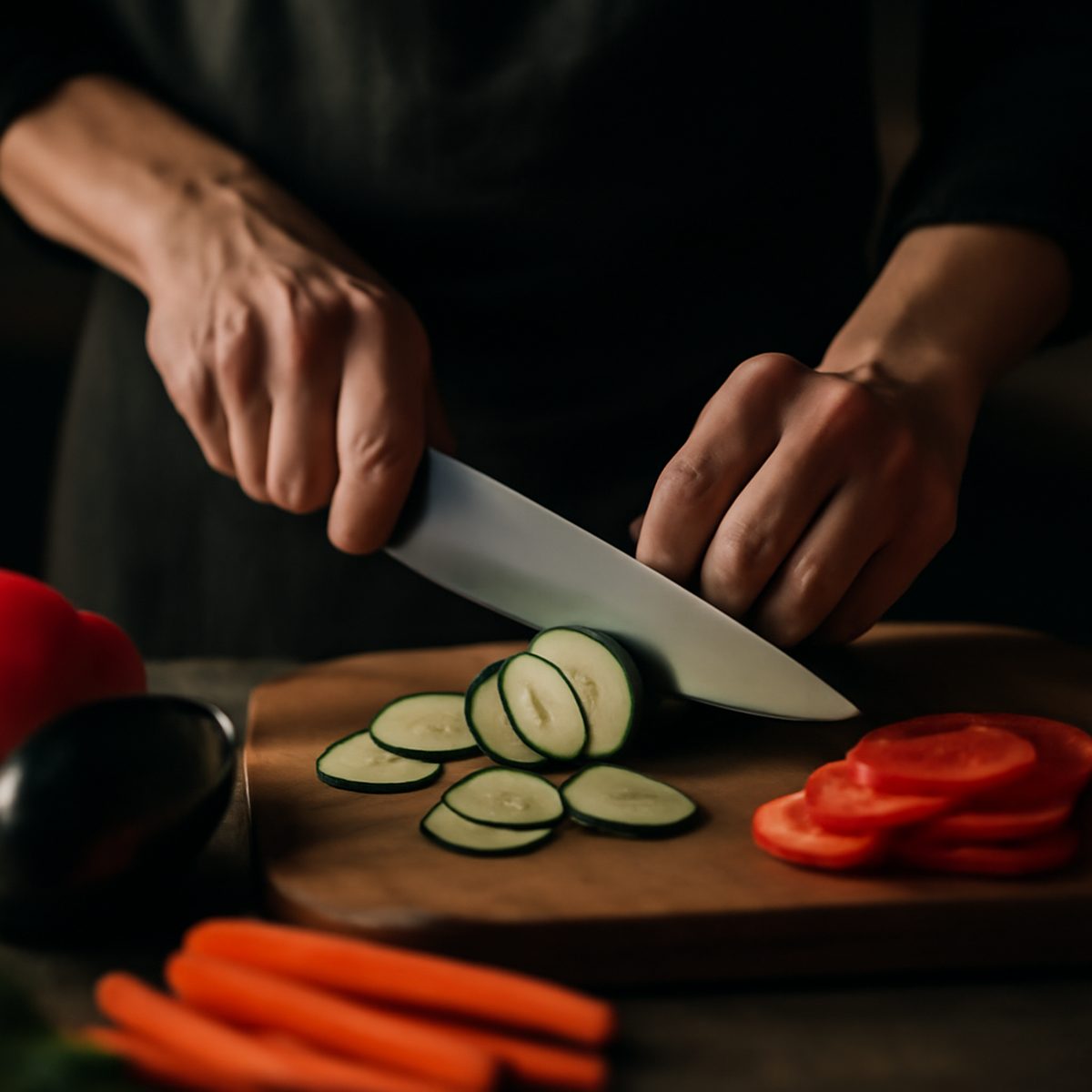
Most home kitchens are over-equipped and under-sharpened, which is precisely backwards. A drawer full of specialised gadgets rarely improves a meal; a single, properly maintained knife, used with even modest technique, improves almost every meal it touches. This is not a controversial position among people who cook seriously, and yet it remains one of the more consistently ignored pieces of kitchen wisdom — largely because a beautiful set of knives photographs better than the unglamorous business of learning to sharpen and use just one of them well.
The Case for Owning Fewer, Better Knives
A genuinely capable home kitchen needs, at minimum, three blades: a chef’s knife for the bulk of chopping and slicing, a paring knife for detail work, and a serrated bread knife for anything with a tough exterior and soft interior. Beyond these three, most additional knives — santokus, cleavers, specialised fish knives — solve problems most home cooks do not actually have. Better to spend the budget that would go towards a twelve-piece block set on one excellent chef’s knife, ideally in the 20-22cm range, forged rather than stamped, with a full tang that runs through the handle for balance and durability.
Material matters more than brand prestige. A high-carbon stainless blade holds an edge longer than standard stainless and resists corrosion better than plain carbon steel, making it the sensible middle ground for most home cooks who are not prepared to dry and oil a blade after every use.
The Grip and the Cut That Change Everything
Two technical habits do more for a home cook’s confidence than any amount of equipment. The first is the pinch grip: holding the knife not by wrapping all fingers around the handle, but by pinching the blade itself between thumb and forefinger just above the handle, with the remaining fingers curled around the grip beneath. This grip transfers far more control to the blade tip and is the single fastest way to improve precision.
The second is the claw grip on the guiding hand — fingertips curled under, knuckles forward, guiding the blade against the first knuckle rather than the fingertip. It looks unnatural at first and becomes second nature within a few sessions of deliberate practice. Together, these two habits eliminate the vast majority of kitchen knife injuries and immediately improve both speed and consistency of cut.
Sharpening Is Not Optional
A dull knife is considerably more dangerous than a sharp one, since it requires more force and is more likely to slip. Most home cooks never sharpen their knives properly, relying instead on a honing steel, which realigns the edge but does not actually remove metal to create a new one. Honing should happen every few uses; genuine sharpening, on a whetstone or by a professional sharpening service, is needed every few months depending on frequency of use. Learning to use a whetstone properly takes patience but is a genuinely worthwhile skill — maintaining a consistent angle, usually around fifteen to twenty degrees depending on the blade, and working through progressively finer grits until the edge takes on a distinct, almost audible sharpness when tested lightly against a fingernail.
“People spend hundreds of dollars on a good knife and then never sharpen it,” one culinary instructor running private classes from a shophouse kitchen told us. “A cheap knife, properly sharpened, will outperform an expensive one that hasn’t seen a stone in a year.”
The Cutting Board Question
The surface a knife meets matters almost as much as the blade itself. Glass and stone boards, however attractive, dull an edge far faster than wood or good-quality plastic, and should be avoided entirely for serious knife work. End-grain wooden boards are the gold standard — the fibres run vertically, allowing the blade to slip slightly between them rather than being blunted against a flat, resistant surface, and the board itself tends to self-heal slightly over repeated use. A good board is a genuine investment in blade longevity, not merely an aesthetic choice for the kitchen counter.
Building Out From There
- A proper knife roll or in-drawer guard protects both the blade and your fingers reaching into a drawer.
- A bench scraper is a small, inexpensive tool that transforms the process of transferring chopped ingredients from board to pan.
- A honing steel used correctly — light strokes at a consistent angle, not aggressive scraping — extends the life of a sharpened edge considerably.
- A dedicated paring knife for anything requiring precision that a larger blade cannot manage comfortably.
For those setting up a kitchen properly rather than piecemeal, our guide to the considered pantry kitchen covers the broader philosophy of building a kitchen around genuinely useful tools rather than aspirational clutter, and our piece on the kitchen appliances worth the splurge makes a similar case for larger equipment.
Basic Cuts Worth Practising Deliberately
Rather than attempting to learn every classical French cut at once, most home cooks are better served by drilling a handful repeatedly until they become automatic. The julienne — thin, matchstick-sized strips, useful for anything destined for a quick stir-fry or a raw salad — teaches consistency of width, which in turn teaches even cooking. The chiffonade, used mainly for herbs and leafy greens rolled tight before slicing into ribbons, teaches control at slow speed. And the rock chop, the basic forward-and-down motion used for most everyday vegetable prep, teaches rhythm — the knife should never fully leave the board, pivoting instead on its tip as the guiding hand feeds ingredients steadily beneath it.
None of these techniques require formal training to learn reasonably well. Fifteen minutes of deliberate practice a few times a week, using cheap vegetables rather than expensive ones while the technique is still shaky, is enough to produce a visible improvement within a month. The goal is not restaurant-kitchen speed — home cooks rarely need that — but consistency, which is what actually improves how food cooks and looks on the plate.
A Skill, Not a Purchase
Good knife skills cost almost nothing beyond a modest initial investment and a genuine willingness to practise. They transform the daily experience of cooking — faster prep, more even cuts, less waste, considerably less risk of injury — in ways that no additional gadget ever quite manages. It is one of the more understated arguments this magazine makes across its Dining & Drinks coverage: that the fundamentals, properly learned, outperform almost everything sold as an upgrade.
Renée has covered Singapore's restaurants for over a decade, with a soft spot for the kitchens most people walk past.


